Tag: Moroccan Food

  • From Goat Poop to Sardines: A Moroccan Odyssey

    From Goat Poop to Sardines: A Moroccan Odyssey

    Morocco Series Part 6: Tafraoute Goats, Essaouira Seafood & Marrakech’s First Act

    We left Tafraoute and the Atlas Mountains in the morning, heading west toward Essaouira. The highlight of the drive came dangling from trees: goats. Yes, actual goats perched in argan trees, munching away on the fruit like it’s their personal buffet. It’s hilarious until you realize they’re part of the argan oil production chain. Nature’s little tricks.

    For those interested in the details, here’s the glamorous truth: argan oil starts with goat digestion. The animals can’t digest the seeds, so they either spit them out (clean and ready for processing) or pass them through their digestive system, softening the shell in the process. Either way, the goats do the prep work. Humans then collect the debris (a polite word for goat poop), crack the shells, roast the kernels, grind them into paste, and knead out the oil. It takes about 30 kilos of nuts to produce one kilo of oil. That’s a lot of goat labor (and poop). It resembles the process of making elephant coffee—Black Ivory Coffee—except the elephants don’t have to climb trees for their beans. Easier work.

    Nowadays, production is mostly done in women-run cooperatives—similar to saffron farming. The cosmetic-grade oil is prized for its skin benefits, but the culinary version is a nutty little surprise. Pricey, yes, but you only need a few drops. I bought a couple of bottles. No regrets.
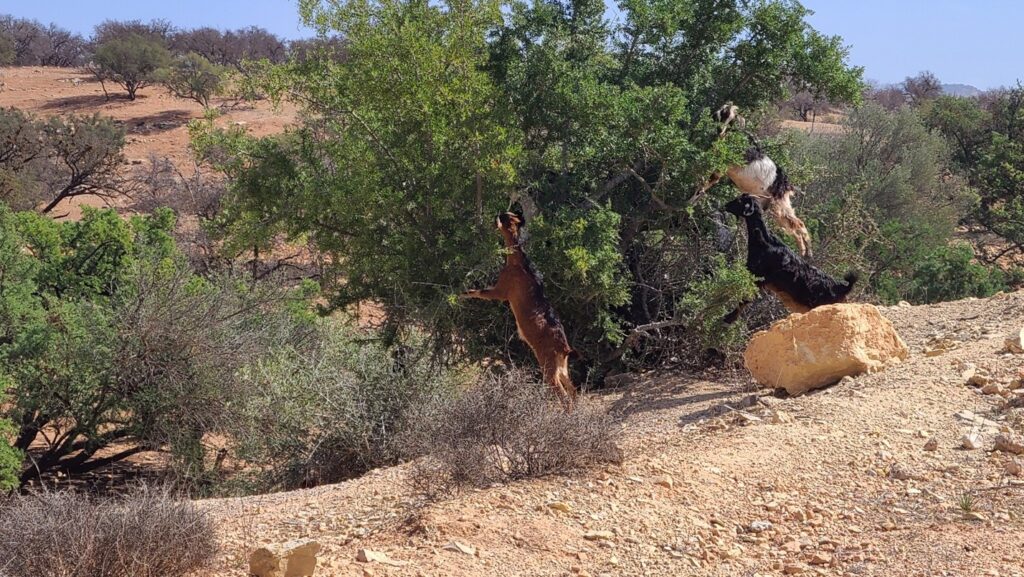
    Goats in argan trees along the road to Essaouira

    Goats eating argan fruit.

    We made a quick detour to Agadir—a modern beach city with wide boulevards and a vibe that screams “package holiday.” It’s fine. But Essaouira, just up the coast, is where things get interesting. Smaller, breezier, and infinitely more charming. The fishing port is buzzing, the arts scene is alive, and the medina (a UNESCO World Heritage Site) is a maze of whitewashed walls and blue doors. The nightlife is also quite vibrant. It is one of those places you want to stay one more day.

    Upon arrival, we skipped the usual hotel check-in routine and went straight to the fish market. Maybe not the cleanest place in the world, but the food is simple and perfect. Dozens of restaurants compete for your attention. We settled on a place that served monkfish, shrimp, langoustines, salad, and fries. Nothing fancy—just fresh, grilled, and perfect.
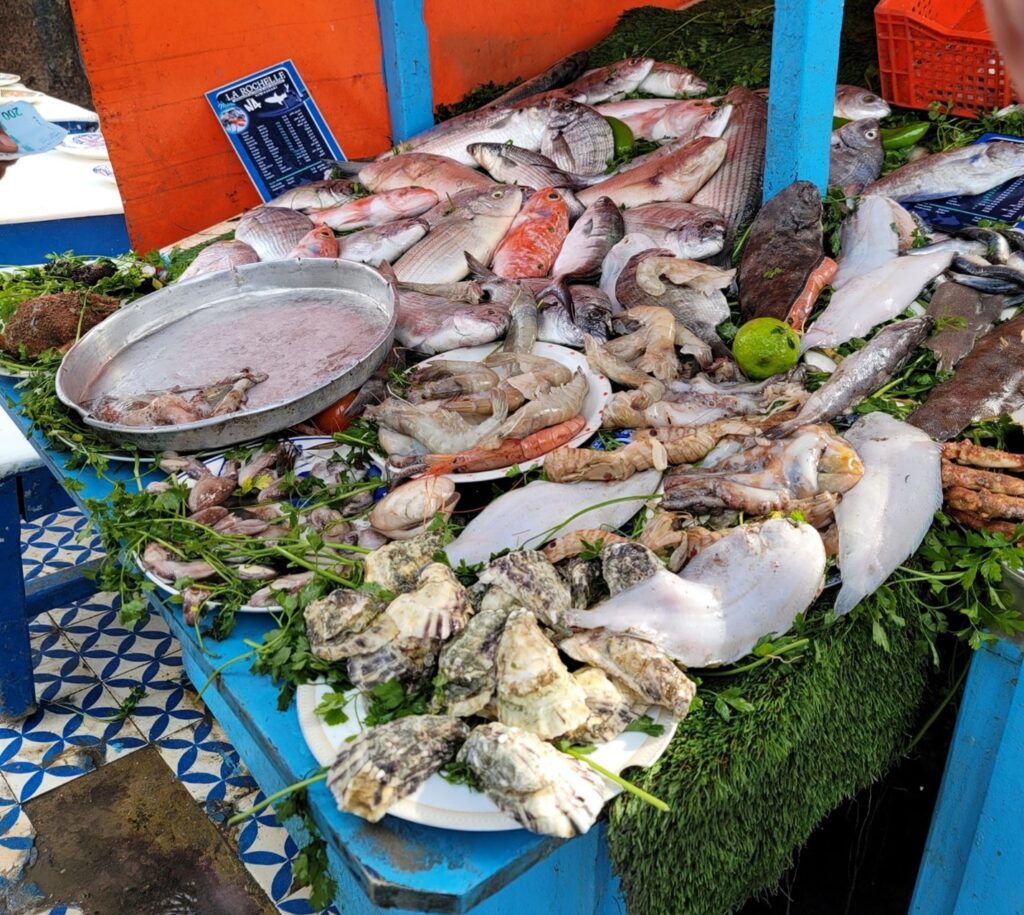
    Seafood stall at Essaouira’s seafood market

    Essaouira fish market – catch of the day
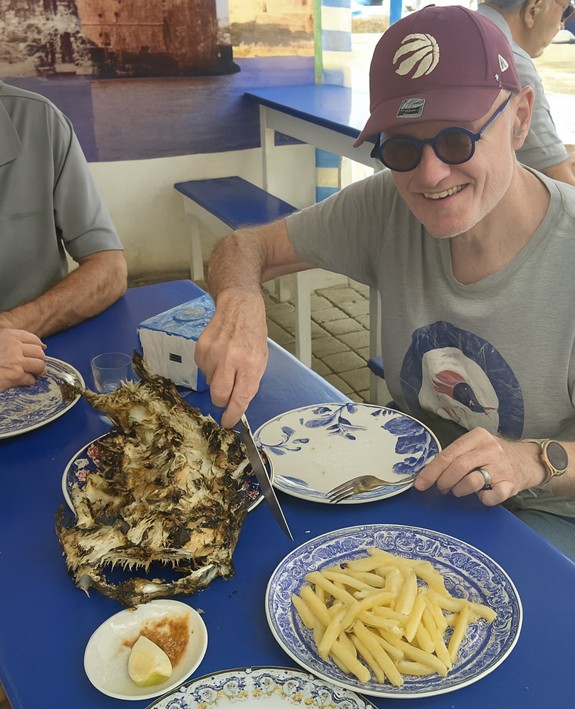
    Here I am the surgeon dissecting the monk fish

    Cars aren’t allowed in the medina, so we hired one of the many cart-wielding men to haul our bags to Riad Al Zahia. The hotel was fine. The rooftop view (where they also serve breakfast) was great. Sadly, we only had one night in Essaouira. The medina is a bit touristy, but it’s still a joy to wander: art galleries, shops, bars with live music, and that laid-back coastal vibe.
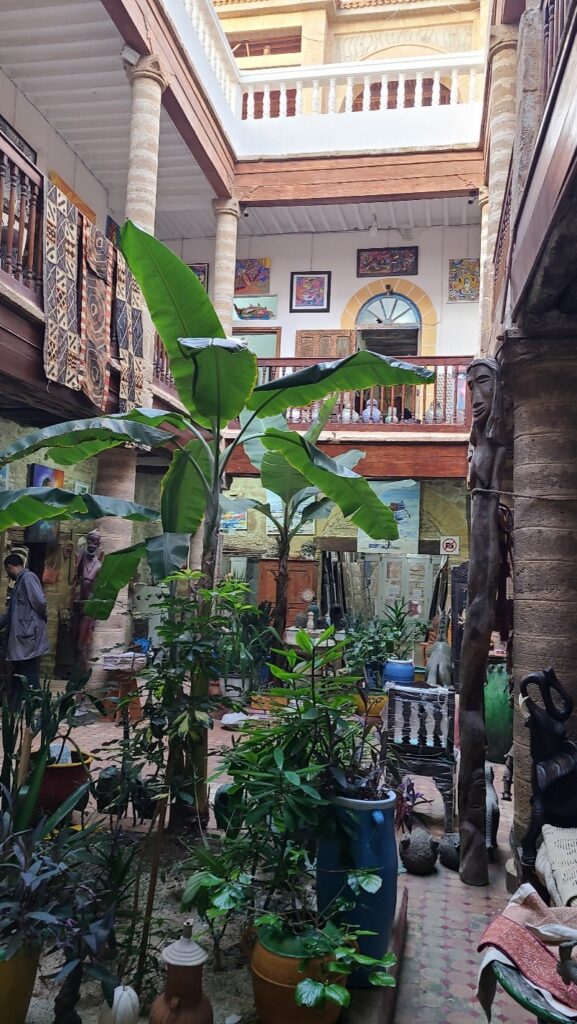
    Inside a gallery in Essaouira medina

    Inside one of the art galleries in Essaouira medina

    Next stop: Marrakech. And if Morocco were a movie, Marrakech would be the acting star.

    Marrakech Arrival: The City That Knows It’s Famous

    We arrived in Marrakech and said goodbye to Muhammad, our driver for the past two weeks. It was a bit emotional—not just because the trip was nearing its end, but because Muhammad was genuinely great. Funny, helpful, and full of insights about Morocco’s culture, quirks, and contradictions. He was far more than a driver; he was our unofficial ambassador.

    We checked into La Maison Arabe, a lovely 5-star hotel. Not quite La Mamounia (more on that in the next post), but still a solid choice. The rooms are spacious, the service impeccable, and the breakfast buffet was full of delicacies and could feed a small army. The only downside? The place goes into hibernation in the late evening. The bar closes early, and the vibe is more “spa retreat” than “nightlife.” Still, highly recommended—just don’t expect a party.
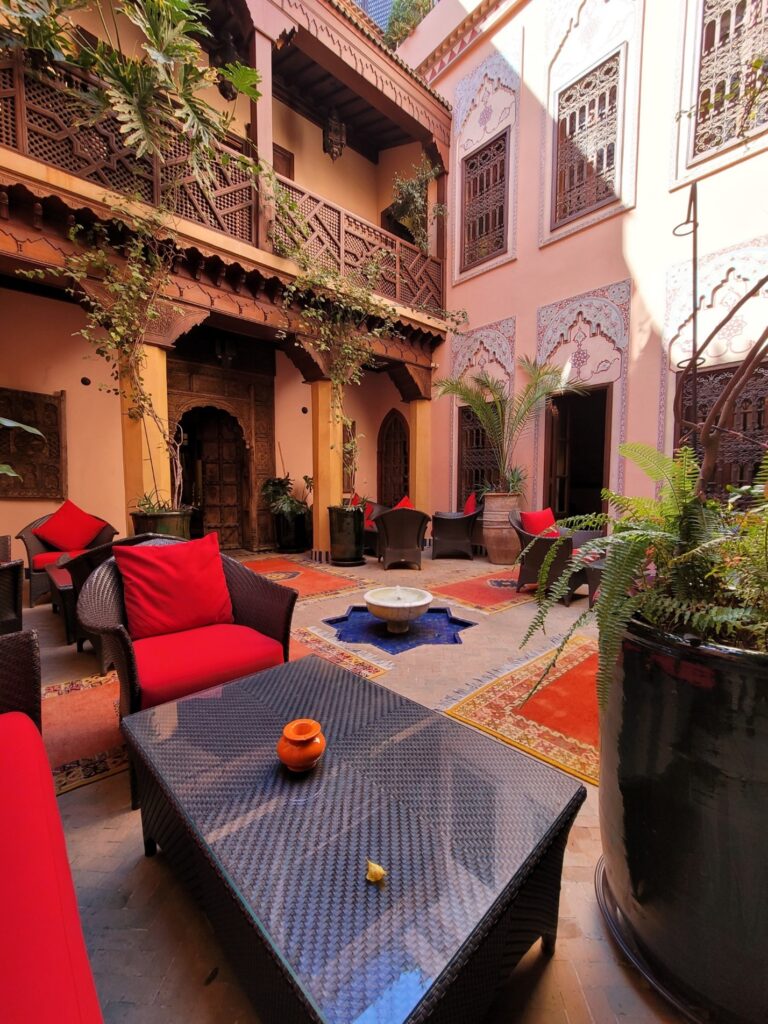
    La Maison Arabe hotel patio in Marrakech

    La Maison Arabe – the patio in one of the two buildings
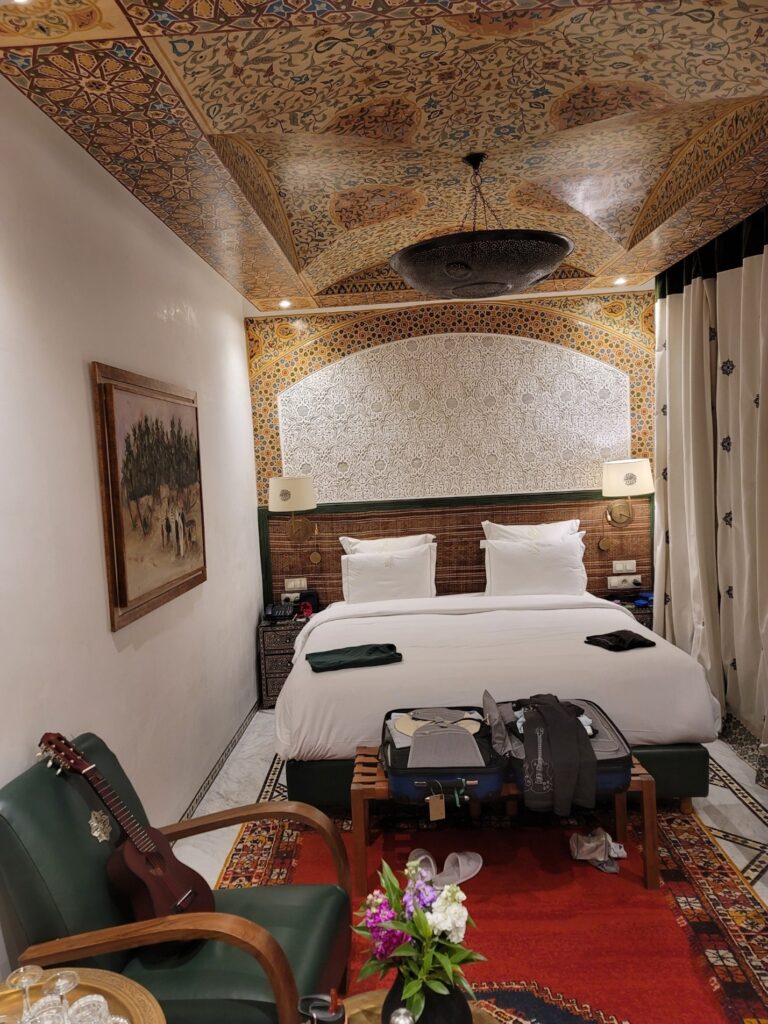
    Our room at La Maison Arabe

    First stop: Djemaa el-Fna. We’d read about it before arriving, and it lived up to the hype—eventually. In the afternoon, it’s relatively tame: juice stands, ice cream carts, and a few sweet stalls. We climbed to a rooftop café and watched the square slowly wake up. It’s like observing a volcano before it erupts.

    We wandered through the medina, got pulled into shops we didn’t plan to enter, and bought souvenirs we didn’t need (not different than in many other places in the country). Moroccan merchants could sell sand in the Sahara. Resistance is futile.
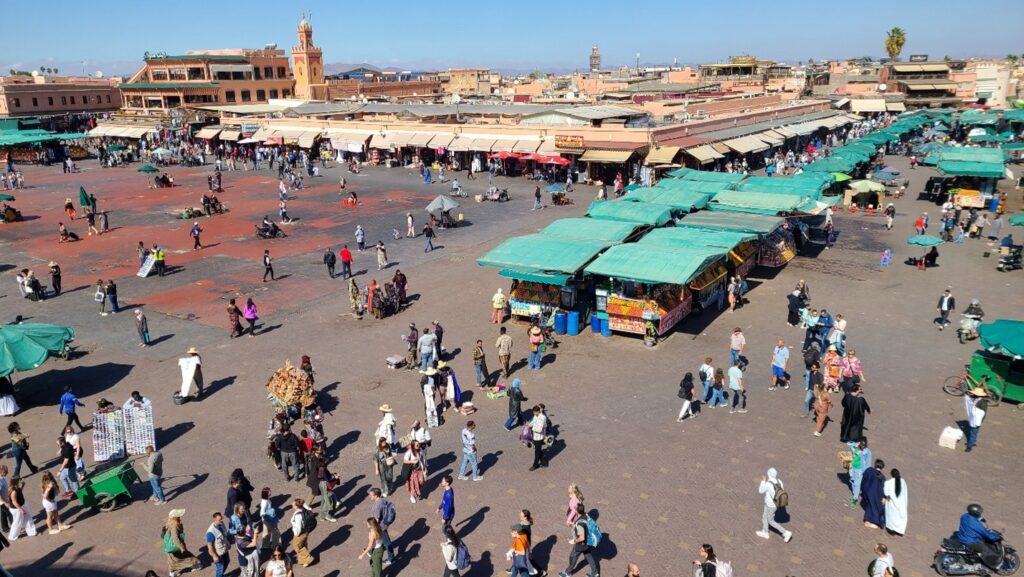
    Djemaa el-Fna square in Marrakech at sunset

    Djemaa el Fna in the afternoon. Not so exciting at that time of the day.

    Netta checking one of the local traditional instruments, which we eventually bought

    Dinner at Nomad: Where the Sardine Tarte Stole the Show

    Dinner was at Nomad (not the one in NYC, though the name drop could be intentional). It’s Moroccan cuisine with a modern twist. The lamb chops were tender and juicy, but the sardine tarte stole the show—fresh herbs, some of which brought nice bitterness, and others balanced with a bit of sweetness, covered umami-packed sardines, preserved lemon, spicy chilies, and that glorious Moroccan olive oil. Even if quite simple, it was the best dish we had in Morocco.
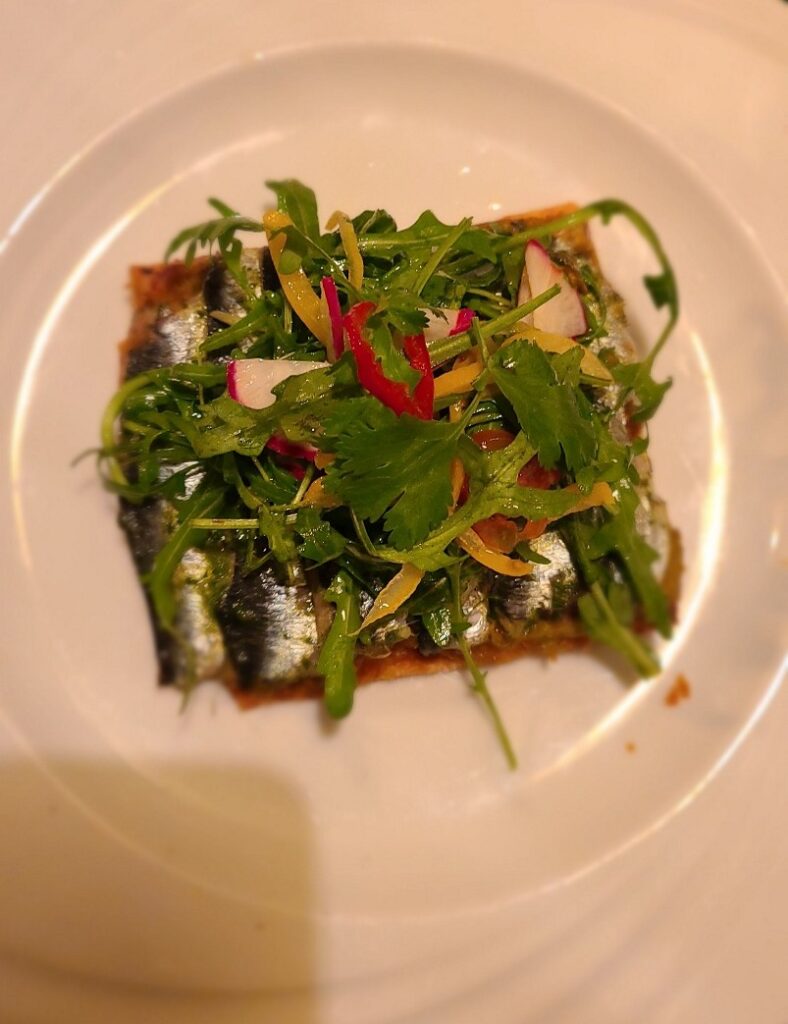
    Sardine tarte at Nomad restaurant in Marrakech

    Sardine tarte at Nomad Restaurant in Marrakech

    • Tree-climbing goats & argan oil reality check
      Nature’s weirdest interns kick off the trip with digestive contributions to Morocco’s beauty industry.
    • Essaouira’s fish market frenzy
      Monkfish, langoustines, and salad in a slightly grimy but gloriously fresh seafood haven.
    • Riad Al Zahia & medina logistics
      No cars allowed, but plenty of cart-wielding men ready to haul your luggage like it’s treasure.
    • Essaouira’s artsy, touristy charm
      UNESCO medina, live music, and galleries—just enough vibe to make you wish for one more night.
    • Marrakech madness begins
      Goodbye to our more-than-only-driver Muhammad, hello mint tea, medina chaos, and rooftop coffee surveillance.
    • Nomad restaurant’s sardine tarte revelation
      A modern Moroccan masterpiece: sardines, herbs, chilies, and olive oil in perfect harmony.

    Is Essaouira worth a stop even for just one night?
    Yes. It’s breezy, charming, and fun. You’ll wish you had more time.

    Is La Maison Arabe a good alternative to La Mamounia?
    Absolutely—unless you want nightlife. Then you’ll need to look elsewhere.

    Do the goats really climb trees?
    Yes. And they are so hungry they don’t care about the passerby.

    Is Nomad Marrakech a good restaurant?
    Yes. Strongly recommended. Order the sardine tarte and thank me later.

    ← Previous: Part 5 Dades, Ait Benhaddou & Tafraoute: Pizza, Saffron, and a Shower That Tried to Kill Us

    Next: Part 7 From Marrakech to Casablanca: A Moroccan Finale→
  • Chefchaouen & Fes Travel Guide: Blue Walls, Roman Ruins, and a Tagine We’ll Never Use

    Chefchaouen & Fes Travel Guide: Blue Walls, Roman Ruins, and a Tagine We’ll Never Use

    Morocco Series Part 3: Chefchaouen’s Blue Medina, Volubilis’ Majestic Quietness, and the Frenzied Maze of Fes


    New here? Start with Part 1 (Morocco: A practical guide, unsolicited opinions and some food heresyhttps://snarkyvoyager.com/guide-to-morocco-post/

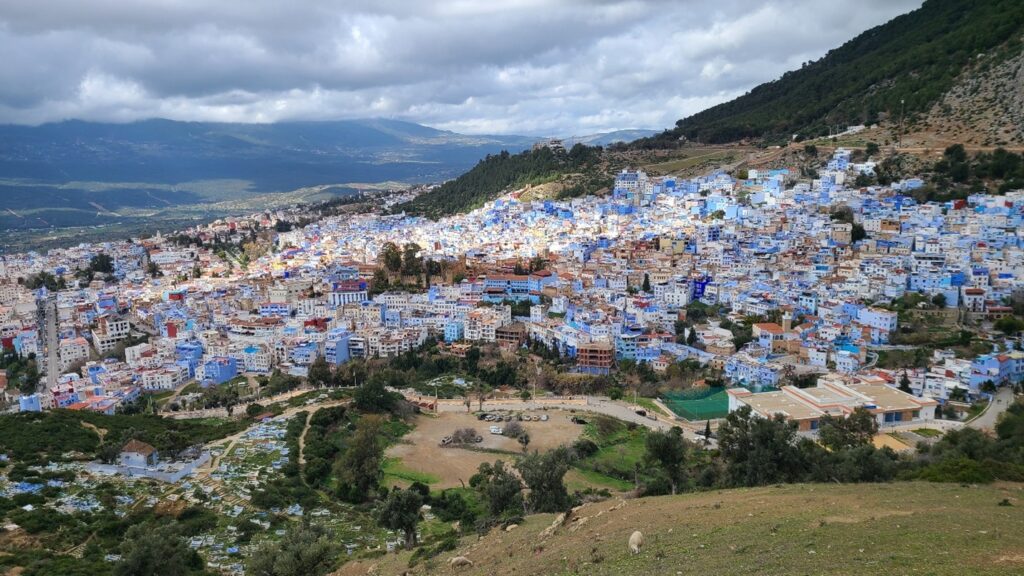
    Day 4 started with a short 1.5 hours drive from Tangier to Chefchaouen, a small, picturesque town nestled in the Rif Mountains. Its claim to fame? Blue. Lots of it. The old town is drenched in every shade of blue imaginable—like someone let a Smurf loose with a paint roller.

    If you’re wondering whether Chefchaouen is worth visiting, the answer is yes — especially if you love photography, blue walls, and mild uphill cardio.

    Why blue? Depends on who you ask. Some say it’s a Jewish tradition carried over from Spain. Others claim it keeps homes cool. Or repels mosquitoes. Or just looks good on Instagram (probably the most honest answer). One thing’s sure, the locals started painting their houses in blue in the 20th century and whatever the reason, they keep painting—and the authorities help by handing out money or free buckets of blue, because tourism is good business for the town.

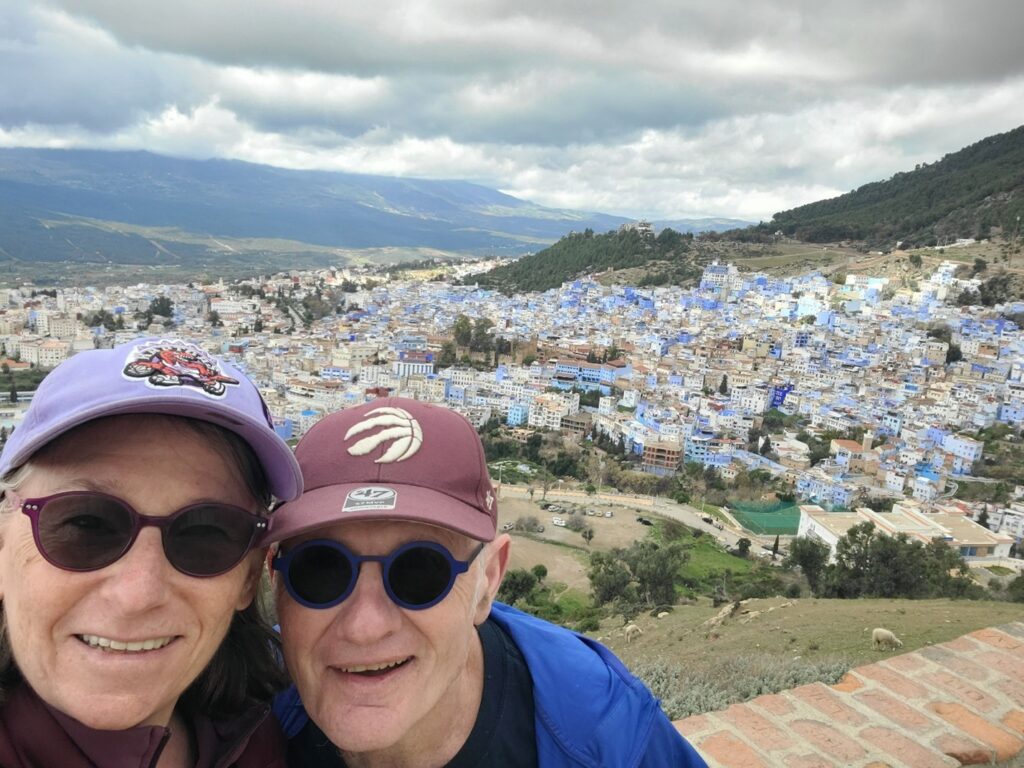
    Chefchaouen the blue city from above

    View of Chefchaouen from the hilltop

    The medina is charming and car-free, which sounds romantic until you’re dragging luggage uphill. We hired porters with carts again, paid double the “recommended” fee, and didn’t argue, especially that we were faced with the amount after the luggage was already in the hotel.

    This is a small town but perfect for a one‑day Chefchaouen itinerary, especially if you enjoy wandering, shopping, and pretending you hike regularly

    Fun fact: many locals here speak Spanish instead of French, thanks to Northern Morocco’s colonial history.

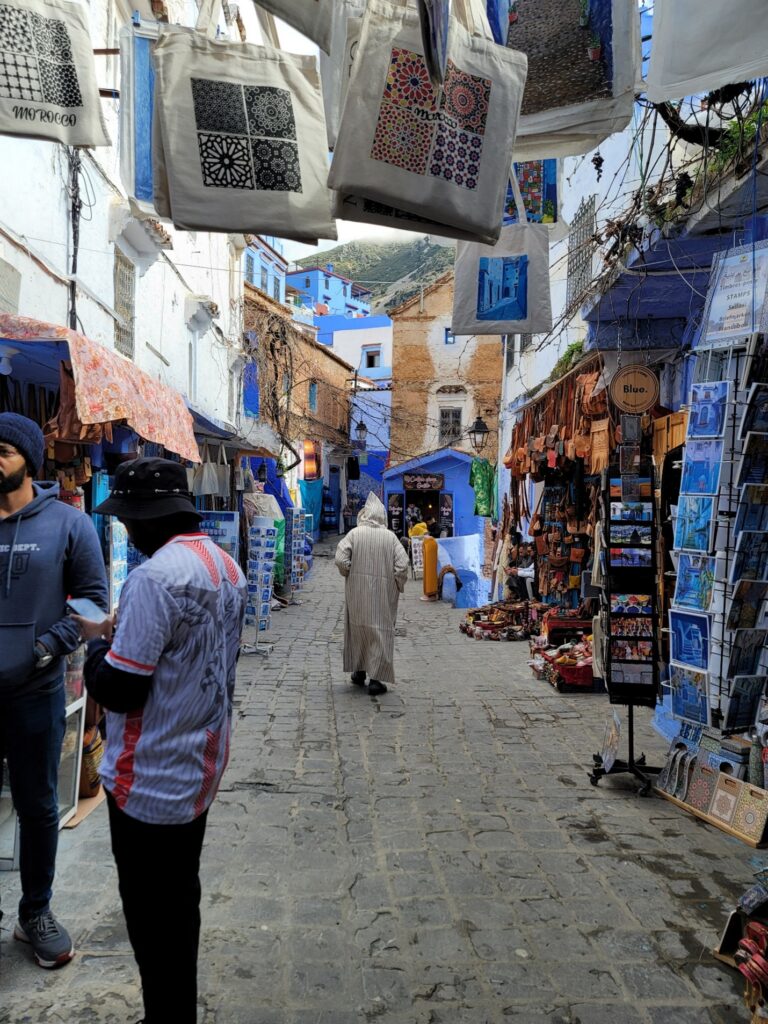
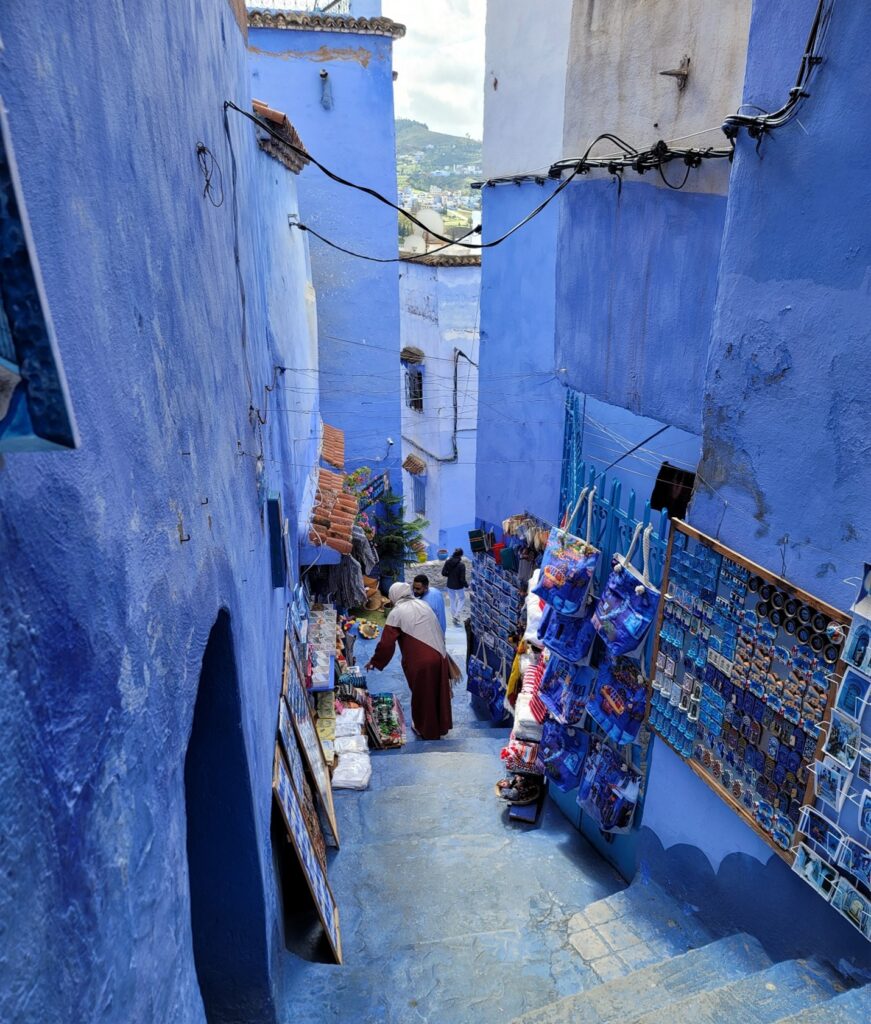
    The medina of Chefchaouen

    Shops in Chefchaouen Medina

    Chefchaouen blue medina — is Chefchaouen worth visiting? YES!

    Chefchaouen artisanal shop

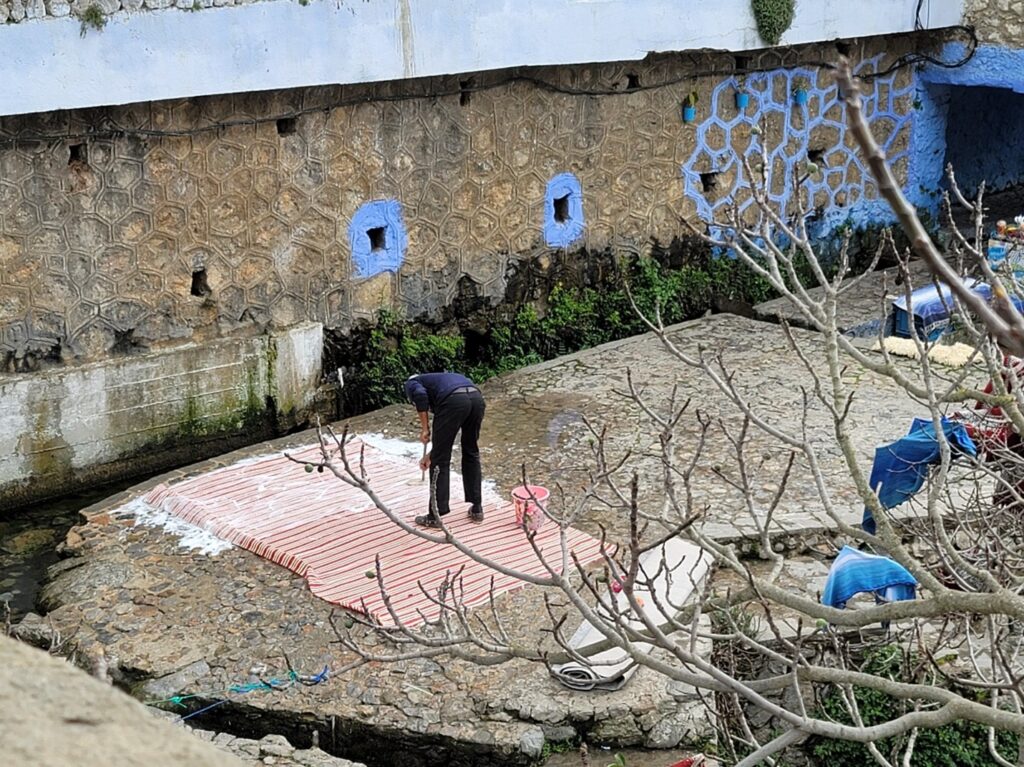
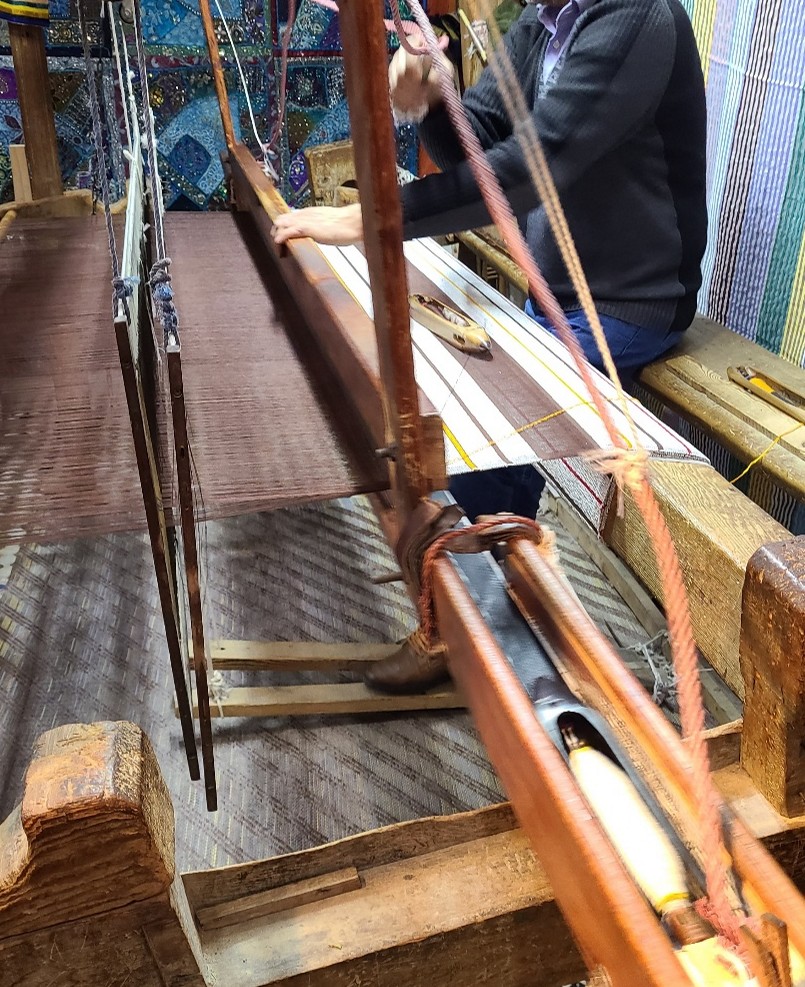
    We spent the day strolling through the medina, browsing shops selling artisanal crafts made of leather and wool. We admired the Mendil—traditional red-and-white striped blankets worn by Rif women—and watched silk and wool being woven on looms that looked older than some of the ruins we’d later visit.

    Cleaning the traditional red and white blankets

    Washing the Mendil, the traditional blanket of the Rif Mountain region

    We hiked up the hill for a panoramic view, took the obligatory photos, and drank orange juice from a guy who squeezed it faster than we could blink.

    Us and Chefchaouen

    I know it looks like I recorded at high speed. But no. This is how fast this guy’s hands really moved.

    Staying at Dar Meziana. It’s a small riad with questionable cleanliness (or should I say unquestionable uncleanliness?), claustrophobic and uncomfortable rooms, and heating that’s more symbolic than functional. Even for Canadians, winter nights in the mountains are not the time to test your tolerance for cold. Verdict: Chefchaouen is a must‑see, but Dar Meziana is a must‑avoid.

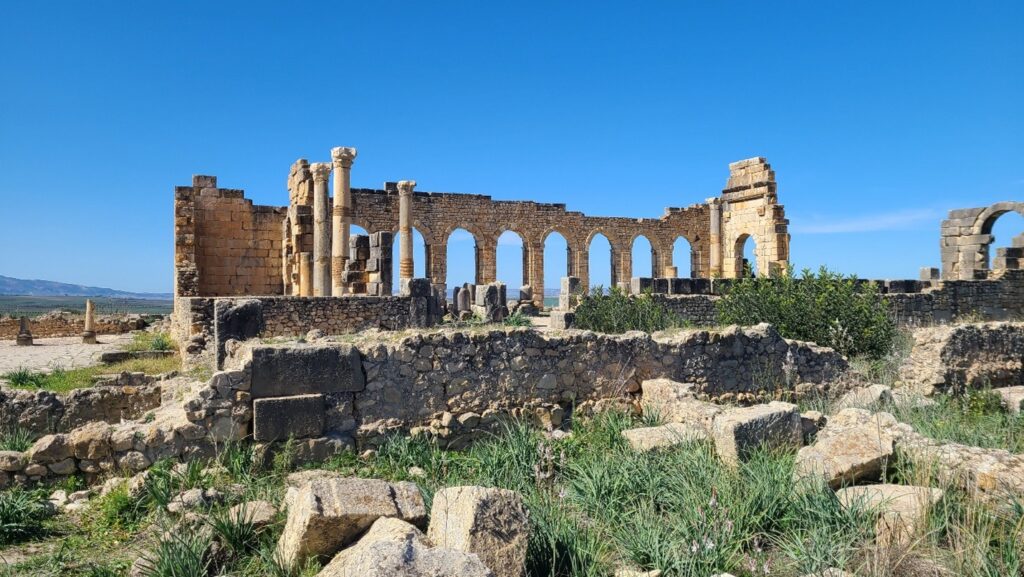
    Next day, we hit the road for Fes, with a stop at Volubilis—an ancient Roman settlement that’s both massive and impressive. After three hours of driving, we needed a break anyway.

    The ruins? Stunning.

    Our guide? Less so. He delivered his lines with the enthusiasm of someone reading cereal ingredients. The site deserves better. There probably are better guides, but we didn’t get lucky.

    If you’re planning how to visit Volubilis from Chefchaouen, it’s an easy stop on the drive between Chefchaouen and Fes—and absolutely worth the detour.

    Volubilis Roman ruins — how to visit Volubilis from Chefchaouen

    The Basilica of Volubilis, a key Roman administrative structure used for legal and civic proceedings

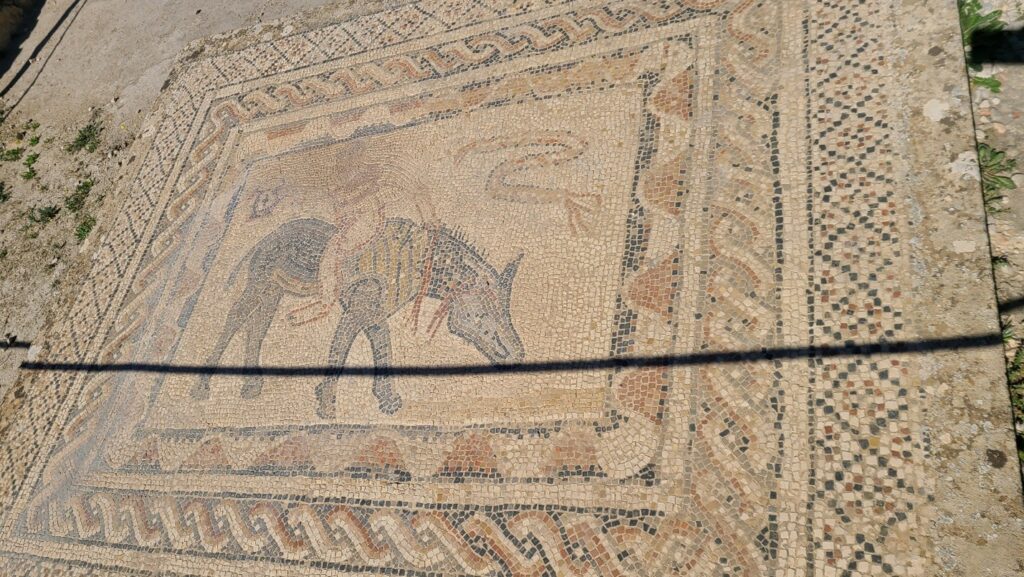
    Volubilis mosaic

    One of the Mosaics at Volubilis still well-preserved

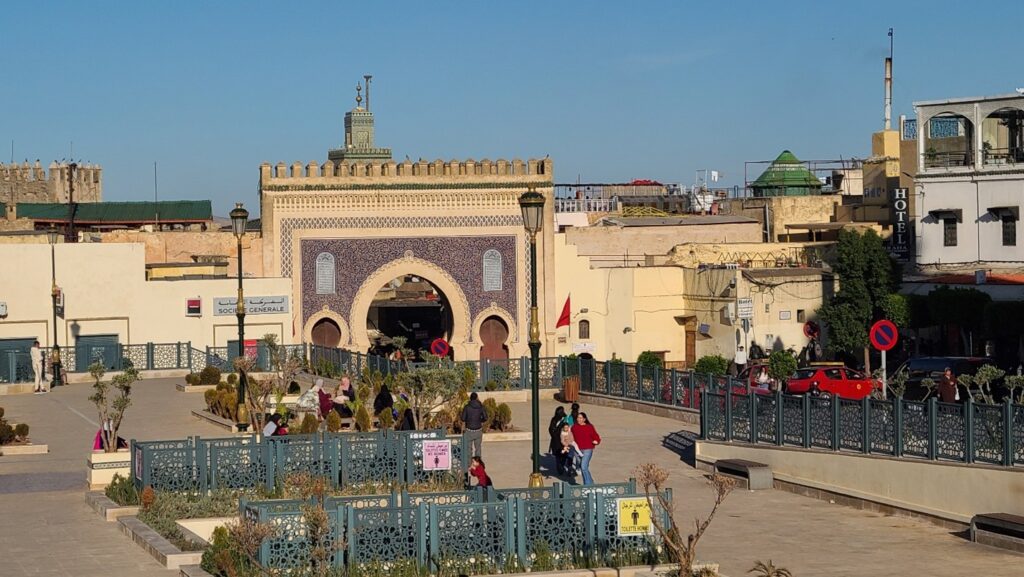
    Back in the car, another 1.5 hours later, we arrived in Fes. The weather was beautiful, so we dropped our bags and wandered the neighborhood. Found a cozy café, ordered coffee, and let the late afternoon sun remind us why we travel.

    Fes entrance to the medina

    Gate to the Fes Medina. We enjoyed the mild weather and a coffee at the coffee shop on the right

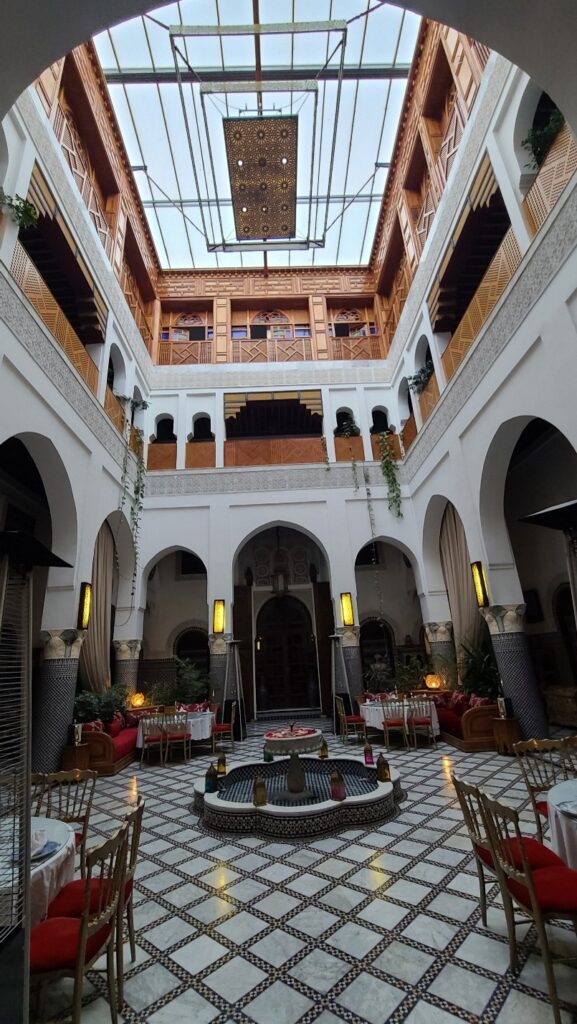
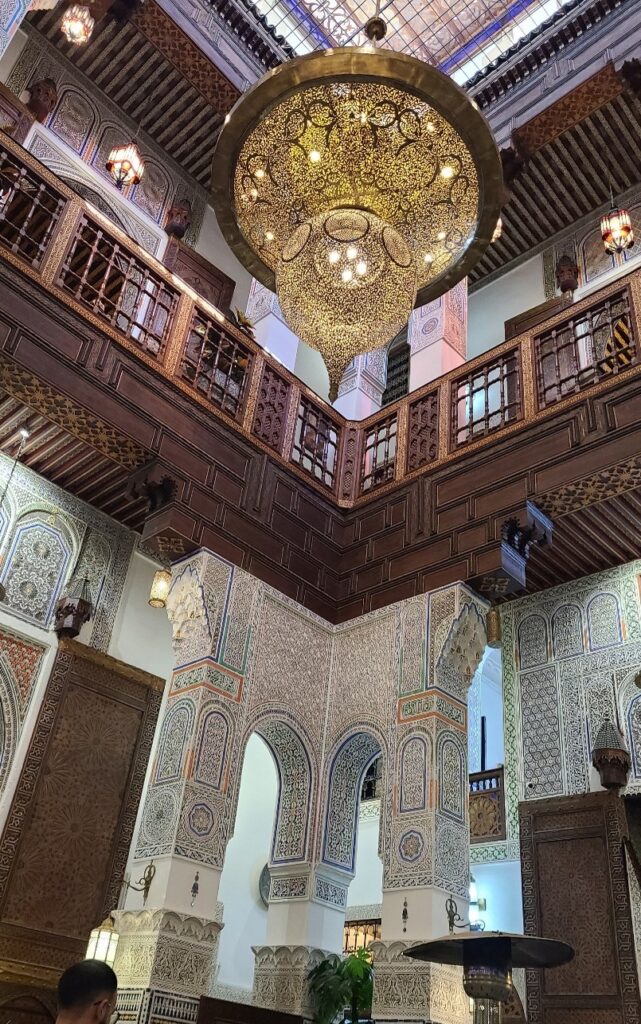
    We stayed at Riad El Yacout—a majestic hotel with spacious rooms and excellent staff. February is low season, so we scored a great deal. It was the perfect antidote to our Chefchaouen lodging trauma.

    The main hall at Riad el Yacout Fes

    Riad el Yacout, the main lobby

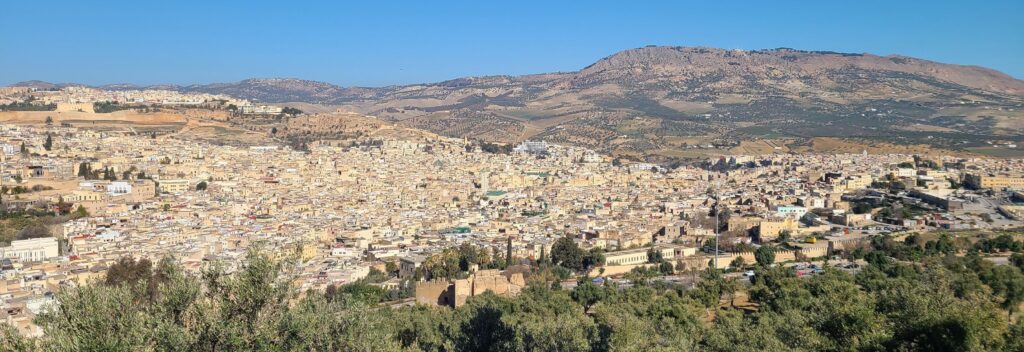
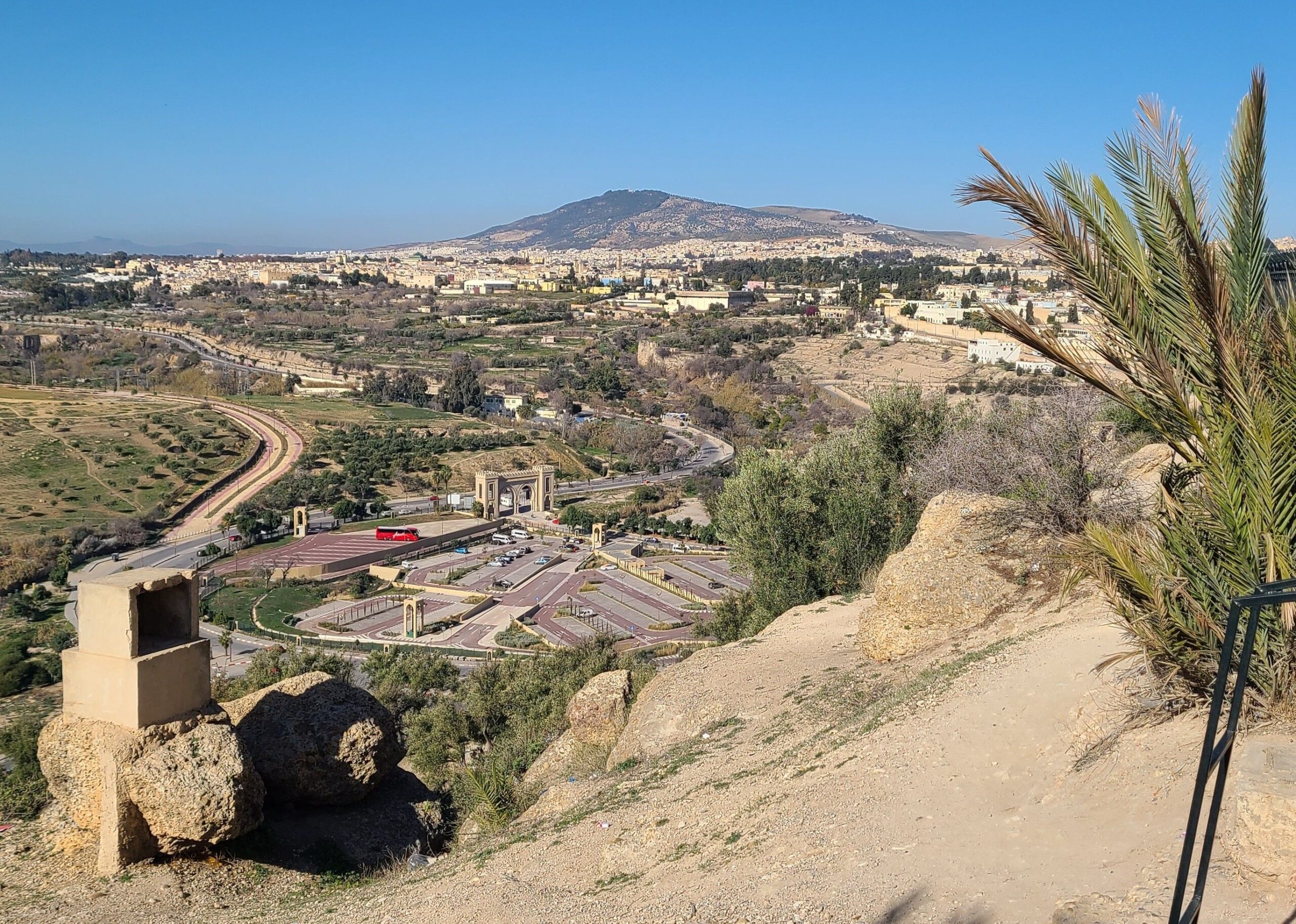
    Fes is one of Morocco’s largest and most exciting cities, and it delivers. We took a six-hour guided tour that started with ruined forts on the surrounding hills, offering a stunning panoramic view of the city and an excellent way to understand Fes’ size and history.

    Fes - panoramic view

    Panoramic view of Fes

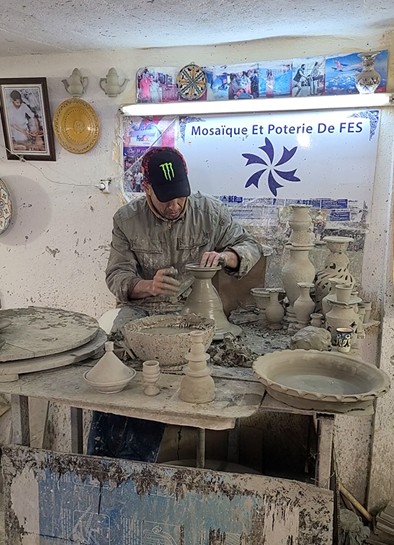
    We watched artisans create Fes’ famous blue pottery and intricate mosaics. The craftsmanship was so impressive that we felt we had to buy a tagine. It is totally unusable for cooking (our friends tried; it cracked), but it looks great in our growing collection of decorative kitchenware we’ll never use.

    Ceramics are one of the most tempting answers to what to buy in Morocco—even if they end up purely decorative.

    Each small piece of mosaic is made by hand in this Fes pottery

    Fes pottery workshop — what to buy in Morocco

    Making a tagine in a pottery in Fes

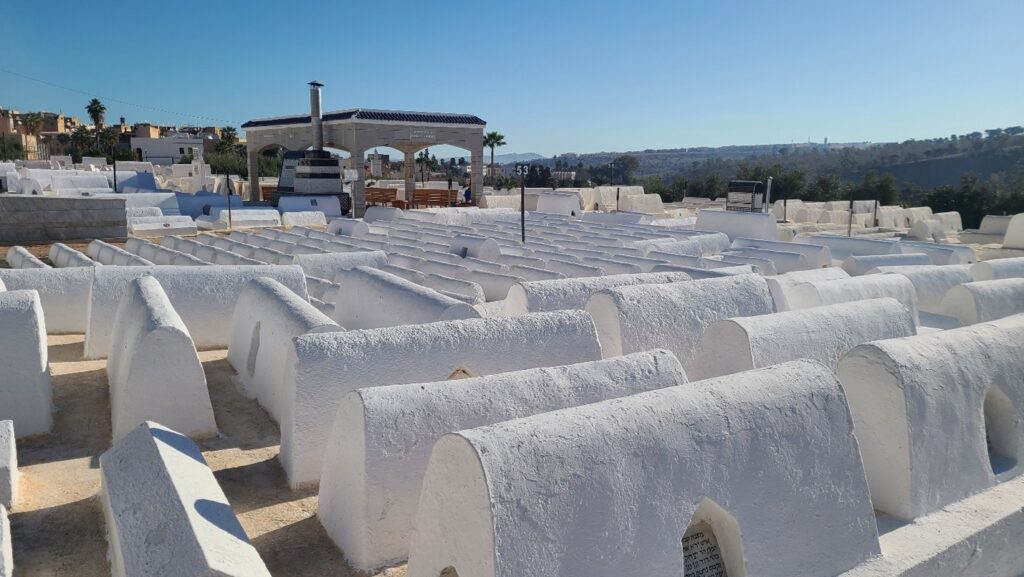
    A historic neighborhood with preserved architecture, cemeteries, and synagogues. Fes’ Mellah is one of the largest in Morocco and a testament to the enduring relationship between Jewish and Muslim communities in the country.

    Jewish cemetery in Fes

    Old Jewish Cemetery in Fes

    Grand, golden, and completely inaccessible. You can admire them, but don’t get any ideas.

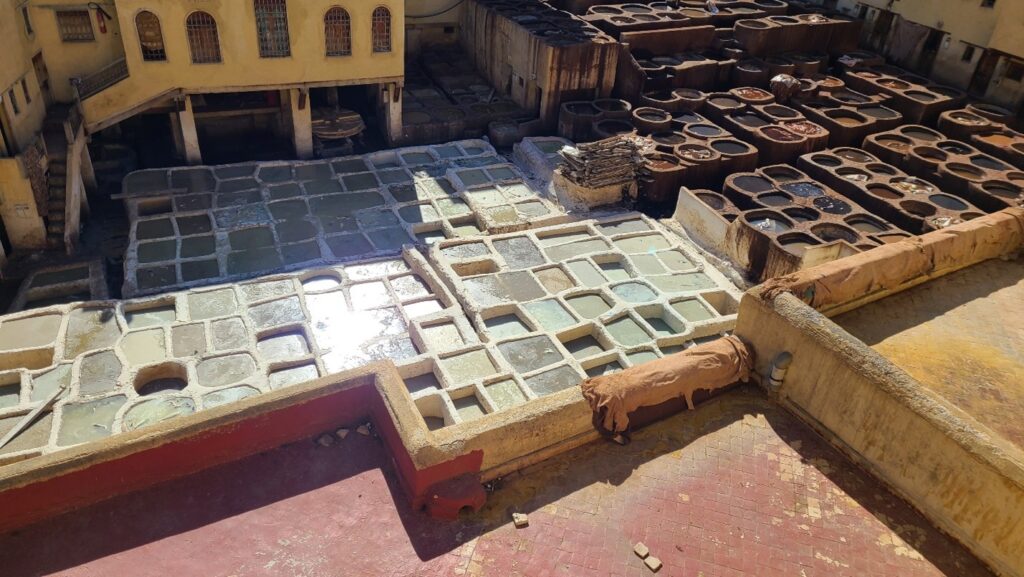
    A sprawling labyrinth where even Google Maps throws up its hands. We were warned not to explore alone, and we listened. Our guide led us through artisan quarters where metalworkers, dyers, woodworkers, and silk weavers still practice their crafts. The tannery was a highlight—equal parts fascinating and pungent. They try to convince you to buy.  The quality is excellent, and we left with leather gifts we actually use.

    Fes tannery — things to do in Fes medina

    The leather is processed in Fes the same way as it was done centuries ago

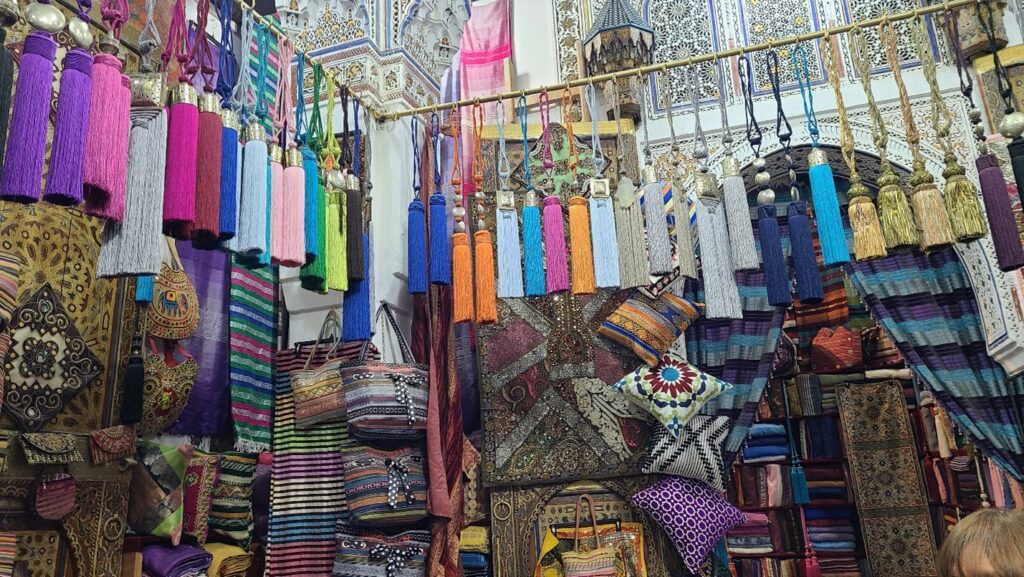
    Inside a shop in the souk

    Weaving a carpet with a loom in Fes Medina

    By midday, we were starving, so lunch at Palais Lahlou was a welcome pause. It was Friday, so couscous was mandatory. The restaurant was a bit touristy, but the couscous was excellent and served in quantities that could feed a small battalion. We skipped dinner…

    Palais Lahlou restauarnt in Fes

    Palais Lahlou Restaurant

    The salads served before couscous at Palais Lahlou restaurant

    This is brought to the table even before the couscous arrives… there was no room in the frame to show the pitas.

    Chefchaouen and Fes offered two very different flavors of Morocco—one painted in blue and the other full of history, chaos, and the occasional olfactory challenge.

    We climbed hills, bought pottery we’ll never use and the odd leather gift that is already in use, and learned more about Moroccan culture than we ever expected. From the freezing riad in Chefchaouen to the royal gates we couldn’t enter in Fes, it was a journey of contrasts, color, and couscous. And while not every moment was comfortable, every moment was memorable—which, in travel terms, is basically the same thing.

    • Chefchaouen’s Blue Medina – It’s blue, it’s charming, and it’s aggressively ready for photography.
    • Orange Juice Guy – Peeled and squeezed faster than we could say “vitamin C.”
    • Riffi Blankets and Artisan Shops – Wool, leather, handmade textiles – the temptation to buy things we don’t need.
    • Hilltop Viewpoint in Chefchaouen – Best panoramic view of Chefchaouen, mild cardio, and pretending we hike regularly.
    • Volubilis Roman Ruins – Impressive relics, underwhelming guide, excellent excuse to stretch our legs.
    • Riad El Yacout (Fes) – Majestic rooms, warm staff, and actual heating (not so needed anyway). Strongly recommended. Chefchaouen, take notes.
    • Pottery Quarter in Fes – Gorgeous ceramics and mosaics we’ll never use but absolutely had to buy.
    • Fes Mellah (Jewish Quarter) – Rich history and architecture.
    • Fes Medina – A maze of artisans, markets, and sensory overload, so confusing even Google Maps gave up.
    • Lunch at Palais Lahlou – Friday is Couscous Day… plus other food for a battalion, but tastier.

    Is Chefchaouen worth visiting?
    Yes — especially if you love photography, blue alleys, and a medina that feels like a watercolor painting.

    How do you visit Volubilis from Fes?
    It’s an easy stop on the drive between Chefchaouen and Fes. You can visit independently or hire a guide (results may vary).

    What are the best things to do in Fes medina?
    The tannery, pottery workshops, artisan quarters, and getting lost under controlled supervision.

    What should you buy in Morocco?
    Ceramics, leather, textiles, and souvenirs you’ll never use but will absolutely display.

    ← Previous: Part 2 –Rabat and Tangier: The Cities You Visit Before the Real Drama Starts

    Next: Part 4 – Sahara: Camels, Sandstorms & One Majestic State of Mind