
Morocco Series Part 5: Todra Gorge Drama, Dades Serpentines, Ait Benhaddou’s Cinematic Walls & Tafraoute’s Berber Heartland
Day 9: Todra Gorge, Berber Pizza & the Road That Rearranged Our Organs
Day 9 kicked off with a Sahara sunrise and ended with a serpentine drive through the Dades. We designed our itinerary this way because we believe if you haven’t experienced both a pocketful of ‘souvenir’ sand and a mild case of motion sickness within a 12-hour window, you haven’t truly seen Morocco.
Before reaching the gorge, we stopped in Rissani, a small town known for its culinary pride: Berber Pizza (Medfouna). To be clear, it’s not pizza. It’s a stuffed flatbread pretending to be pizza, but we’ll allow it. The filling—vegetables, minced meat (lamb, beef, or goat), cheese, and spices—was rich, rustic, and filling enough to qualify as a weighted blanket for your stomach. It bridges the gap between street food and ceremonial dish.
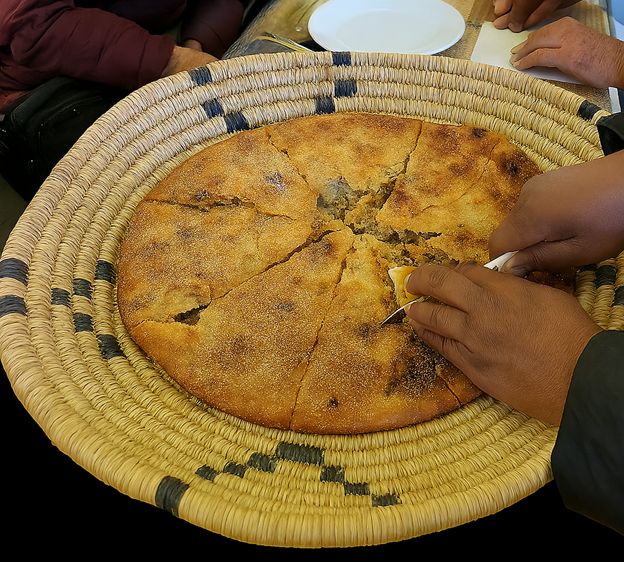
Berber pizza. The woven basket is the traditional way to serve it.
Todra Gorge – short stroll, beautiful landscape
Following lunch, we continued, heavy enough to question our walking plans. Even after the one‑million‑calorie lunch, we could walk the 10–15 minutes through Todra Gorge, which was enough time to admire the towering cliffs and pretend we were outdoorsy. There are various ways to hike in the Todra Gorge: the lazy version—easy strolls along the gorge floor—and the far more adventurous routes with serious elevation gain for those who want to explore the dramatic limestone canyon near Tinghir. We, unsurprisingly, chose the “let’s not die today” option. Muhammad, our driver, waited patiently on the other side, probably wondering why tourists insist on walking through rocks when cars exist.
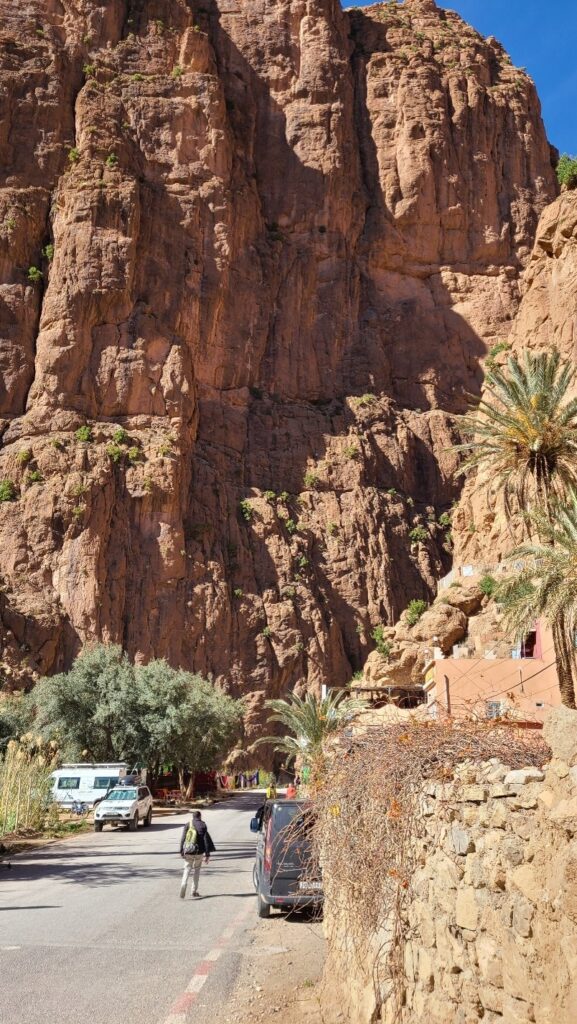
Todra Gorge “hike”. The lazy version.
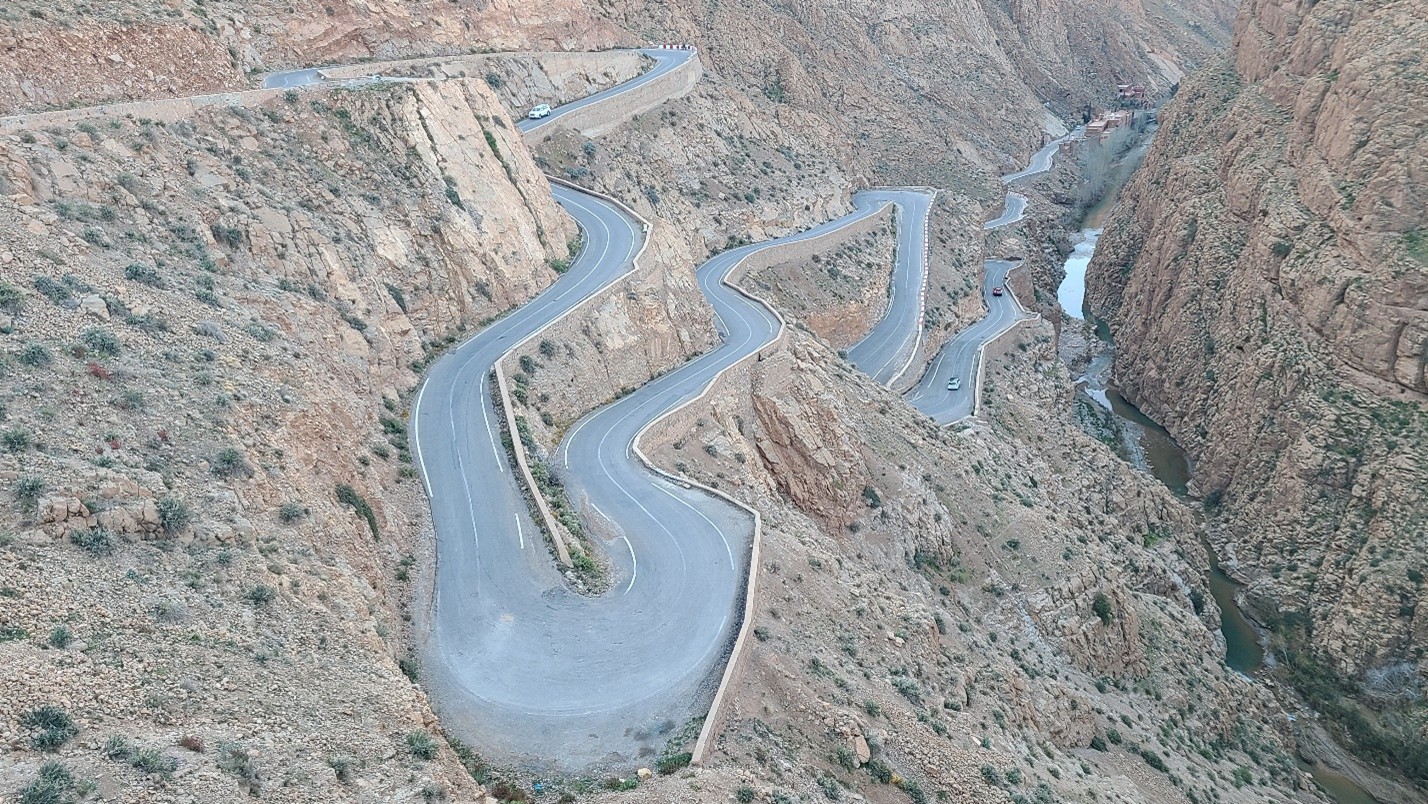
Dades Gorge — A Serpentine Masterpiece
Then came the Dades Gorge. The road leading up is a twisted masterpiece of engineering and mild nausea. But the views from the top? Worth every hairpin turn and internal organ shift.
It was the most serpentine route I’d ever traveled—until a few months later, when I drove the Road to Hana in Maui. That one is narrower, longer, and has ten times more hairpin curves… but the scenery is very different.
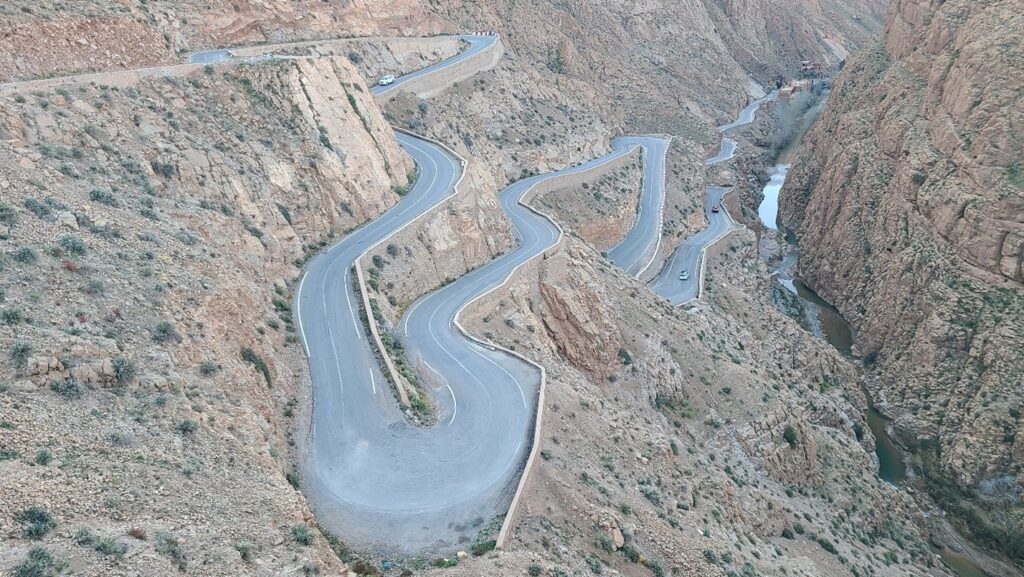
The serpentine road up to the top of the mountain and the Dades River at the bottom
We stayed at La Perle du Dades, a charming hotel owned by a French couple with a deep love for African and Berber art. The lobby and rooms were decorated with beautiful artifacts from Morocco, Mauritania, and Senegal. There’s also a pool, and I’m sure that in summer the place is packed. Definitely worth it.

Beautiful African artifacts in our room at La Perle du Dades hotel
Day 10: Ait Benhaddou — The Kasbah of Cinematic Dreams
The next morning, we were up for a treat: drove only 150 km to Ait Benhaddou. We skipped Ouarzazate (the Hollywood of Morocco) because we weren’t in the mood for movie trivia.
We arrived around noon, dropped our bags, and headed straight to the Ait Benhaddou Kasbah, a UNESCO World Heritage Site and a masterclass in photogenic architecture.
When in Ait Benhaddou Kasbah, you should take your time walking through narrow streets, browsing tiny shops, and admiring the surrounding landscape. Worth visiting despite the crowds. When we were there, it felt like half the world had the same idea.
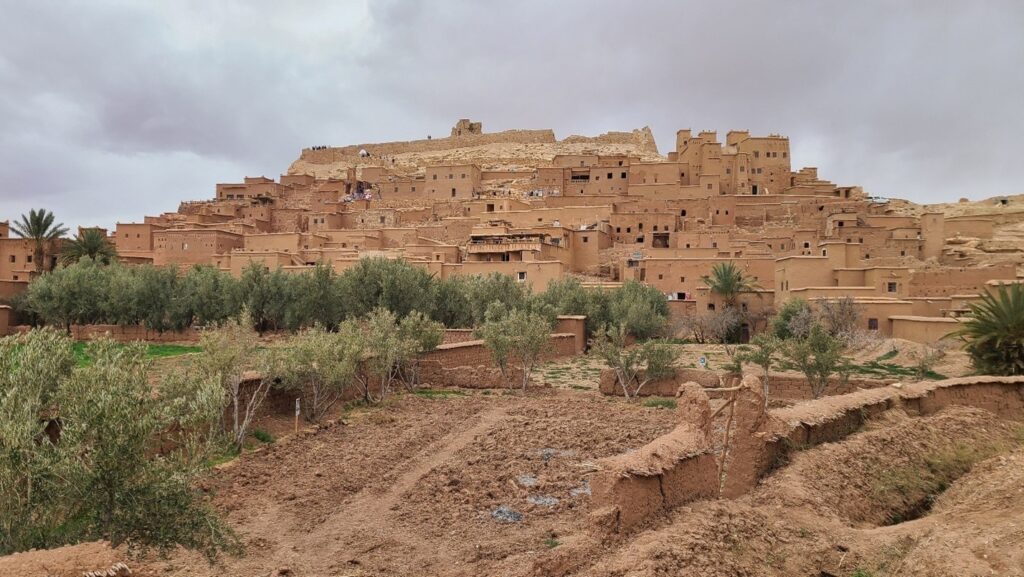
Ait Benhaddou – The Kasbah
Day 11: Saffron, Bunk Beds & Plumbing Disaster
Most of Day 11 was spent driving to Tafraoute—another long, tedious journey over roads that felt like they were designed by someone with a personal vendetta against suspension systems.
We’re not too much into carpets, so we skipped Taznakht, the carpet town. We’re very much into cooking. So instead, we stopped in Taliouine, Morocco’s saffron capital.
The cooperative we visited was run mostly by women. When we asked why, our guide explained that men lack the patience to hand‑pick each fragile flower and its three delicate stigmas during the very short harvest window. Fair point? You decide.
We learned about the process, bought some to bring home… saffron rice… yummm…
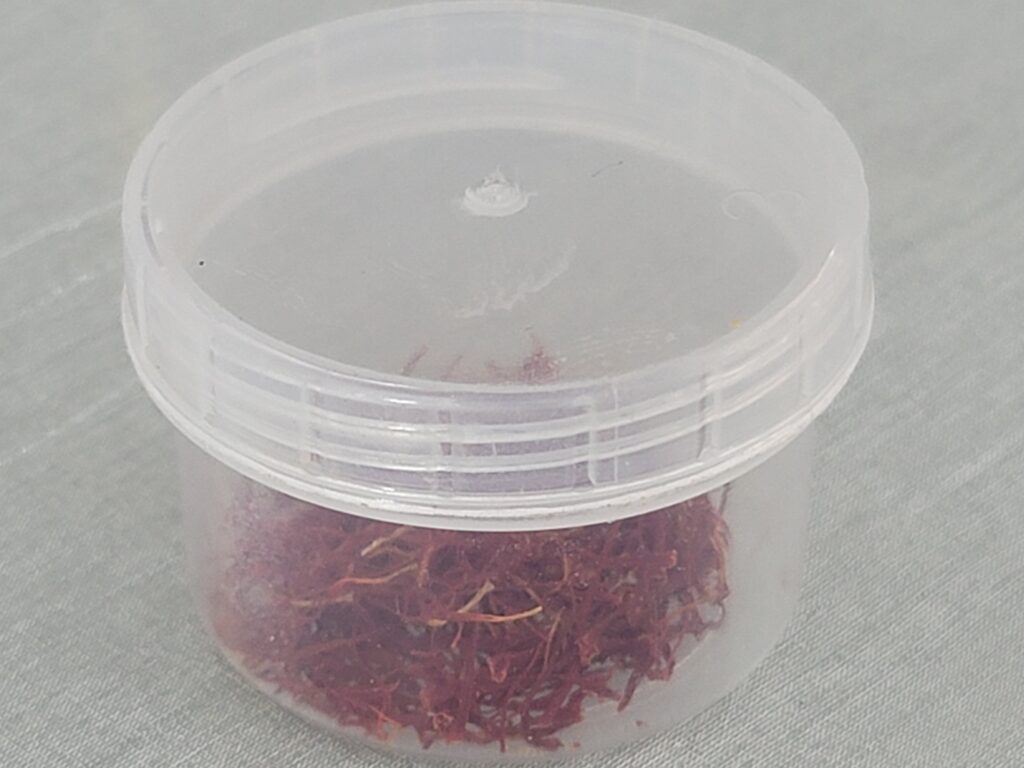
Saffron. Each gram is sealed in its own container and wrapped in foil to lock in its peak aroma and flavor.
Tafraoute – beautiful landscape, awful hotel
Then came Tafraoute. And with it, Auberge Kasbah Chez Amaliya—a name we now associate with trauma.
BEWARE.
Not only did they try to cram us and our travel companions into a shared apartment with bunk beds (yes, bunk beds), but when we finally got a separate room, it reeked of insect repellant with the subtlety of a chemical weapons test.
Later that evening, the shower turned into a flood emergency. Water poured into the room like it was a test for a fire hydrant.
When I sprinted to reception to ask for help, they didn’t believe me and insisted the room was “the best they have” (what????). After some light begging, the receptionist came to the room. When he saw the aquatic chaos, he acknowledged it and gave us towels to wipe the floor.
Thank you! Very kind of you!
There were no other hotels available, so we stayed. The owner didn’t apologize. Not even a shrug. Just bad vibes.
The only redeeming moment came from Yassine (the agent who helped us with organizing the trip, who reimbursed us for the entire stay. He had nothing to do with the mess but still took responsibility and promised to cut ties with the hotel.
Yassine, if you’re reading this—you’re the only good memory we have of this place.
The real reason we visited Tafraoute
The next day, we hiked. It was easy, scenic, and refreshingly free of plumbing disasters. Our guide shared insights about the local Berber communities, dramatic rock formations, and the argan trees dotting the landscape.
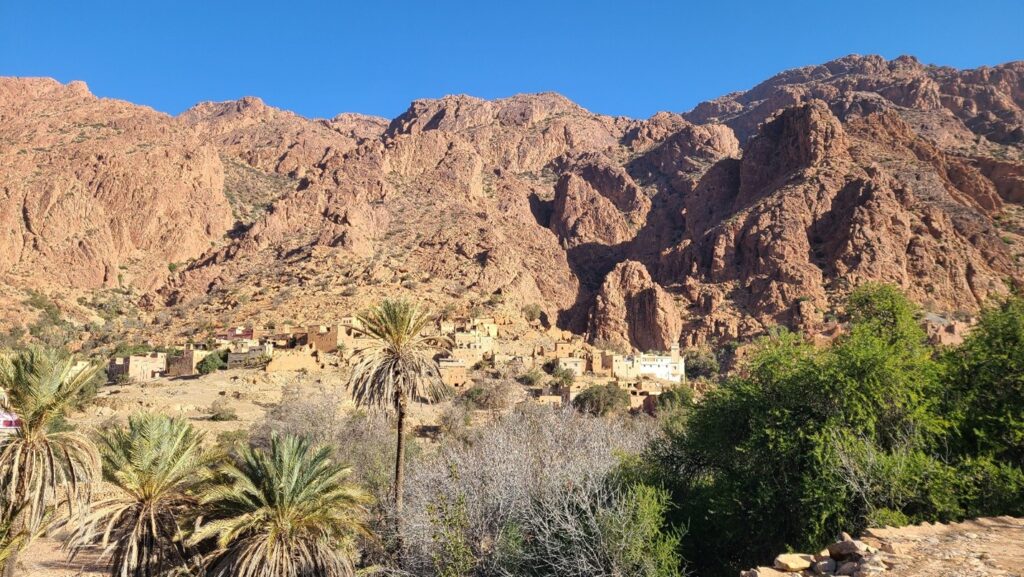
Tafraoute is a small town in the Anti‑Atlas Mountains
Tafraoute is considered Morocco’s Berber heartland, and the hike reminded us why we came here in the first place: nature and culture. One of the attractions for which people come to Tafraoute is the Lion Head – a naturally sculpted rock formation.

I hope you can see the lion head staring from the top of the mountain. It is quite easy to see it when you’re there, especially in the afternoon.
Highlights
- Todra Gorge Walk – Short, dramatic, and just enough nature to feel virtuous without breaking a sweat.
- Dades Gorge Drive – A masterclass in hairpin turns and mild passenger nausea, rewarded with jaw‑dropping views.
- La Perle du Dades – Art‑filled, cozy, and blissfully free of bunk beds.
- Ait Benhaddou Kasbah – UNESCO charm, cinematic views, and more tourists than any place that claims to be “off the beaten path”.
- Saffron Cooperative in Taliouine – High‑quality spice at a decent price and zero plumbing emergencies.
- Tafraoute Hike – Argan trees, Berber culture, and scenery that almost made us forget the hotel trauma.
FAQ — Dades, Ait Benhaddou & Tafraoute
Is the Dades Gorge worth visiting?
Absolutely — the serpentine road alone is a scenic roller coaster.
How long do you need in Ait Benhaddou?
2-3 hours is enough to explore the kasbah and viewpoints.
Is Tafraoute worth the long drive?
Yes for the landscapes and Berber culture. No for the hotel we stayed in.
Where does Morocco’s best saffron come from?
Taliouine — home to some of the world’s highest‑quality saffron
← Previous: Part 4 – Sahara: Camels, Sandstorms & One Majestic State of Mind
Next: Part 6 – From Goat Poop to Sardines: A Moroccan Odyssey→