Tag: marrakech

  • From Marrakech to Casablanca: A Moroccan Finale

    From Marrakech to Casablanca: A Moroccan Finale

    Morocco Series Part 7: Hammams, Grappa, Tassel Physics & A Time Zone Plot Twist


    The next day was a full-on cultural marathon. Our guide, Amine, was a rockstarโ€”smart, openโ€‘minded, professional. Simply the best guide we had on the trip. We started at the Koutoubia Mosque (viewing only, as nonโ€‘Muslims arenโ€™t allowed inside), then dove straight into the medinaโ€™s chaos: souks, bakeries, spice shops, galleries, and a hammam.
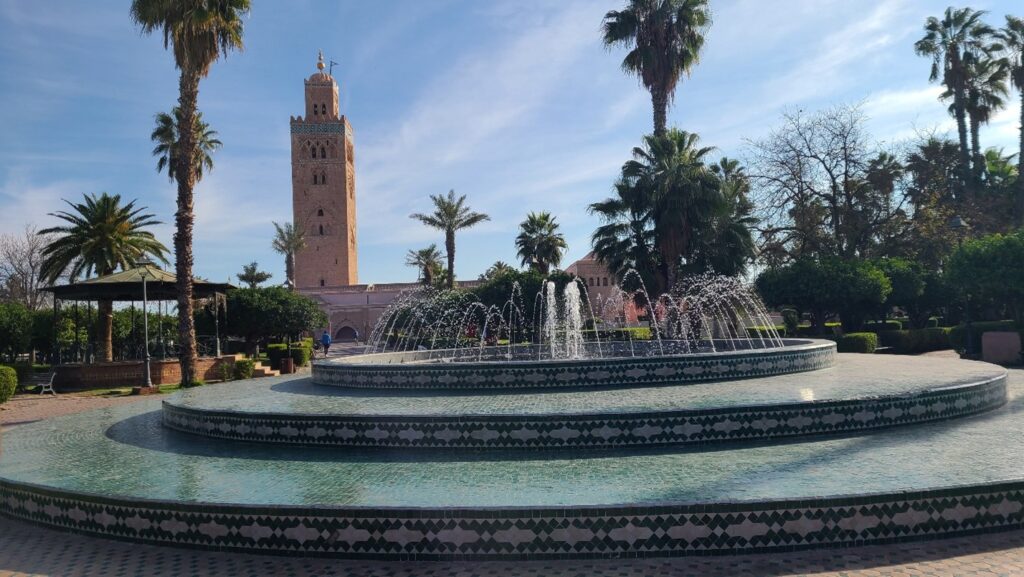
    Koutoubia Mosque exterior in Marrakech

    Koutoubia Mosque Marrakech

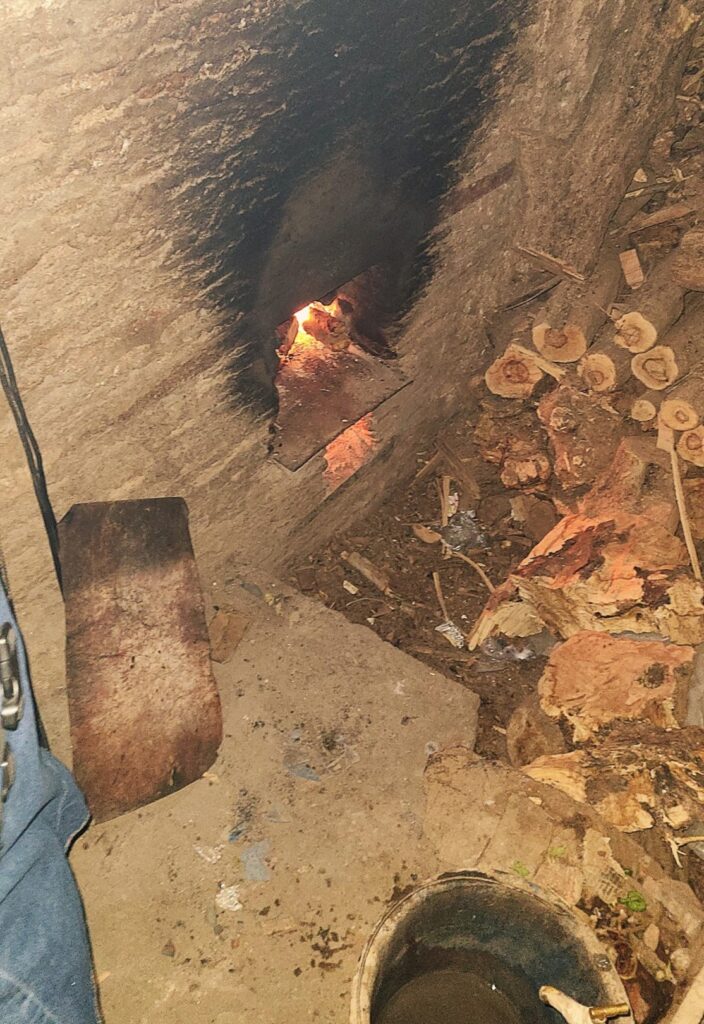
    We learned the difference between Moroccan and Turkish hammams. Turkish = spaโ€‘lite, foam massage, gentle sighs. Moroccan = industrialโ€‘grade exfoliation, black soap, a Kessa glove, and a heating room usually located in the basement. Oppressive heat radiates from every surface, and the smoke clings to the air, making each breath a challenge. It feels like Satanโ€™s sauna. The workers down there deserve medalsโ€”or at least hazard pay.

    Moroccan hammam steam room interior

    The heating room of a hammam in Marrakech

    Historical highlights included:

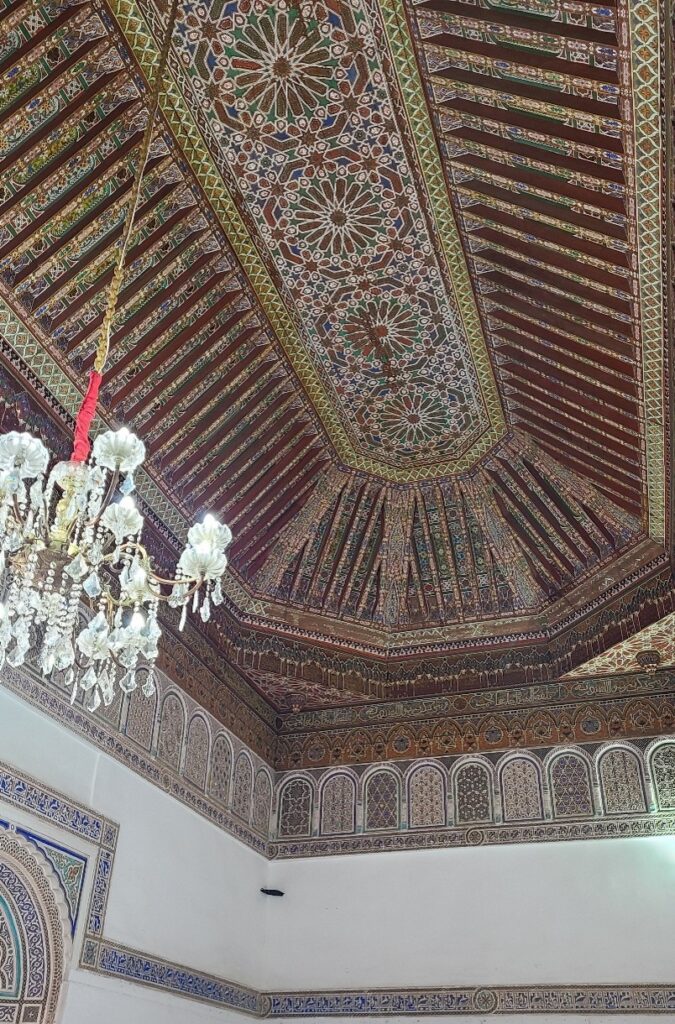
    • Palais Bahia โ€“ a 19th century palace of the Grand Vizier – the ceiling of all the halls is magnificent with its intricate geometric and floral patterns and richly painted woodwork
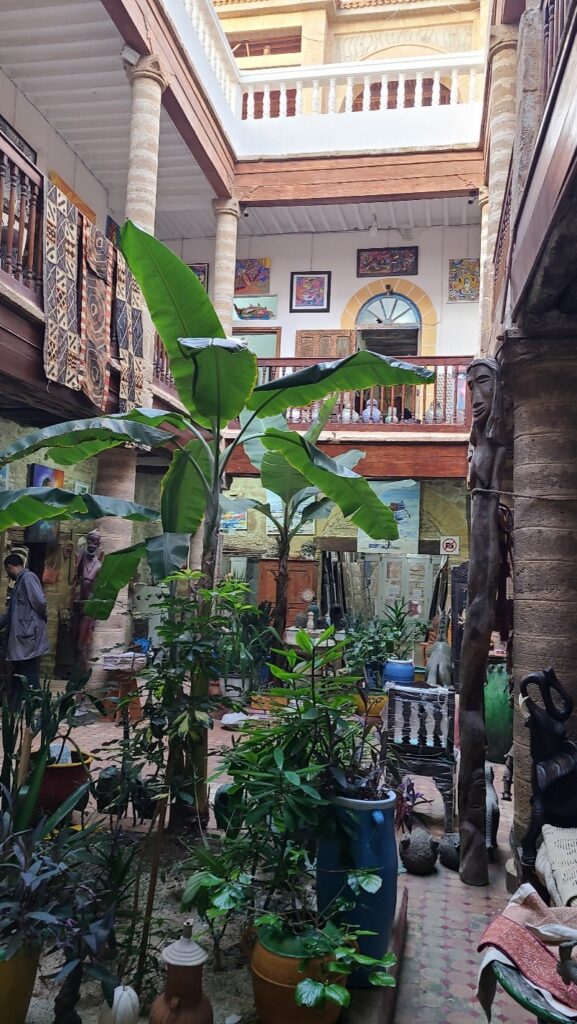
    Palais Bahia courtyard

    Bahia Palace patio

    Palais Bahia painted ceilings

    The ceiling of one of the halls of the Bahia Palace

    • The Jewish synagogue and cemetery that includes a museum showcasing the life of jews in Marrakech.
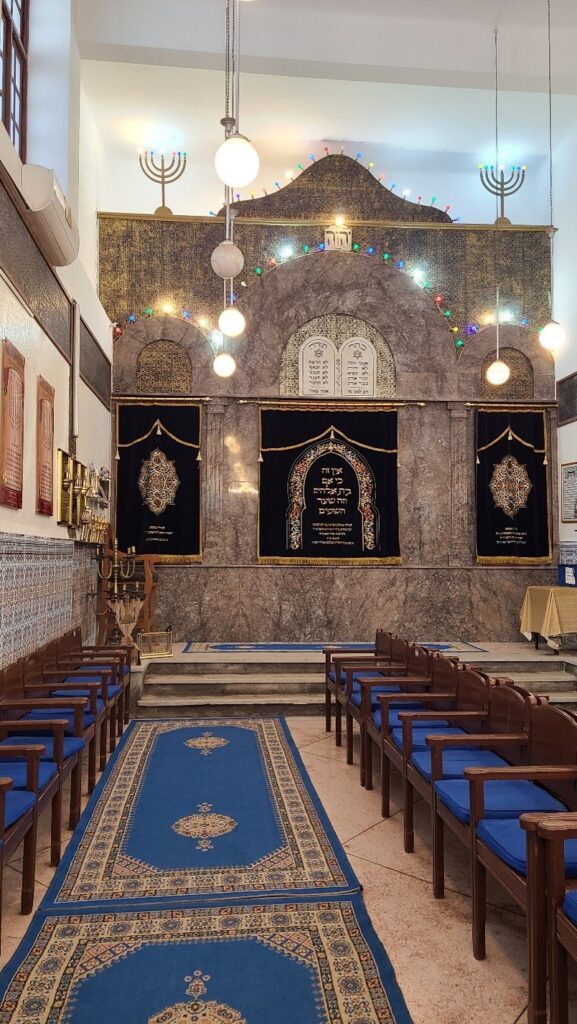
    Marrakech Synagogue

    Marrakech Synagogue

    • The Saadian tombs – a historic royal necropolis located in theย Kasbah. They date to the 16th century although members of Morocco’s monarchy continued to be buried there for a time afterwards. The complex is regarded as the high point of Moroccan architecture due to its luxurious decoration and interior design
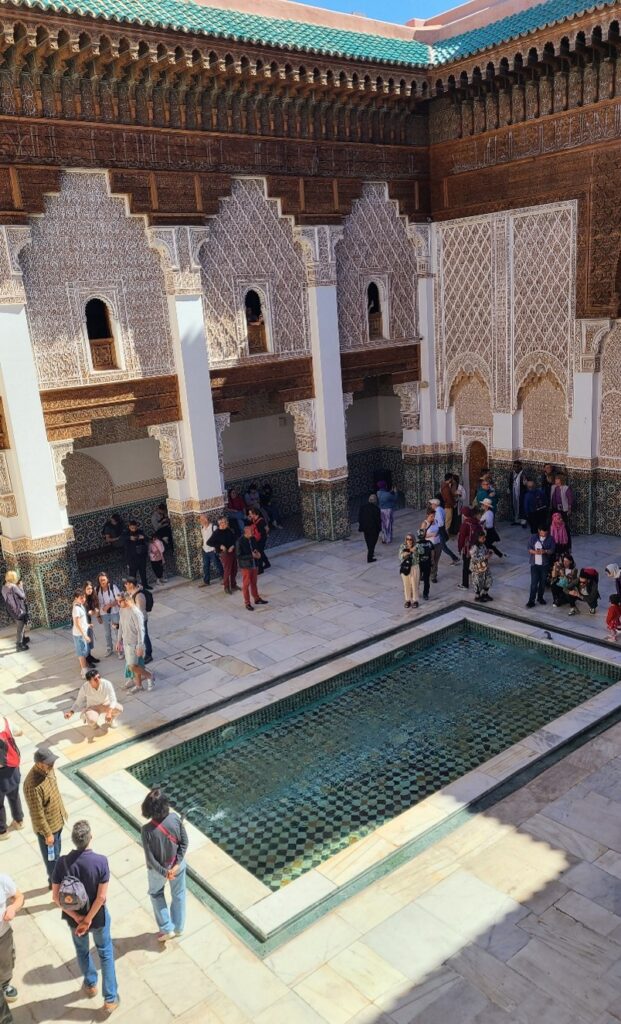
    • Madrasa Ben Youssef – built in the 14th century. It was originally built as a religious school for Islamic studies one of the most popular spots in Marrakech. Surprisingly peaceful and quiet despite being in the heart of the medina.ย 

    At the end of a long day we went for dinner at Yazel, a small Lebanese spot with a breezy balcony and a menu of hummus, baba ghanoush, falafel, and fresh salads. Light, tasty, and just what we needed before the eveningโ€™s main event: the Churchill Bar at La Mamounia.

    We took an InDrive cabโ€”Moroccoโ€™s unofficial Uber. Itโ€™s technically illegal, operates in a legal gray zone. Itโ€™s ride-sharing meets bazaar economics: you name a price, they decide if youโ€™re worth the gas. It doesnโ€™t that it is cheaper than a regular cab, but regular cabs are elusive during peak hours. Now there’s Uber in some of the big cities. Not sure how reliable it is. Worth trying anyway. Bottom line: use whatever works.

    La Mamounia is stunning. The gardens glow at night, the lobby oozes elegance, and the bars are not just bars, they are curated mood boards of drinking experiences. We chose the Churchill Bar named after the British PM who was a frequent guest at the hotel. It is small and intimate (two small tables and 12 seats surrounding the bar itself) and unapologetically old-school. The bartenders are pros, mixing drinks with quiet confidence and zero flair bartending nonsense. The focus here is whisky, but the free Moroccan olives and macadamia nuts deserve their own honorary mention.
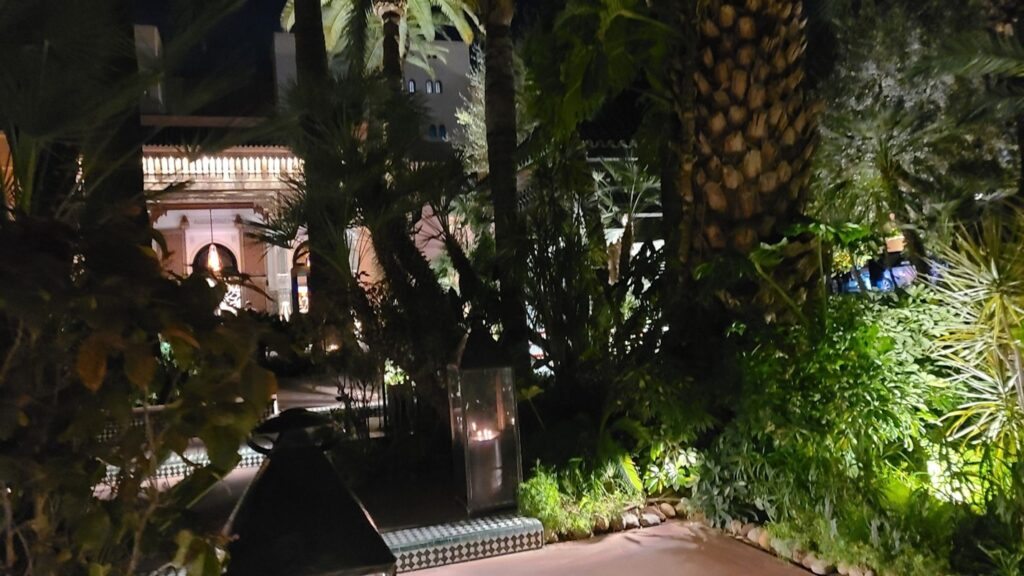
    La Mamounia Hotel Garden at night

    La Mamounia Hotel Garden at night

    We went rogue and ordered a 21-year-old grappa: La Mamounia Gran Riserva. Amber-hued, nutty, with vanilla, dried fruit notes and even some smokiness. Not your typical grappa, but complex and memorable.
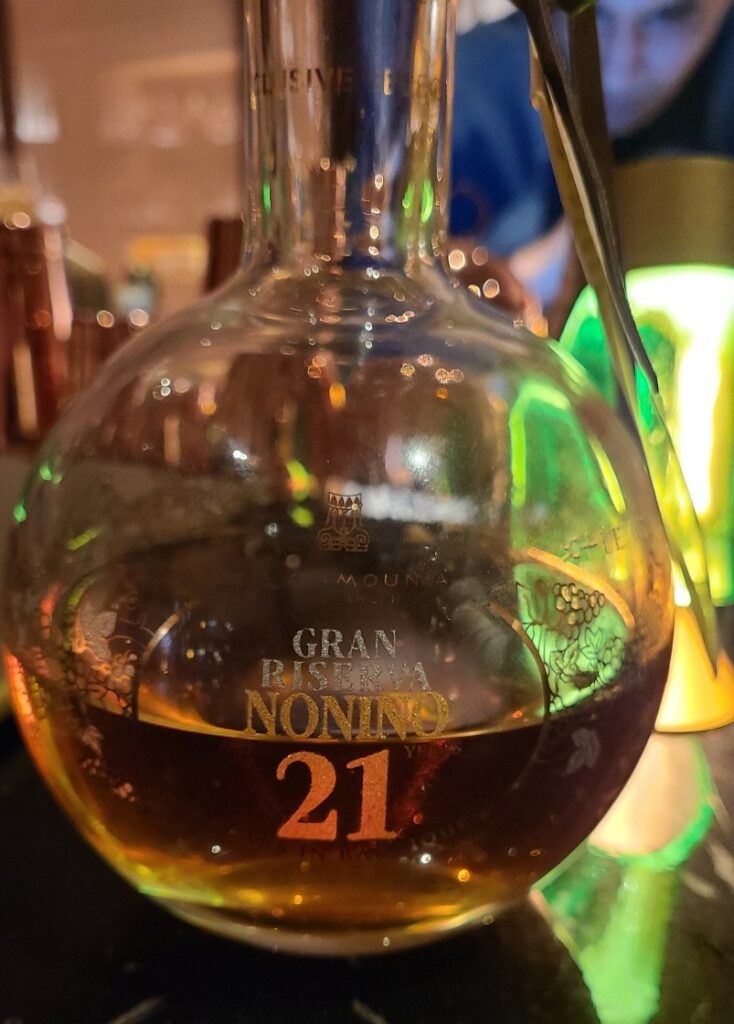
    Grappa Nonino La Mammounia Gran Riserva

    Grappa Nonino La Mammounia Gran Riserva – worth every penny

    We chatted with a lovely Moroccan couple and their daughter, a physician visiting from Spain. The evening was a perfect blend of luxury, conversation, and alcohol-induced wisdom.

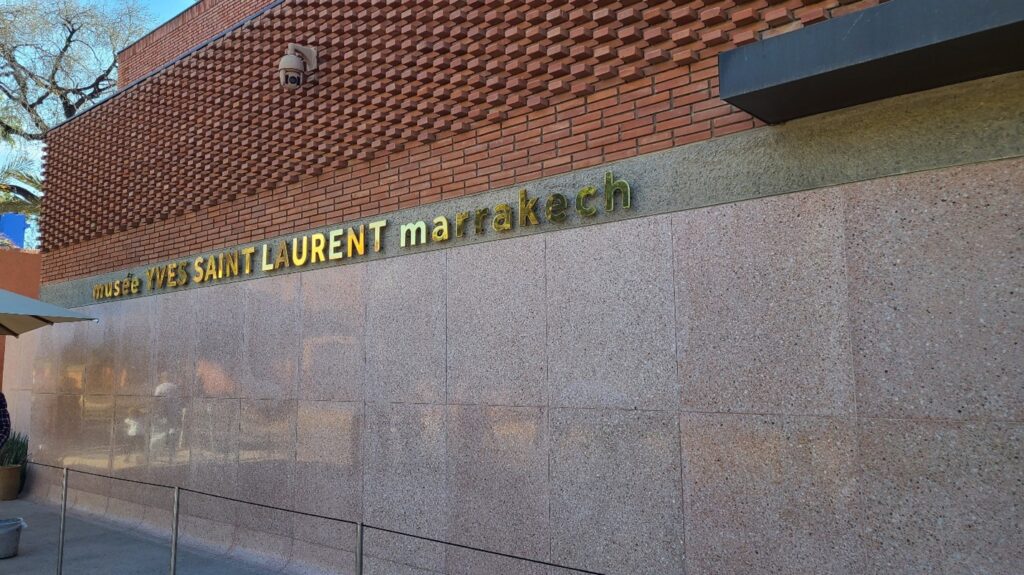
    The next morning, we tried to visit Jardin Majorelle and the Yves Saint Laurent Museum. No luck with the gardenโ€”sold out. The museum, however, was a win. Itโ€™s well-curated, with exhibits on YSLโ€™s life, inspirations, and iconic designs. Thereโ€™s even a short documentary in a cozy little theatre. Pro tip: book your tickets in advance, especially if you want to see both. Donโ€™t trust the websites. Call. Seriously.

    Yves Saint Laurent Museum exterior

    Yves Saint Laurent Museum in Marrakech

    For our final night in Marrakech, we returned to Djemaa el-Fna for the full nocturnal experience. We ate tangia at Chez Hassanโ€” lamb stew slow-cooked in a clay pot with preserved lemon and spices. Add fries and salad, and youโ€™ve got Moroccan comfort food at its finest. The staff were warm, welcoming, and clearly proud of their craft.
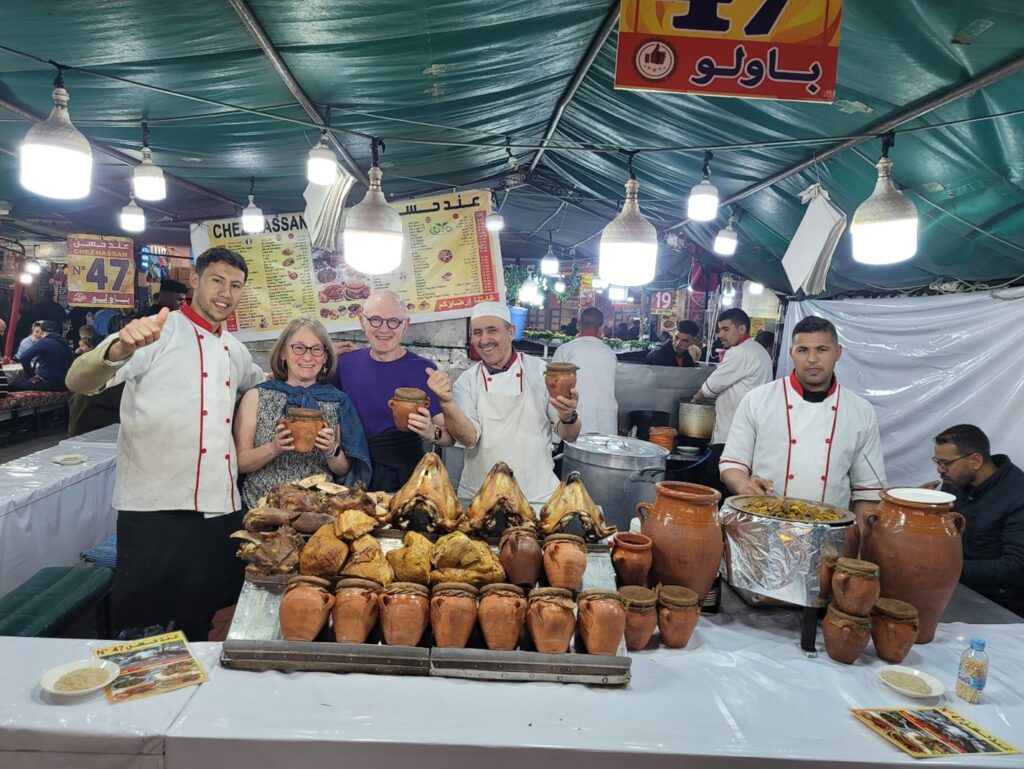
    Tangia dish at Chez Hassan

    Chez Hassan in Jamaa el Fnaa. We are holding tangia pots in which the stew is made.

    After dinner, we caught a spontaneous Berber percussion concert. One dancer spun his tassled hat with such intensity Iโ€™m convinced heโ€™s immune to vertigo. We ended the night with a rooftop drink, saying goodbye to this beautiful and fascinating city.
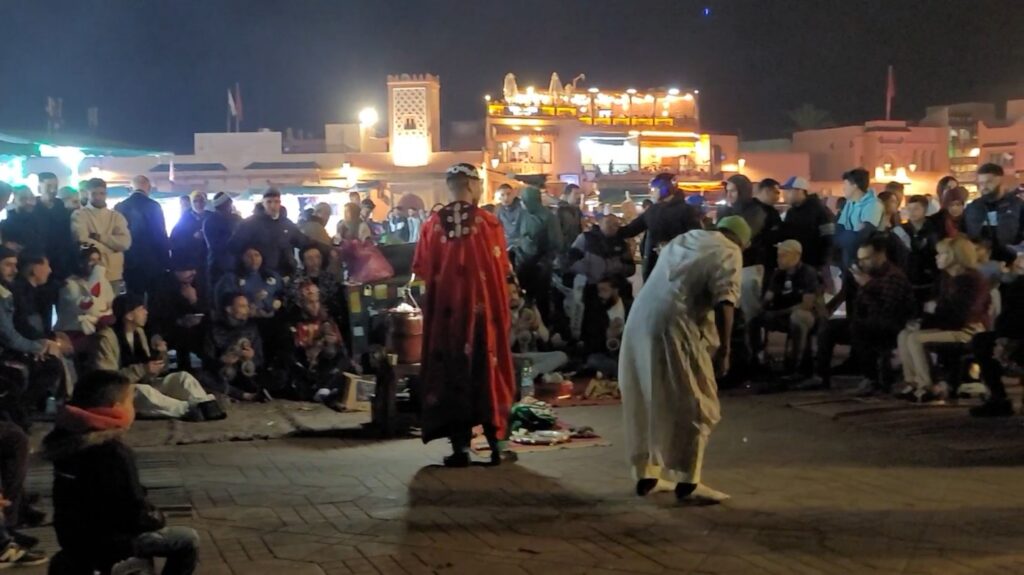
    Berber dancer spinning tasselled hat

    Many small groups of percussionists perform in Jamaa el Fnaa during the evening and night. The rhythm is thrilling and sometimes a man starts dancing with the shashiya (hat with a twirling tassel).
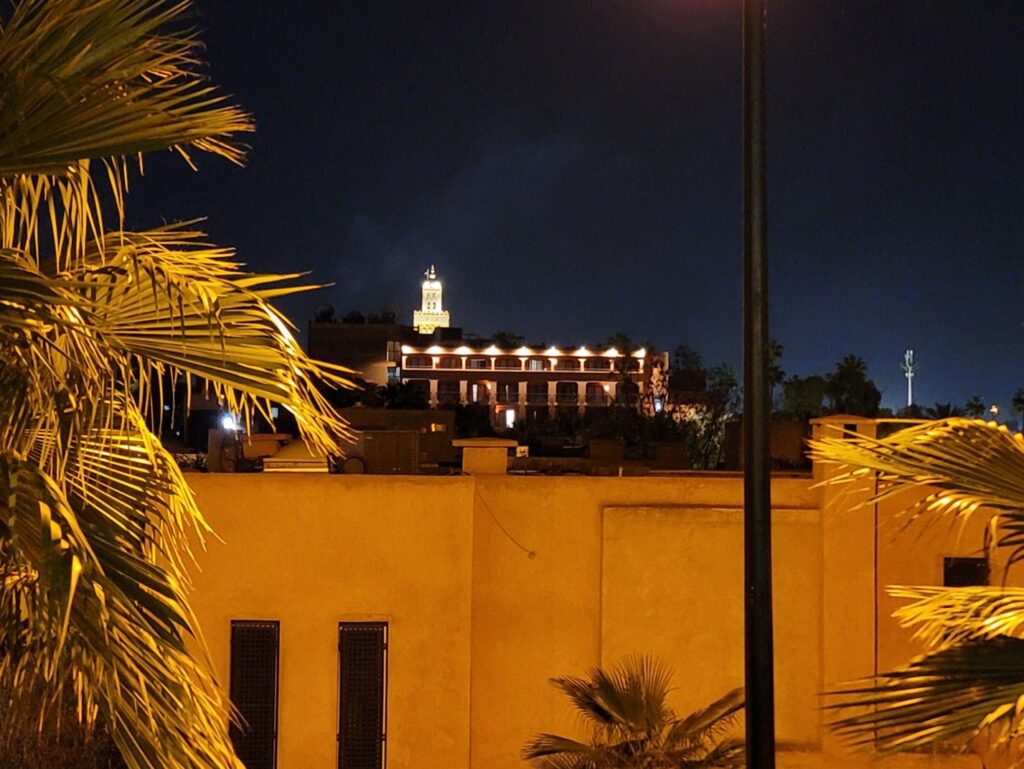
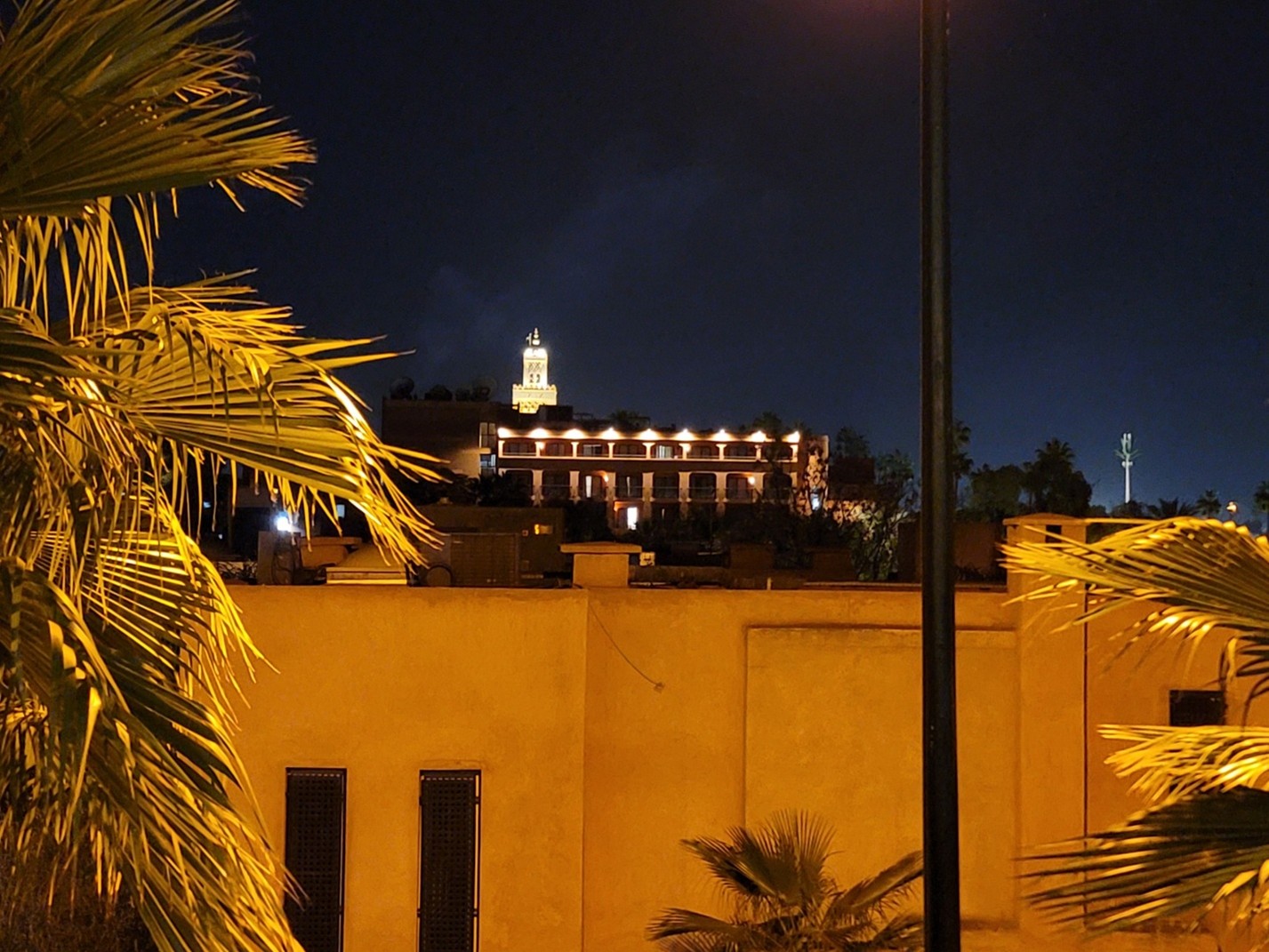
    Koutoubia Mosque at night as seen from the rooftop bar we said goodbye to Marrakech

    The next morning: Casablanca. Big, gritty, and not exactly charming. Itโ€™s lost much of its mid-century allure and isnโ€™t known for safety or ambiance. We had half a day, and our main goal was the Hassan II Mosqueโ€”the only one in Morocco open for visit to non-Muslims. Itโ€™s a majestic architectural masterpiece.
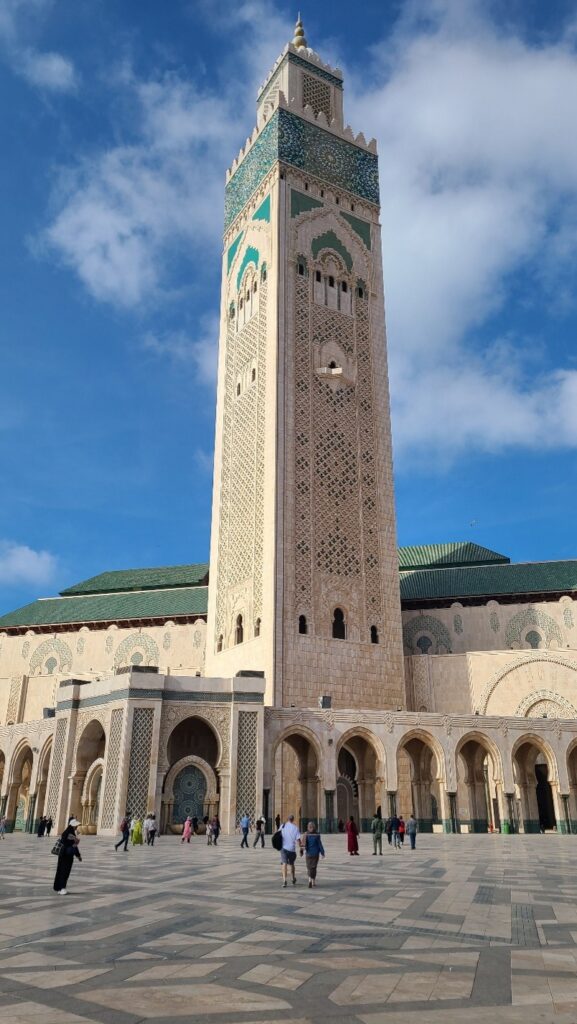
    Hassan II Mosque exterior in Casablanca

    Hassan V Mosque in Casablanca

    Unfortunately, Morocco switched time zones (GMT+1 to GMT) for Ramadan, and the mosqueโ€™s website forgot to mention it. We arrived too late for the guided tour. No entry. Lesson learned: always call ahead, especially during Ramadan. Websites are not always accurate.

    We passed Rickโ€™s Cafรฉ on the way back. Didnโ€™t feel the need to eat a burger there, but snapped a photo for nostalgiaโ€™s sake. Because yes, weโ€™re old enough to know that there was a movie named Casablanca.
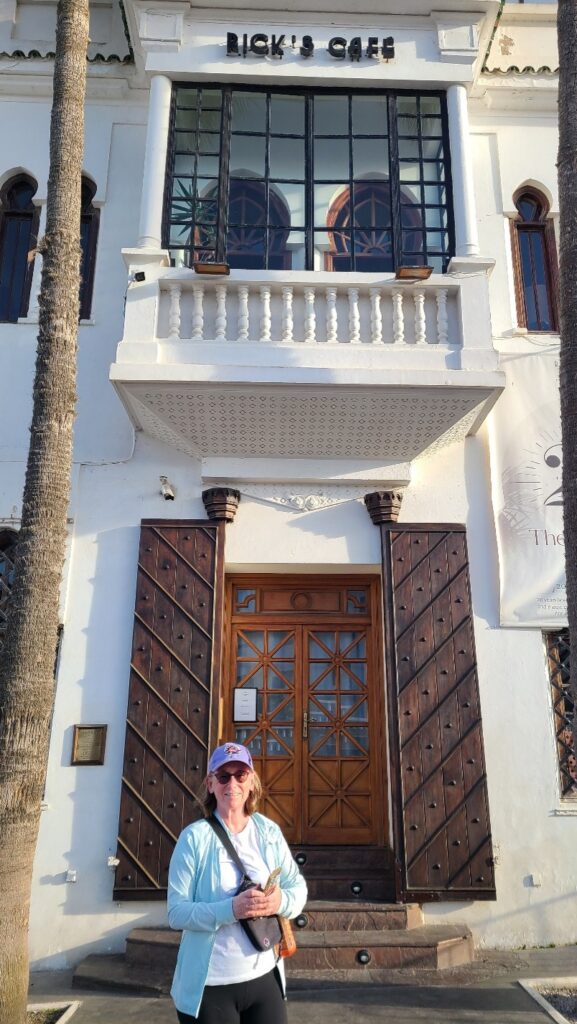
    Rickโ€™s Cafรฉ Casablanca entrance

    Netta in front of Rick’s Cafe in Casablanca

    • Amine, THE guide we had in Morocco
      Souks, hammams, and historical sites with actual insight and zero fluff.
    • Hammam heat and exfoliation trauma
      Moroccan hammams: where relaxation goes to die and your dead skin cells go to heaven.
    • Palais Bahia, Saadian Tombs, and Madrasa Ben Youssef
      Architecture so ornate it makes your IKEA bookshelf feel like a war crime.
    • Yazelโ€™s Lebanese palate cleanse
      Simple and tasty falafel and hummus before diving into La Mamouniaโ€™s liquid luxury.
    • InDrive: Moroccoโ€™s ride-hailing app with trust issues
      Like negotiating in a souk, but with fewer rugs.
    • Churchill Bar at La Mamounia
      Grappa, macadamias, and Moroccan olives in a whisky temple that whispers elegance.
    • Yves Saint Laurent Museum (but not the Majorelle garden)
      Fashion, flair, and a reminder to always book aheadโ€”especially when websites are not completely accurate.
    • Tangia at Chez Hassan in Djemaa el-Fna
      Clay-pot lamb stew, fries, and salad served with genuine warmth and zero pretension.
    • Berber percussion concert & tassel physics
      A dancer defies dizziness while your brain defies logic.
    • Casablancaโ€™s brief cameo
      Hassan II Mosque missed due to time zone trickery. Rickโ€™s Cafรฉ visited for the photo,

    Is a Moroccan hammam really that intense?

    Yes. If a Turkish hammam is a warm hug, a Moroccan hammam is a full-body audit. Expect heat, steam, black soap, and exfoliation that removes sins you didnโ€™t know you committed.

    Is La Mamounia worth visiting even if youโ€™re not staying there?

    Absolutely. Go for a drink or for dinner at one of their 4 bars or 4 restaurants, admire the gardens, and enjoy great service.

    Should I use InDrive in Marrakech?

    Use whatever gets you from A to B. InDrive works, but itโ€™s negotiationโ€‘based and technically not legal. Regular cabs vanish at peak hours, so flexibility is your friend. Now there’s Uber in a few big cities. Not sure how it works.

    Do I need to book Jardin Majorelle and the YSL Museum in advance?

    Yes. Online info can be unreliable, so call. Some Moroccan websites have a casual relationship with accuracy.

    Whatโ€™s the mustโ€‘eat dish in Marrakech at night?

    Tangia at Chez Hassan in Djemaa elโ€‘Fna. Clay pot, slowโ€‘cooked lamb, preserved lemon, fries, salad. Zero pretension, maximum comfort.

    Is Casablanca worth more than a halfโ€‘day?

    Depends on your tolerance for grit. Itโ€™s not Moroccoโ€™s prettiest city, but the Hassan II Mosque is spectacularโ€”if you manage to catch the tour.

    Why did we miss the Hassan II Mosque tour?

    Morocco switched time zones for the month of Ramadan and the website didnโ€™t update. Moral of the story: always call ahead.


    โ† Previous: Part 6 โ€“ย From Goat Poop to Sardines: A Moroccan Odyssey
  • From Goat Poop to Sardines: A Moroccan Odyssey
    From Goat Poop to Sardines: A Moroccan Odyssey
    Morocco Series Part 6: Tafraoute Goats, Essaouira Seafood & Marrakechโ€™s First Act

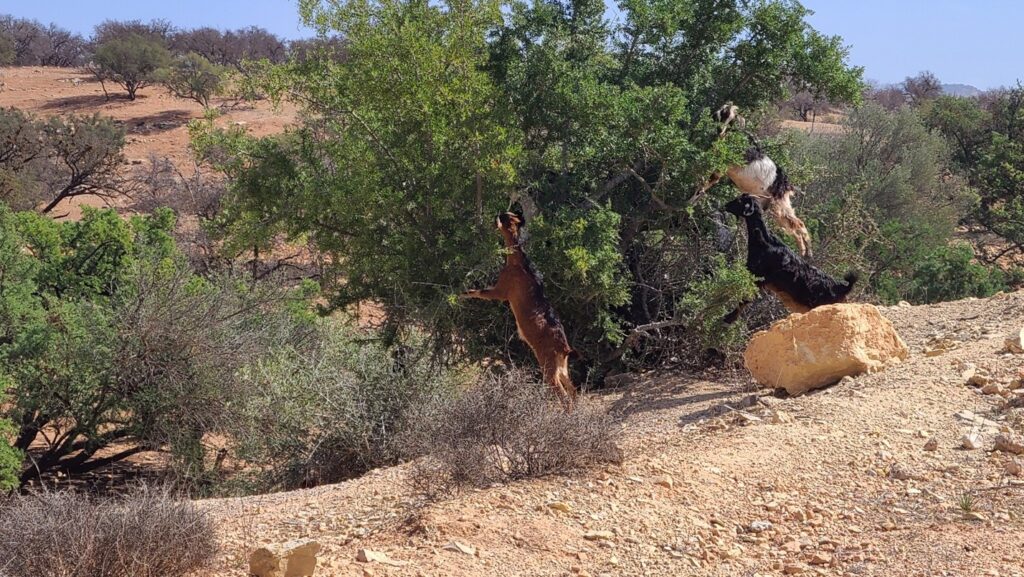
    We left Tafraoute and the Atlas Mountains in the morning, heading west toward Essaouira. The highlight of the drive came dangling from trees: goats. Yes, actual goats perched in argan trees, munching away on the fruit like itโ€™s their personal buffet. Itโ€™s hilarious until you realize theyโ€™re part of the argan oil production chain. Natureโ€™s little tricks.

    For those interested in the details, hereโ€™s the glamorous truth: argan oil starts with goat digestion. The animals canโ€™t digest the seeds, so they either spit them out (clean and ready for processing) or pass them through their digestive system, softening the shell in the process. Either way, the goats do the prep work. Humans then collect the debris (a polite word for goat poop), crack the shells, roast the kernels, grind them into paste, and knead out the oil. It takes about 30 kilos of nuts to produce one kilo of oil. Thatโ€™s a lot of goat labor (and poop). It resembles the process of making elephant coffeeโ€”Black Ivory Coffeeโ€”except the elephants donโ€™t have to climb trees for their beans. Easier work.

    Nowadays, production is mostly done in women-run cooperativesโ€”similar to saffron farming. The cosmetic-grade oil is prized for its skin benefits, but the culinary version is a nutty little surprise. Pricey, yes, but you only need a few drops. I bought a couple of bottles. No regrets.

    Goats in argan trees along the road to Essaouira

    Goats eating argan fruit.

    We made a quick detour to Agadirโ€”a modern beach city with wide boulevards and a vibe that screams โ€œpackage holiday.โ€ Itโ€™s fine. But Essaouira, just up the coast, is where things get interesting. Smaller, breezier, and infinitely more charming. The fishing port is buzzing, the arts scene is alive, and the medina (a UNESCO World Heritage Site) is a maze of whitewashed walls and blue doors. The nightlife is also quite vibrant. It is one of those places you want to stay one more day.

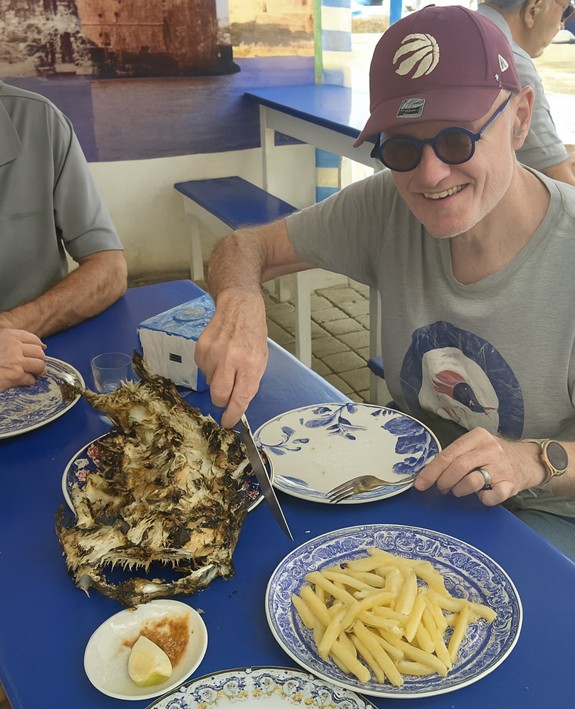
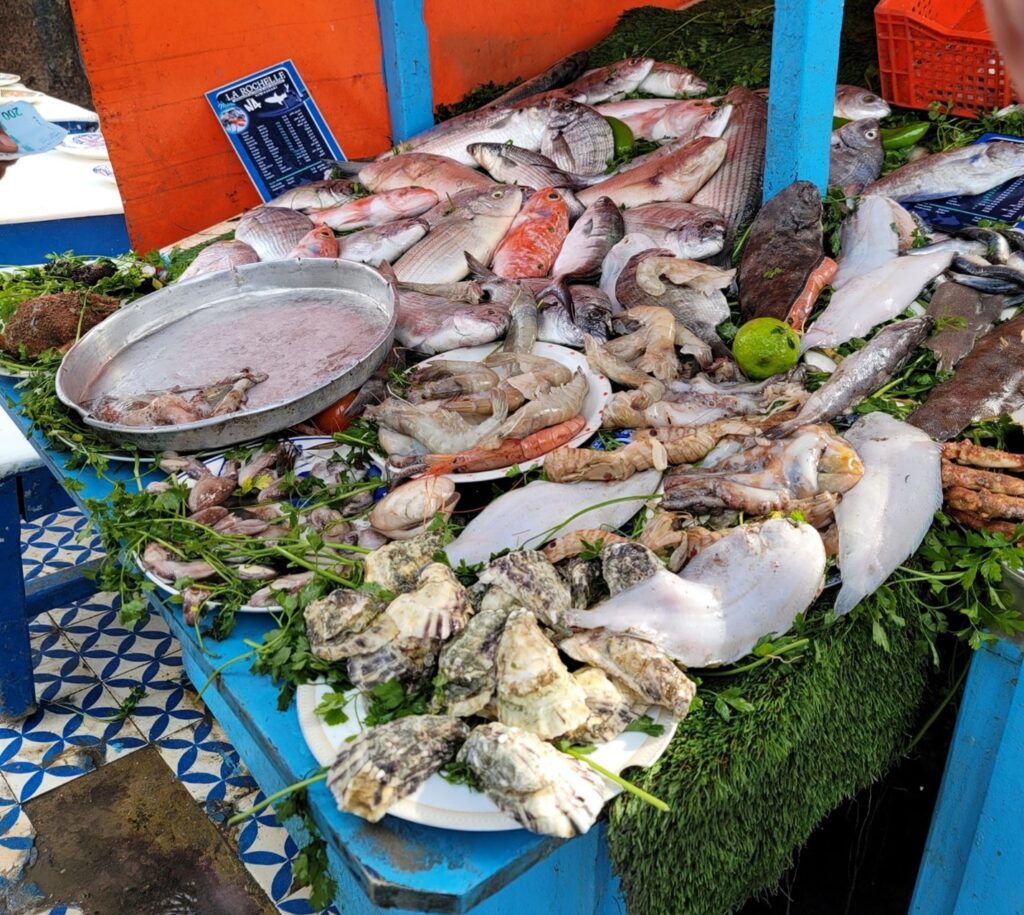
    Upon arrival, we skipped the usual hotel check-in routine and went straight to the fish market. Maybe not the cleanest place in the world, but the food is simple and perfect. Dozens of restaurants compete for your attention. We settled on a place that served monkfish, shrimp, langoustines, salad, and fries. Nothing fancyโ€”just fresh, grilled, and perfect.

    Seafood stall at Essaouiraโ€™s seafood market

    Essaouira fish market – catch of the day

    Here I am the surgeon dissecting the monk fish

    Cars arenโ€™t allowed in the medina, so we hired one of the many cart-wielding men to haul our bags to Riad Al Zahia. The hotel was fine. The rooftop view (where they also serve breakfast) was great. Sadly, we only had one night in Essaouira. The medina is a bit touristy, but itโ€™s still a joy to wander: art galleries, shops, bars with live music, and that laid-back coastal vibe.

    Inside a gallery in Essaouira medina

    Inside one of the art galleries in Essaouira medina

    Next stop: Marrakech. And if Morocco were a movie, Marrakech would be the acting star.

    Marrakech Arrival: The City That Knows Itโ€™s Famous

    We arrived in Marrakech and said goodbye to Muhammad, our driver for the past two weeks. It was a bit emotionalโ€”not just because the trip was nearing its end, but because Muhammad was genuinely great. Funny, helpful, and full of insights about Moroccoโ€™s culture, quirks, and contradictions. He was far more than a driver; he was our unofficial ambassador.

    We checked into La Maison Arabe, a lovely 5-star hotel. Not quite La Mamounia (more on that in the next post), but still a solid choice. The rooms are spacious, the service impeccable, and the breakfast buffet was full of delicacies and could feed a small army. The only downside? The place goes into hibernation in the late evening. The bar closes early, and the vibe is more โ€œspa retreatโ€ than โ€œnightlife.โ€ Still, highly recommendedโ€”just donโ€™t expect a party.

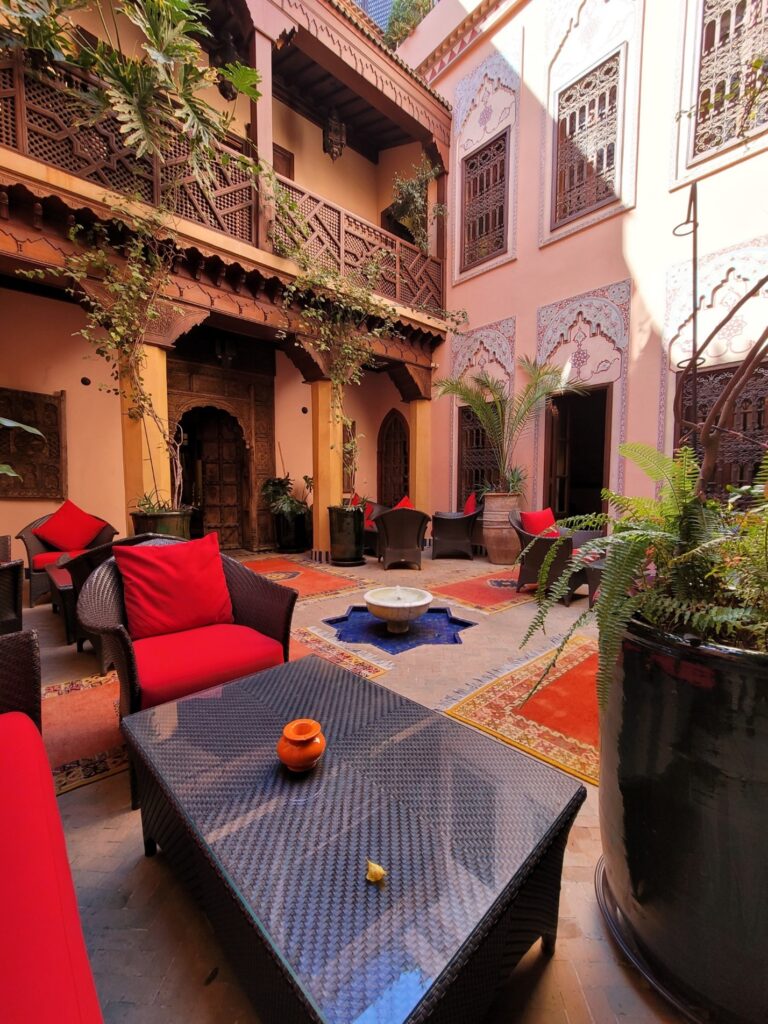
    La Maison Arabe hotel patio in Marrakech

    La Maison Arabe – the patio in one of the two buildings

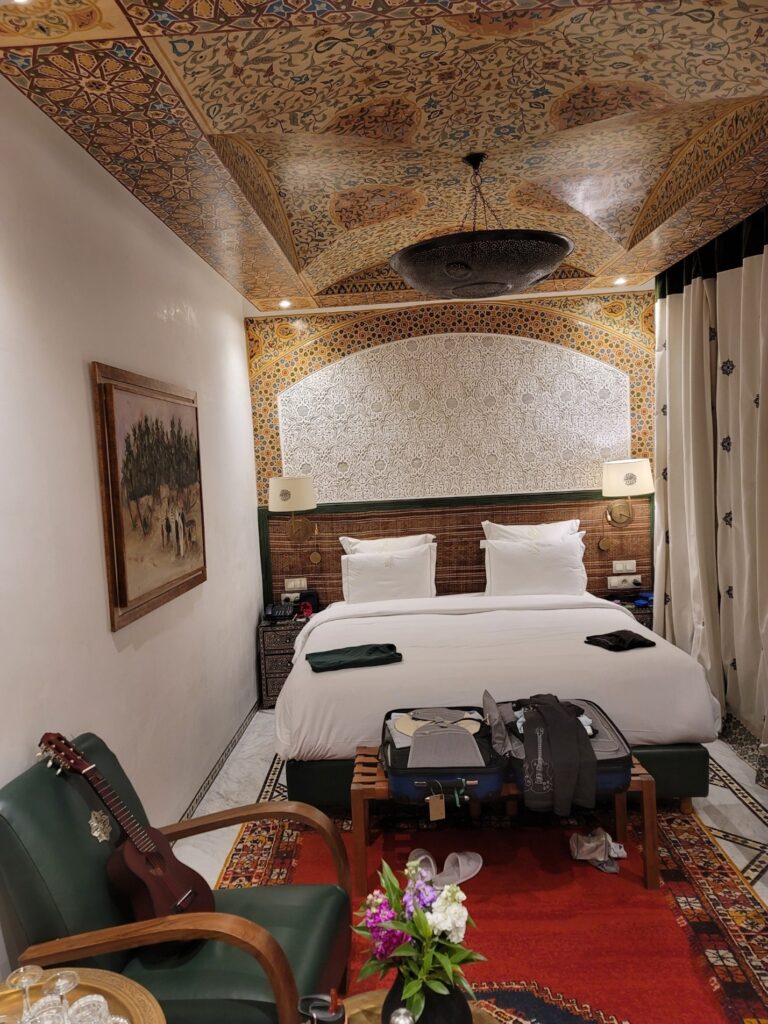
    Our room at La Maison Arabe

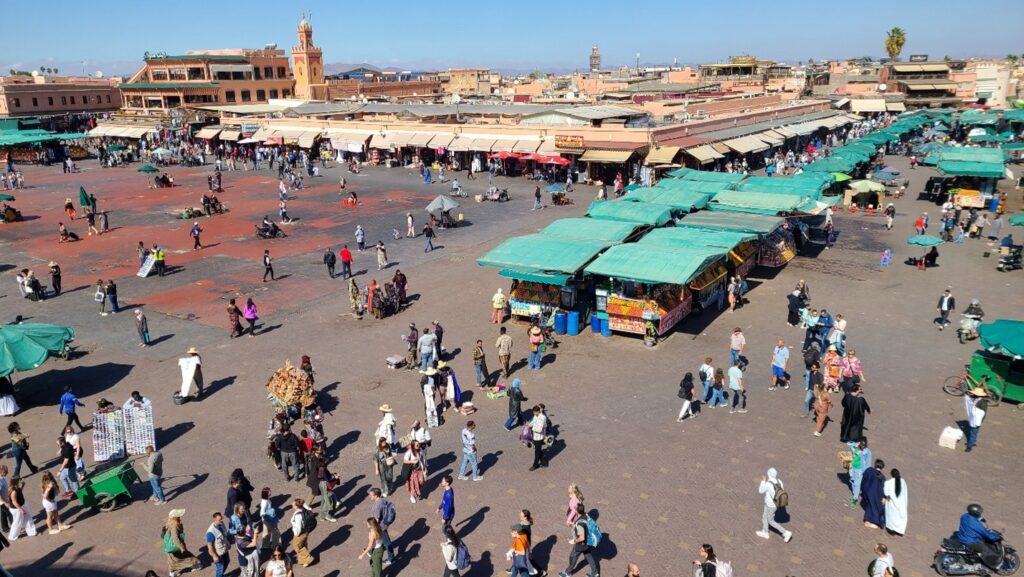
    First stop: Djemaa el-Fna. Weโ€™d read about it before arriving, and it lived up to the hypeโ€”eventually. In the afternoon, itโ€™s relatively tame: juice stands, ice cream carts, and a few sweet stalls. We climbed to a rooftop cafรฉ and watched the square slowly wake up. Itโ€™s like observing a volcano before it erupts.

    We wandered through the medina, got pulled into shops we didnโ€™t plan to enter, and bought souvenirs we didnโ€™t need (not different than in many other places in the country). Moroccan merchants could sell sand in the Sahara. Resistance is futile.

    Djemaa el-Fna square in Marrakech at sunset

    Djemaa el Fna in the afternoon. Not so exciting at that time of the day.

    Netta checking one of the local traditional instruments, which we eventually bought

    Dinner at Nomad: Where the Sardine Tarte Stole the Show

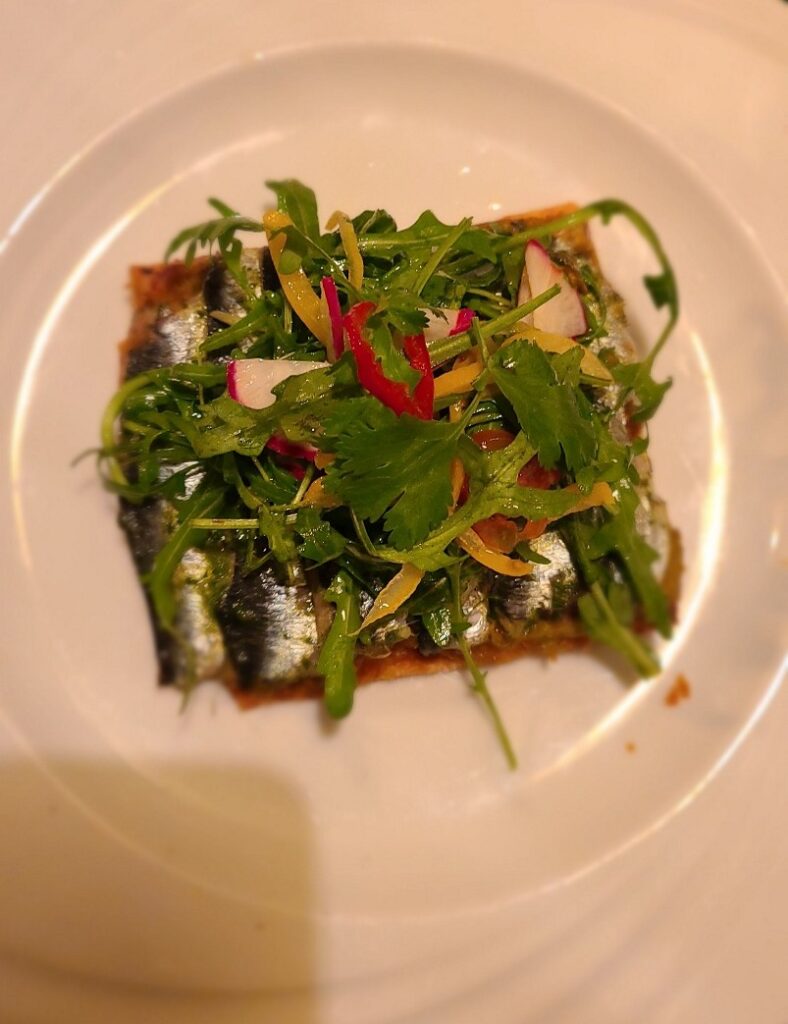
    Dinner was at Nomad (not the one in NYC, though the name drop could be intentional). Itโ€™s Moroccan cuisine with a modern twist. The lamb chops were tender and juicy, but the sardine tarte stole the showโ€”fresh herbs, some of which brought nice bitterness, and others balanced with a bit of sweetness, covered umami-packed sardines, preserved lemon, spicy chilies, and that glorious Moroccan olive oil. Even if quite simple, it was the best dish we had in Morocco.

    Sardine tarte at Nomad restaurant in Marrakech

    Sardine tarte at Nomad Restaurant in Marrakech

    • Tree-climbing goats & argan oil reality check
      Natureโ€™s weirdest interns kick off the trip with digestive contributions to Moroccoโ€™s beauty industry.
    • Essaouiraโ€™s fish market frenzy
      Monkfish, langoustines, and salad in a slightly grimy but gloriously fresh seafood haven.
    • Riad Al Zahia & medina logistics
      No cars allowed, but plenty of cart-wielding men ready to haul your luggage like itโ€™s treasure.
    • Essaouiraโ€™s artsy, touristy charm
      UNESCO medina, live music, and galleriesโ€”just enough vibe to make you wish for one more night.
    • Marrakech madness begins
      Goodbye to our more-than-only-driver Muhammad, hello mint tea, medina chaos, and rooftop coffee surveillance.
    • Nomad restaurantโ€™s sardine tarte revelation
      A modern Moroccan masterpiece: sardines, herbs, chilies, and olive oil in perfect harmony.

    Is Essaouira worth a stop even for just one night?
    Yes. Itโ€™s breezy, charming, and fun. Youโ€™ll wish you had more time.

    Is La Maison Arabe a good alternative to La Mamounia?
    Absolutelyโ€”unless you want nightlife. Then youโ€™ll need to look elsewhere.

    Do the goats really climb trees?
    Yes. And they are so hungry they don’t care about the passerby.

    Is Nomad Marrakech a good restaurant?
    Yes. Strongly recommended. Order the sardine tarte and thank me later.

    โ† Previous: Part 5 Dades, Ait Benhaddou & Tafraoute: Pizza, Saffron, and a Shower That Tried to Kill Us

    Next: Part 7 From Marrakech to Casablanca: A Moroccan Finaleโ†’

  • Morocco: A practical guide, unsolicited opinions and  some food heresy

    Morocco: A practical guide, unsolicited opinions and some food heresy


    Morocco Series Part 1: Practical and Useful Tips, Unsolicited Opinions, and Culinary Controversies

    Weโ€™d long wanted to visit Moroccoโ€”a country where African, Arab, Berber, and European influences mix together in a kaleidoscope of color, sound, and occasional sensory overload. We came to see the cities and villages with their unique architecture, to get lost in the labyrinthine souks (on purpose, mostly), and to better understand Moroccoโ€™s ancient traditions. But letโ€™s be honest: we mostly came for the Sahara.

    Valentin, wife and friends on camels in the Sahara

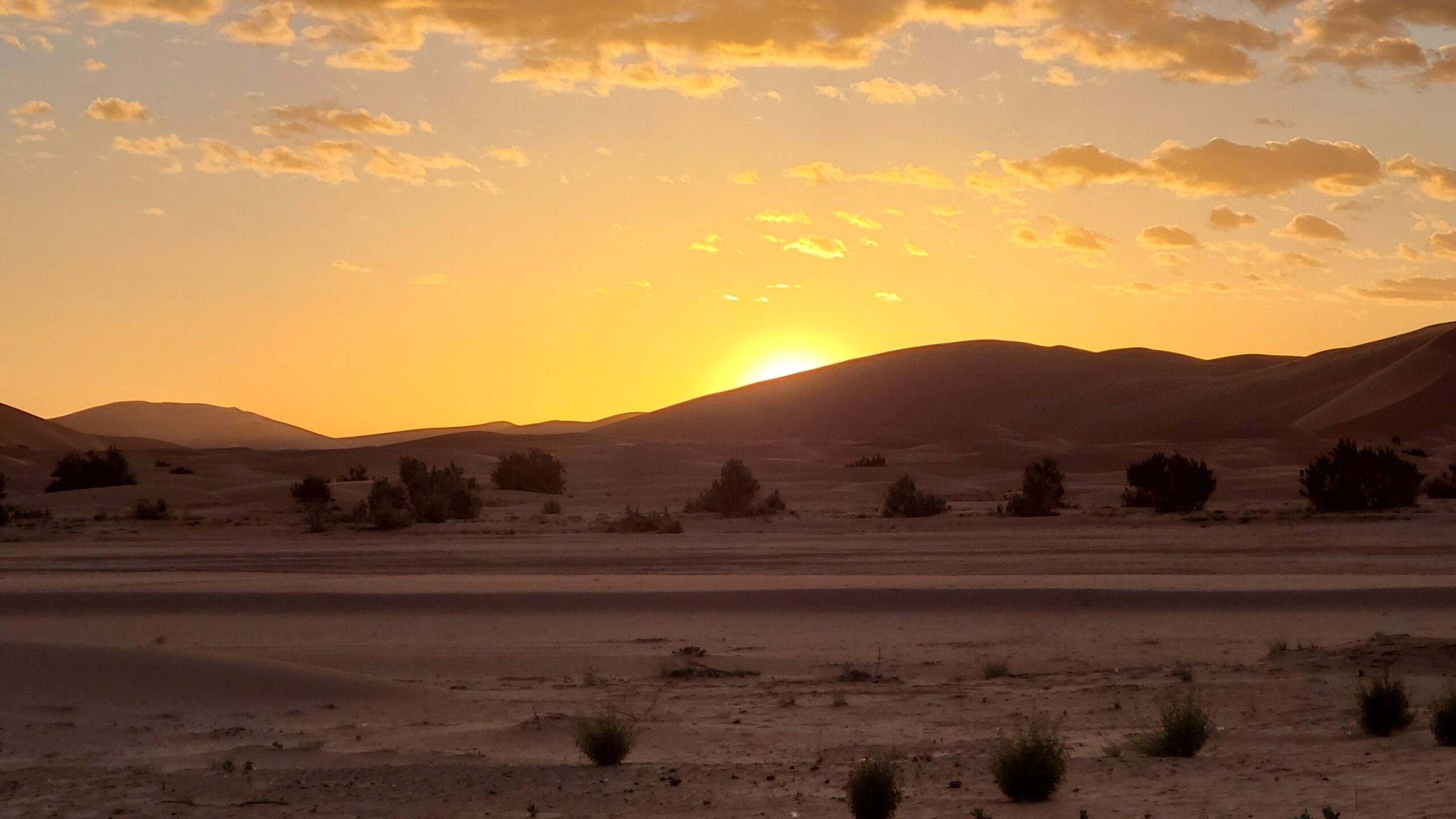
    Sunset in the Sahara

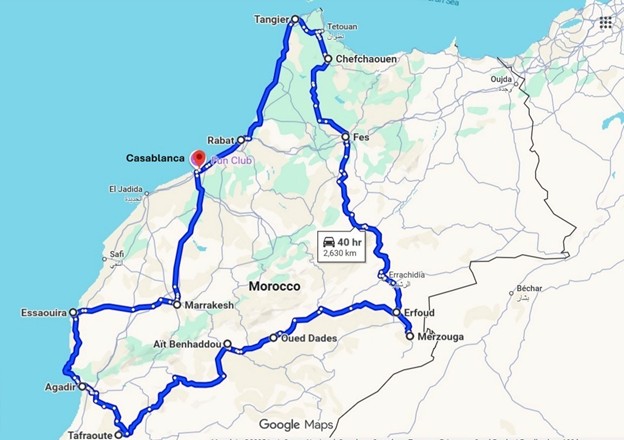
    Uganda gave us wildlife. The airline gave us a detour to Istanbul that defied physics. And yet, against all odds, we eventually landed in Morocco. We spent 18 days in Morocco, executing one of our loop itinerariesโ€”efficient, feasible and just at the edge of being chaotic but without triggering a logistical meltdown.

    Morocco tour map

    Our Morocco tour map (from Casablanca to Casablanca)

    Before diving into the details, credit where itโ€™s due: Yassine, our travel fixer, was very good. He offered great suggestions, handled bookings that we could not make, and had someone on call whenever things got wobbly. He even reimbursed us for a hotel that didnโ€™t live up to our expectationsโ€”a rare move in the travel industry, where โ€œcustomer serviceโ€ often means โ€œweโ€™ll get back to you never.โ€ Thanks again, Yassine.

    The Moroccan Dirham (MAD) was worth about US$0.10. Canadian dollars? too exoticโ€”donโ€™t bother. Stick to Euros, Pounds, or USD. ATMs are plentiful, Visa and Mastercard are widely accepted, and AMEX is mostly treated like a distant cousin who shows up uninvited. Always ask for a receipt when exchanging money. You may need it later, especially if you try to convert leftover Dirhams backโ€”though frankly, itโ€™s easier to spend them on snacks and souvenirs you didnโ€™t know you needed.

    Moroccans are persuasive. They can sell sand to desert people. Youโ€™ll walk into a shop โ€œjust browsingโ€ and leave with a lamp, a rug, and a leather pouf youโ€™ll have to leave at the airport because of overweight. Haggling is expected and oddly enjoyable once you accept that the first price is fiction. If you agree on a price, buy the itemโ€”backing out is considered rude. Think of it as theatre with a financial twist.

    Morocco offers everything from backpacker hostels to palatial hotels. Most tourists opt for riadsโ€”traditional homes with courtyards, often located inside medinas (the old, historic, and often walled part of a city). Some are stunning. Others areโ€ฆ character-building. A beautiful riad is a dream. A bad one is a medieval Airbnb. Do your homework before booking, especially if you value sleep and clean, functioning showers.

    Tipping is customary and expected:

    • Hotel porters: 5 MAD per bag
    • Medina trolley porters: 20โ€“50 MAD (could even go up to double) depending on distance and drama
    • Hotel staff: 5โ€“10 MAD per person/day
    • Restaurant servers: 10%
    • Public toilets: 1 MAD (worth it)
    • Drivers: 75โ€“100 MAD/day
    • Guides: 80โ€“120 MAD/day
    • Camel drivers: 20โ€“30 MAD per person
    • Desert camp staff: 20โ€“30 MAD per person

    Morocco is generally safe, but donโ€™t tempt fate. Use common sense when walking in unknown places, especially at night. Keep valuables close and carry your bag in front of you especially in souks and beaches. If youโ€™re traveling with a driver, take your bag when you leave the carโ€”heโ€™s a driver, not a bodyguard. And yes, pickpockets exist. Theyโ€™re fast and very discreet.

    Morocco is diverse, but modesty is appreciated. The traditional โ€œdjellabaโ€ is worn by locals, but tourists arenโ€™t expected to adopt it unless theyโ€™re feeling theatrical. In rural or conservative areas, modest clothing helps avoid unwanted attention.

    Two types:

    • Grand taxis (big, usually Mercedes, intercity)
    • Petit taxis (small, city-bound, take up to 3 persons)

    Always negotiate the fare unless the driver agrees to use the meterโ€”which is about as common as coconut trees in Sahara.

    I read that they just introduced Uber in Casablanca and Marrakech. Donโ€™t know how reliable it is. Worth checking.

    We arrived with high hopes and empty stomachs. Letโ€™s start with the basics: olive oil here is fantasticโ€”and so cheap we halfโ€‘seriously wished weโ€™d hired a tanker to haul it across the Atlantic back to Canada. The same goes for saffron (minus the tanker, but definitely for the quality and price).

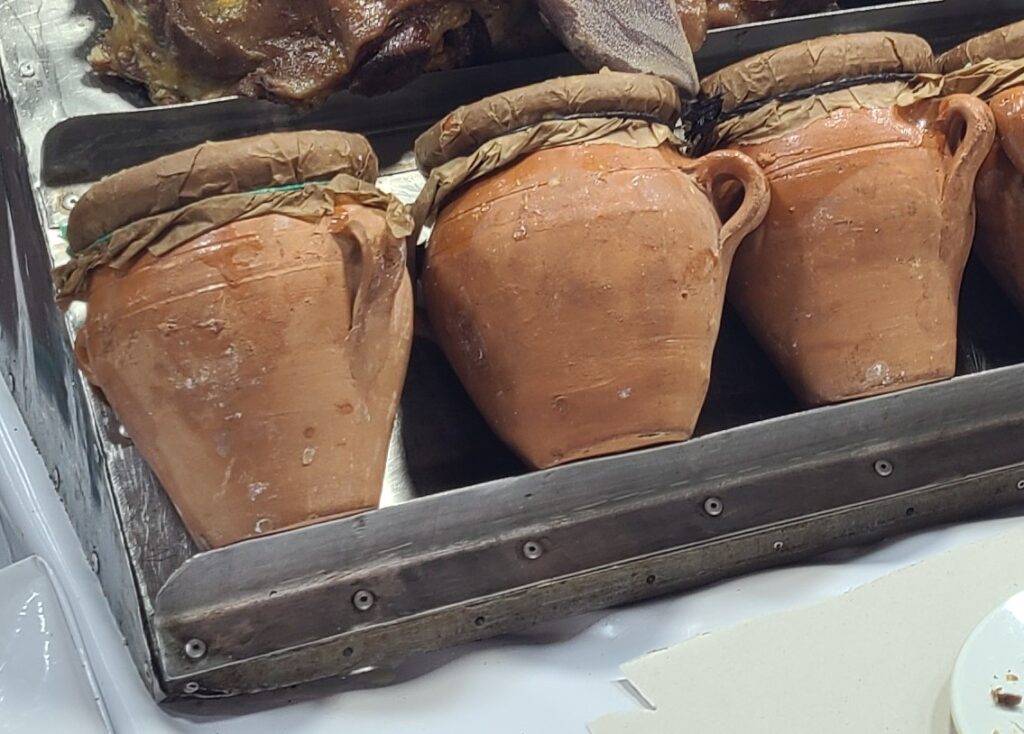
    Moroccan cuisine is famous, and rightly soโ€”especially the street food. Briouats (crispy pastries stuffed with meat or cheese) were addictive. Tangia (not tagine!), a slow-cooked stew of beef or lamb with preserved lemon and spices, was a highlightโ€”especially in Marrakechโ€™s Jemaa El Fna square, where the food is good and the chaos is for free.

    Tangia pots in Jemaa el-fnaa square in Marrakech

    Tangia Pots

    Couscous deserves its reputation. In Morocco, itโ€™s fluffy and delicate. Itโ€™s not just techniqueโ€”its knowledge passed down through generations and seasoned with love.

    But then thereโ€™s the sweet-savory conundrum, but much sweeter than savory. Moroccans love sugar. Not just in desserts, but in main courses. For someone who prefers salty, spicy, and hot food, this was a challenge. Take pastilla: a sweet chicken pie topped with powdered sugar and cinnamon. Itโ€™s like dessert crashed into dinner and nobody called the authorities.

    Now, brace yourself for heresy: I donโ€™t like tagine. There, I said it. The ones I had in restaurants were underwhelmingโ€”boiled meat or vegetables with a hint of spice and a lot of sweetness. Maybe homemade tagine is better. Maybe I just donโ€™t like boiled meat. Either way, it wasnโ€™t my cup of tea (pun intended).

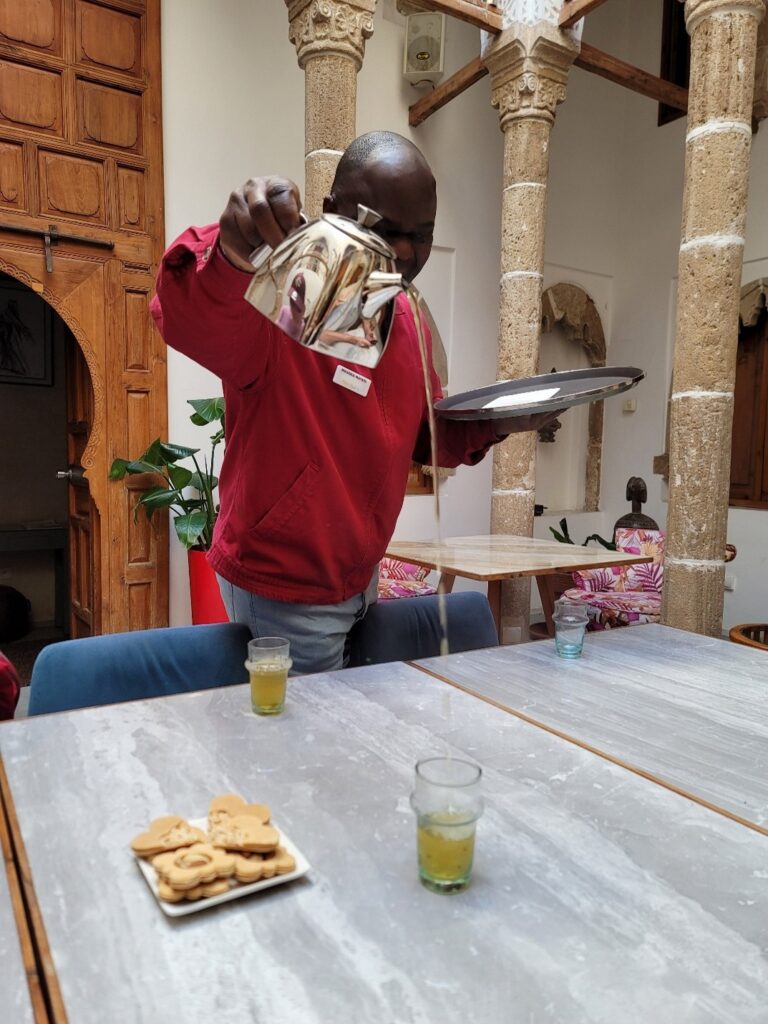
    Speaking of tea: I donโ€™t drink it unless Iโ€™m so sick I forget my own name. So I canโ€™t comment on Moroccan mint tea, except to say the pouring technique is impressive enough to warrant its own TED Talk. Pouring tea from height is part of a hospitality ritual to guests, symbolizing respect and the host’s skill. It also aerates the tea to enhance its aroma, mixing the ingredients (tea, mint, and sugar) in the pot, creating a layer of foam (or “crown”) on top, and quickly cooling the hot tea to a drinkable temperature. 

    Whatโ€™s interesting is that in Asturias, the region in Northern Spain which is probably the farthest from Morocco than any other part of Spain, they pour cider (which is their main alcoholic beverage) in the same way. It is a ritual called escanciar, and they say it releases the cider aromas.  I could not find any connection between the two practices, which probably evolved separately.

    Pouring tea in Morocco

    That’s how they pour tea in Morocco. This is what I call skill.

    Our tour of Morocco started and ended in Casablanca. I cannot say that we covered the entire country, but I feel that we did not miss any important spot, except perhaps Meknes that was undergoing complete renovations.

    We landed in Casablanca and Muhammad, the driver who self-proclaimed himself as โ€œthe best driver in Moroccoโ€ picked us up from the airport and drove us to Rabat, our first stop on the 18-day visit.  He was supposed to be with us only for this short drive, but ended up driving us the entire tour. He is funny, knowledgeable and helpful. He always went beyond his responsibilities as a driver to make our trip more efficient and pleasurable (including some haggling on the price of olive oil).  We liked him very much and I am sure that he could be as good a guide as he is a driver, maybe even better…  Just to clarify that in Morocco, drivers are not allowed to also be tourist guides.

    Eighteen days in Morocco gave us souks, sugar bombs, Sahara dreams, and a driver who did a great job. Between haggling theatrics, riad roulette, and food that ranged from divine couscous to dessertโ€‘crashed dinners, we discovered that Morocco is equal parts chaos, charm, and culinary contradictions.

    Thereโ€™s more to come about Morocco. If youโ€™re interested, come back soon and youโ€™ll find more posts.

    • Loop itinerary: 18 days of efficient, borderline chaotic travel without a meltdown.
    • Money matters: Dirham โ‰ˆ US$0.10; Canadian dollars = exotic paperweights.
    • Shopping & haggling: Theatre with a financial twist; expect to leave with lots of stuff you didnโ€™t plan on.
    • Accommodation: Riads range from dreamy courtyards to medieval Airbnb nightmares.
    • Tipping cheat sheet: From 1 MAD for toilets to 120 MAD for guides.
    • Safety tips: Morocco is safe, but pickpockets are faster than your reflexes.
    • Dress code: Modesty appreciated.
    • Transport: Grand vs petit taxis; meters are mythical. Uber may have just arrived in Casablanca/Marrakech.
    • Food adventures:
      • Briouats = addictive pastries.
      • Tangia = slowโ€‘cooked heaven.
      • Couscous = fluffy perfection.
      • Pastilla = dessert crashed into dinner.
      • Tagine = boiled meat disappointment (heresy admitted).
    • Olive oil and saffron – bring an extra suitcaseโ€ฆ and take home as much as you can.
    • Mint tea ritual: Pouring from height = Moroccan hospitality.
    • Driver Muhammad: Selfโ€‘proclaimed โ€œbest driver in Morocco,โ€ funny, helpful, and oliveโ€‘oil negotiator extraordinaire.

    What should I know before visiting Morocco?
    Money, haggling, tipping, safety, and food expectations all matter more than you think.

    Is Moroccan food spicy?
    Not usually โ€” itโ€™s more sweet than spicy, which may surprise some travelers.

    Are riads better than hotels?
    Often yes, but quality varies wildly. Research is essential.

    Next: Part2 โ€“ Rabat and Tangier: The Cities You Visit Before the Real Drama Starts โ†’