
Uganda Series Part 1: Why was Uganda Our Next Adventure?
About ten years ago, we visited South Africa and absolutely loved it. Yes, I was mugged in broad daylight in what was supposedly a safe area of Cape Town—one of the “safest” cities there—but I’d still go back in a heartbeat. South Africa is stunningly diverse, and the chance to encounter big wild animals up close is something you can’t quite grasp until you’re there, blinking at a lion from a jeep and wondering if your insurance covers eye contact.
And then there’s the sun. Everyone talks about the African sun, especially the sunsets, but it’s one of those things you have to see to understand. Photos don’t do it justice. African sunsets are so beautiful, with vibrant colors, orange, red and yellow. This is partly due to the amount of dust and particles in the air, which refract the light.
We collect masks. I’m obsessed with African art, and the masks we brought home from South Africa are not just beautiful—they’re deeply tied to the cultures that carved them. So even before we left, we promised ourselves we’d return to Africa someday.

One of the masks we brought from Uganda
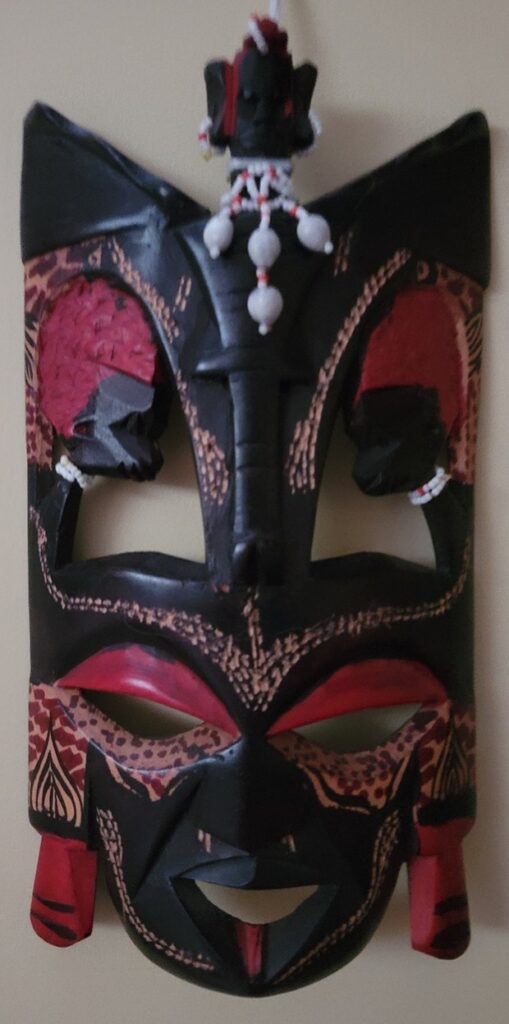
We bought this mask in South Africa, but found one exactly the same in Uganda.
It took a decade, but we made it back—this time to Uganda (and then to Morocco, but this is another story). A completely different country, with a culture just as rich, and people so friendly who smile all the time.
Gorilla Trekking: Bucket List Reality
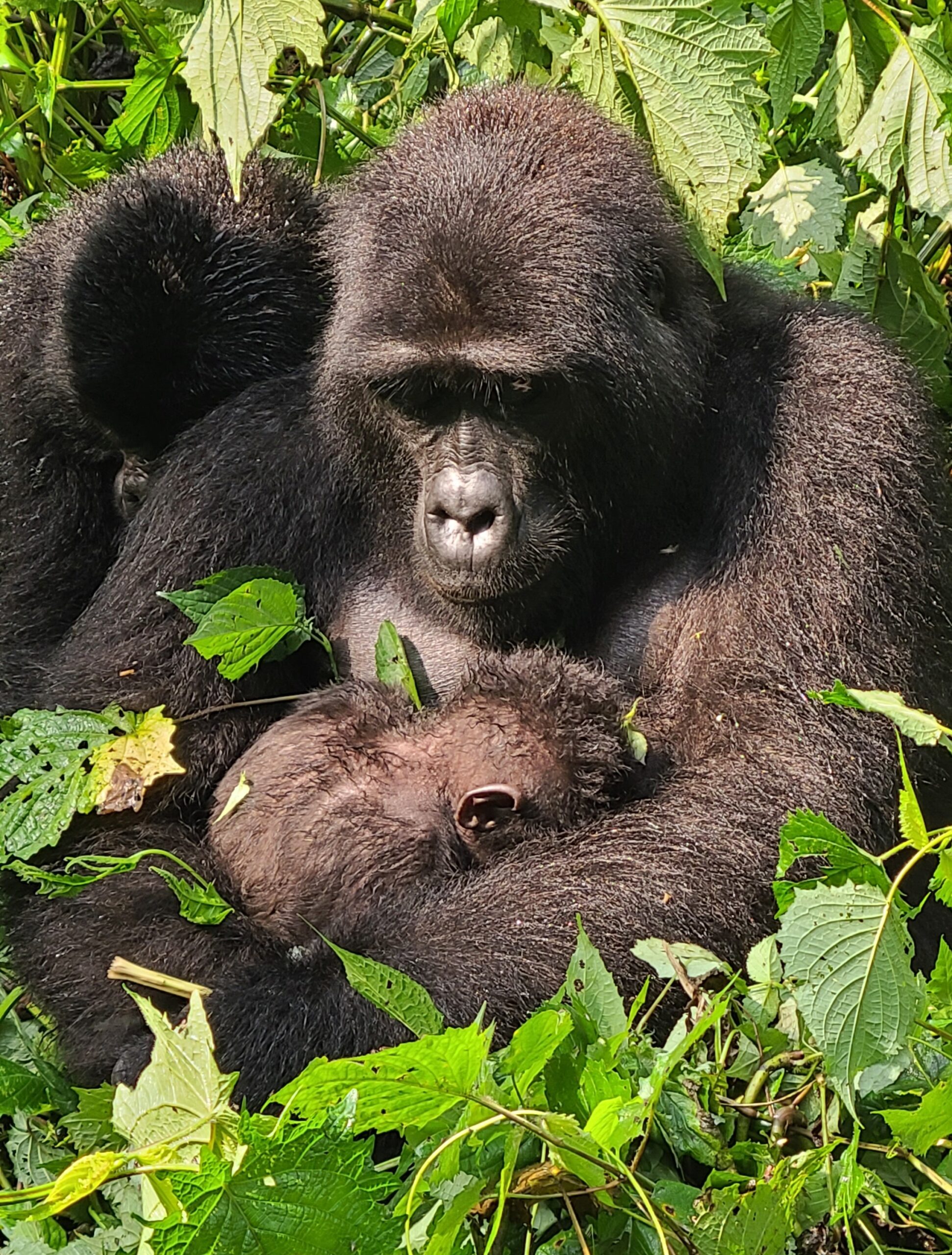
Tracking mountain gorillas has been on my bucket list for about twenty years. A friend visited Uganda and came back raving about them, and ever since, I’ve wanted to see these gentle giants for myself.
Mountain gorillas were very close to extinction. Poaching, habitat loss, and their naturally low reproductive rate makes them incredibly vulnerable. Thankfully, conservation efforts have helped their numbers climb from around 700 a decade ago to over 1,000 today. They live only in three countries near the equator—Uganda, Rwanda, and the Democratic Republic of Congo—and make their homes in high-altitude bamboo forests (between 2,400 and 4,000 meters, or 8,000 and 13,000 feet). They’re herbivores, though they occasionally snack on insects—because who doesn’t like a little crunch now and then?
There’s a lot to learn about gorillas, and many books have been written on the subject. But this blog isn’t one of them. If you’re curious, google them. However, if you’re planning a visit, I highly recommend checking out Gorilla Doctors. This NGO does incredible work balancing minimal human interference with the need to protect and support this fragile population. We visited their center the day before our trek, and one of their doctors gave us a fascinating presentation on their approach. But let’s zoom out—this post is about Uganda in general.
Planning the Itinerary
About a week after returning from our long round-the-world trip (yes, I needed something to soothe my travel withdrawal), I started planning our Ugandan adventure. Two other couples joined us, which made the trip more affordable since we could fill a safari car (Toyota Land Cruiser, the unofficial vehicle of African road trips).
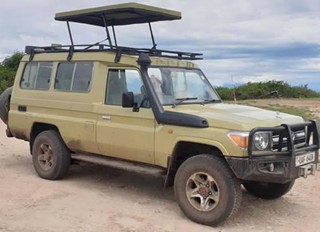
We spent long hours in this car during our Uganda Adventure
Uganda is more than only mountain gorillas
As usual, I began by researching the country. All I knew was limited to “Idi Amin = bad guy.” But I quickly learned more: Uganda has a diverse landscape and climate, from freezing mountain peaks to scorching savannas. And where there are savannas, there are big animals. Also, birds—lots of them, with the grey crested crane (Ngaali) as Uganda’s national bird, proudly displayed on their flag.
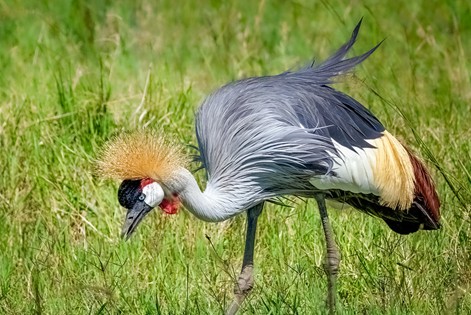
Crested crane appears on the flag of Uganda
Oh, and chimpanzees. Did I mention chimpanzees?
Entebbe, where the international airport is located, sits on the shore of Lake Victoria and serves as a vacation town for people across Africa. The Nile even makes a dramatic appearance at Murchison Falls (more on that later).
It quickly became clear that going to Uganda just to see gorillas would be a missed opportunity. So I planned a 12-day itinerary that would take us nearly all around the country. We wanted to escape the Canadian winter (which was particularly brutal in 2025), so we chose January—a relatively dry season in the mountains and warm everywhere else. Uganda sits on the equator, after all. It’s not exactly sweater weather.
Long Hours, Zero Smooth Roads: Uganda’s Free Full‑Body Massage
To fit everything in, we had to endure some long drives. Uganda’s roads aren’t exactly Autobahn-grade, and spending 4–6 hours a day in a safari car (not every day, but too often for my back) was… character-building. Let’s just say that 100 km in Canada ≠ 100 km in Uganda. The worst part? Driving through towns and villages. Each one greets you with a series of speed bumps—four or five at the entrance, and another set at the exit. Markets and central areas get their own bonus bumps. Our driver was excellent, but no matter how gently he approached them, we felt every jolt. The driving wasn’t the highlight—but everything else more than made up for it.
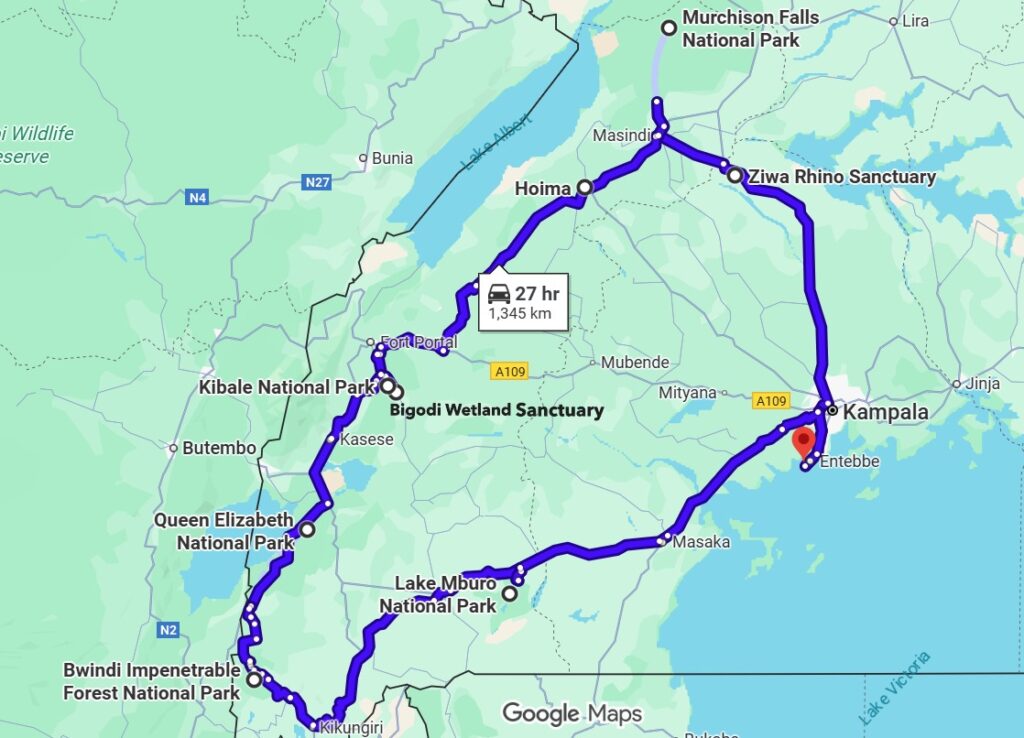
Our 12-day itinerary in Uganda
Permits, & Logistics
Once the itinerary was set, I realized organizing everything solo might be a bit of a challenge. Wasn’t sure that gorilla and chimp tracking permits would be exactly click-and-buy. At the time, gorilla permits were $800 per person, and chimp permits $250. You need to apply about six months in advance, and they’re in high demand during peak seasons.
So we used the “hybrid method”: I researched what we wanted to see and do, picked accommodations, and then contacted local agents to help finalize the plan and make reservations. I shortlisted three agencies that seemed professional and reached out.
I prefer working with local companies over big international ones. They know their country best, they’re more affordable, and supporting local businesses is part of how we travel. We chose the agency that responded quickly, understood our pace (I’m an entrepreneur—I move fast and expect others to keep up), and offered thoughtful suggestions. The company we picked wasn’t the cheapest, but it was responsive, organized, and reliable. They arranged our visas, secured the tracking permits, booked some of the hotels, and gave us solid advice on what to expect and how to behave. They even stayed in touch during the trip.
Tipping guidelines
One helpful tip they gave us: tipping. Wages are low, and tipping is a direct way to support local communities. Here’s a rough guide (in USD or Euros):
- Driver Guide: $25 per person per day
- Gorilla Trekking Rangers: $15
- Gorilla Trekking Porters: $15–20
- Restaurant/Café Servers: 10% of the bill
- Other walking tour activities: $10 per day
Health & Safety Prep
We also got all the necessary shots: Yellow Fever, COVID, Flu, Hepatitis A. Malaria isn’t endemic everywhere in Uganda, but we were advised to take daily preventive meds during our stay and for a couple of days after. We followed instructions—no one wants to bring home a souvenir parasite.
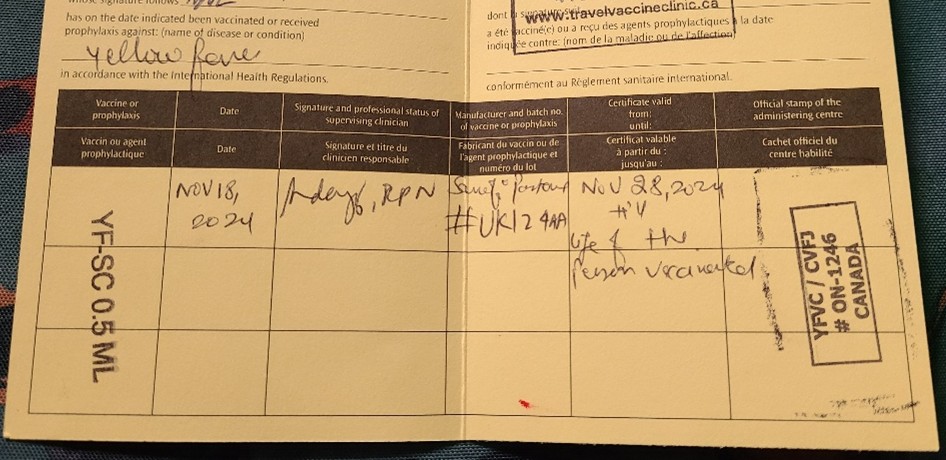
Proof of yellow fever vaccination needs to be shown in Uganda. Nobody asked for it, but good to have it you, in case someone does ask.
Planning a trip to Uganda isn’t just about ticking gorillas off your bucket list—it’s about embracing the variety of adventures that the country has to offer. From misty mountains to sun-drenched savannas, from vibrant markets and beautiful African art to quiet forest trails, Uganda invites you to go deeper. And while the roads may jostle your spine, the journey will stir your soul. Stay tuned for the next chapter, where the adventure truly begins.
Agree, disagree, or just want to rant? The comment box is your stage.
Key Takeaways for Uganda Travel
- Uganda offers much more than gorilla trekking—its diverse landscapes, wildlife, and culture make it a destination worth exploring.
- Mountain gorillas are endangered but recovering, thanks to conservation efforts; permits are limited and should be booked well in advance.
- Travel logistics matter: if your time is limited, long drives and bumpy roads are part of the experience, but a well-planned itinerary makes it worthwhile.
- Local travel agencies can be invaluable, especially for securing permits, arranging accommodations, and offering insider advice.
- Tipping is appreciated and impactful, especially in the tourism sector—guidelines help travelers contribute meaningfully.
- Health prep is essential: Yellow fever vaccination is mandatory and malaria prevention is strongly recommended for a safe trip.
Next: Part 2 – 17 Hours, 5 Wines, and a Stork with low self respect: Welcome to Uganda →