Tag: Murchison Falls

  • The Big Five and the Nile

    The Big Five and the Nile


    On the third morning, we kicked off our tour of Uganda. Expectations were highโ€”and somehow, reality outdid them. Always nice when a trip decides to cooperate.

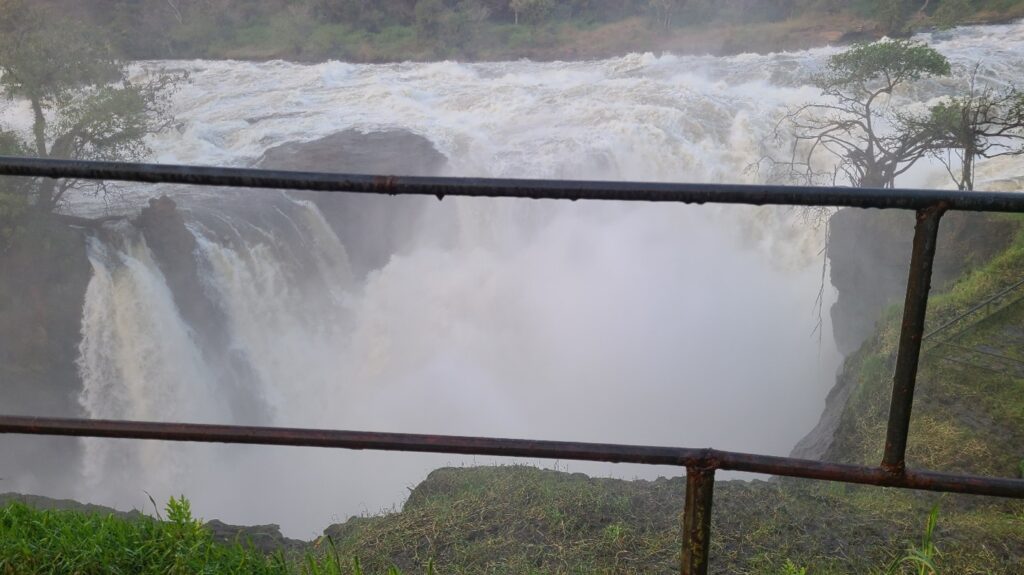
    Our first major destination: Murchison Falls, where the mighty Nile squeezes through a gorge just 7 meters (23 feet) wide before plunging 43 meters (141 feet) into Lake Albert (obviously, coming out of Lake Victoria first โ€” because even rivers follow royal protocol).
    Itโ€™s not the tallest waterfall, but the sheer volume of water being forced through that narrow gap is jawโ€‘dropping. Go at sunset and youโ€™ll get a spectacle that makes you question every photo youโ€™ve ever taken.

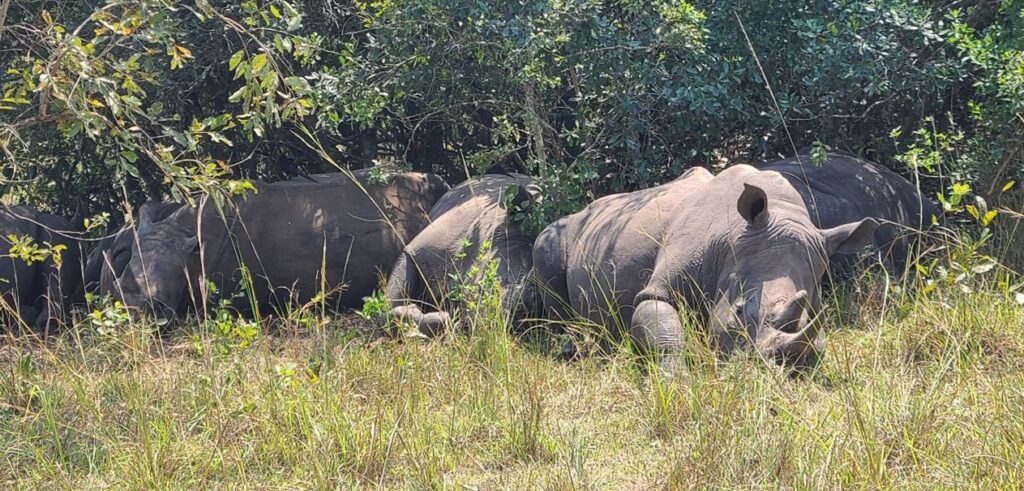
    Before reaching the falls, we stopped at Ziwa Rhino & Wildlife Ranch โ€” in Nakitoma villageโ€”the only place in Uganda to see Southern White Rhinos. There are just 47 of them (maybe 48 if someoneโ€™s been busy), and once they hit 50, the plan is to release them into savannah parks.

    For about an hour, we walked with a ranger and had a close encounter with these massive, surprisingly gentle creatures. Peaceful, breathtakingโ€ฆ and sweating less than we were.

    Southern White Rhinos at Ziwa Rhino Sanctuary Uganda

    Rhinos in Ziwa Sanctuary. Even they thought it was too hot.
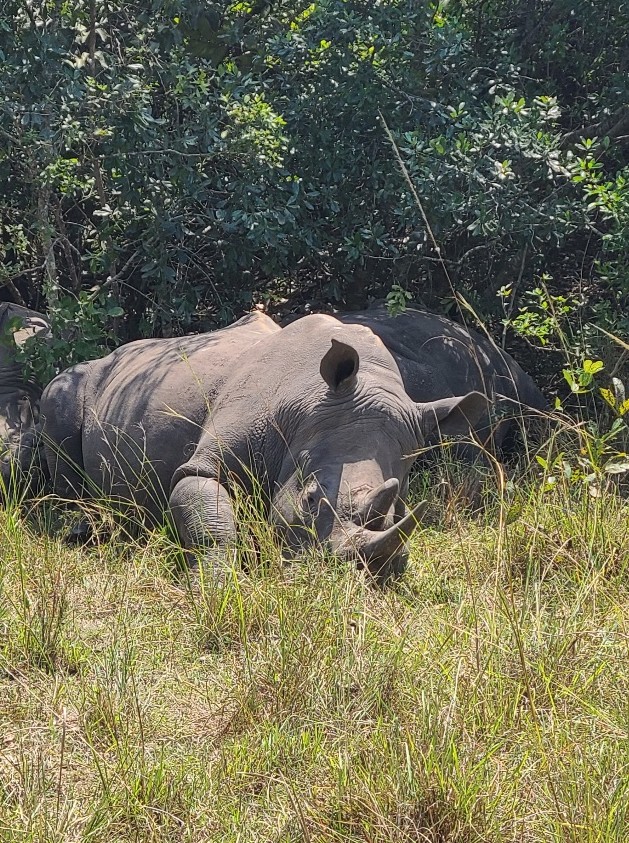
    This one probably had too much to eat.
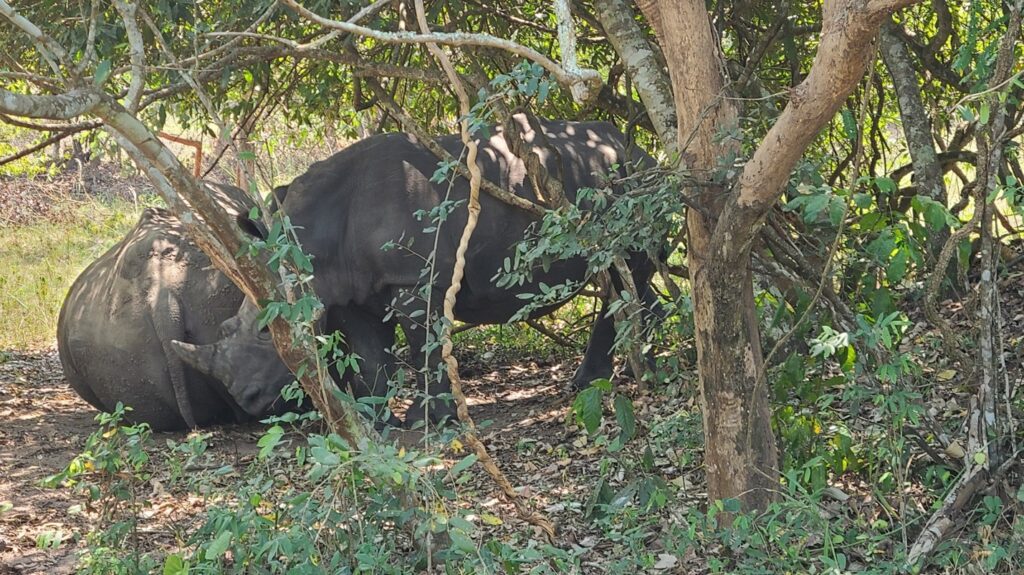
    The young guy was only two years old, babysat by his big brother while mom recovered from giving birth.

    We arrived at Murchison Falls about an hour before sunset. And honestly? Words fail. Itโ€™s one of those places where your camera gives up before you do โ€” it canโ€™t capture the roar, the mist, or the feeling that youโ€™re witnessing something so powerful.

    Murchison Falls from above at sunset
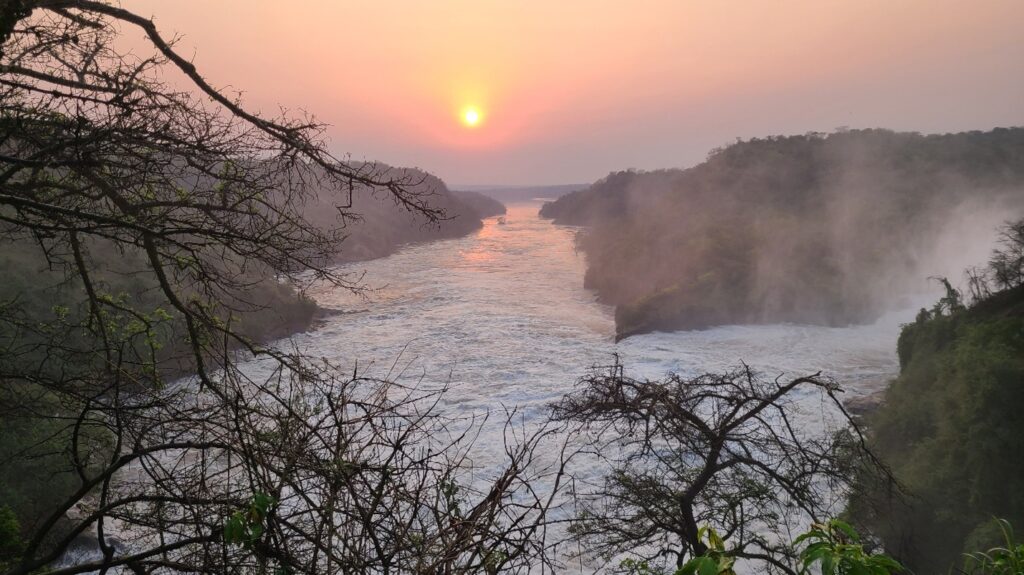
    Murchison Falls from above

    Sunset on the Nile

    Right inside the national park โ€” great location, very comfortable, and no need to pretend youโ€™re โ€œone with natureโ€ because nature is literally outside your window.

    We started early. Beforeโ€‘dawn early. Too early.
    Animals in Africa donโ€™t do lunch โ€” theyโ€™re up with the sun, grabbing breakfast before the heat kicks in. So if you want to see the action, youโ€™ve got to be there when the wild wakes up.
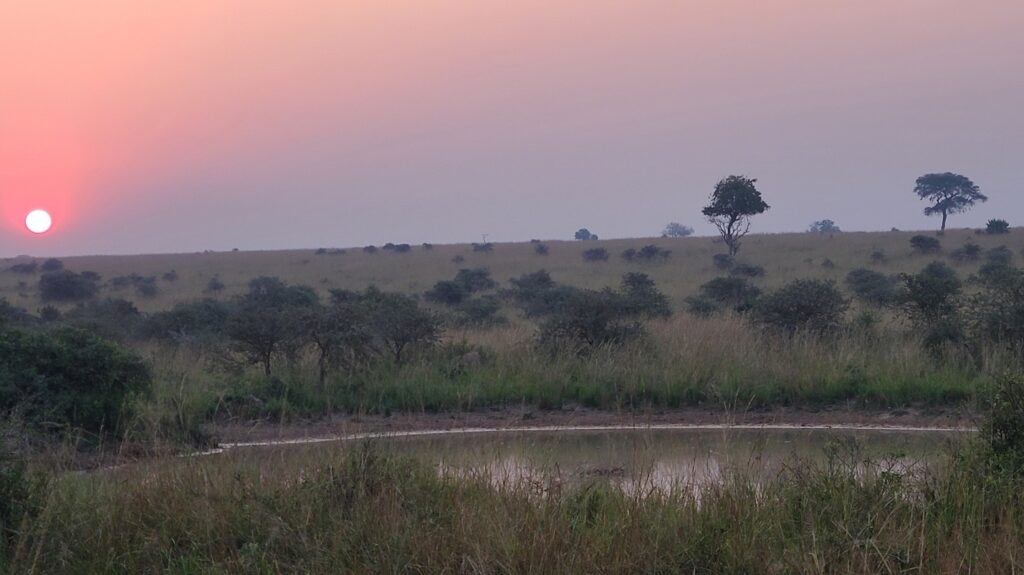
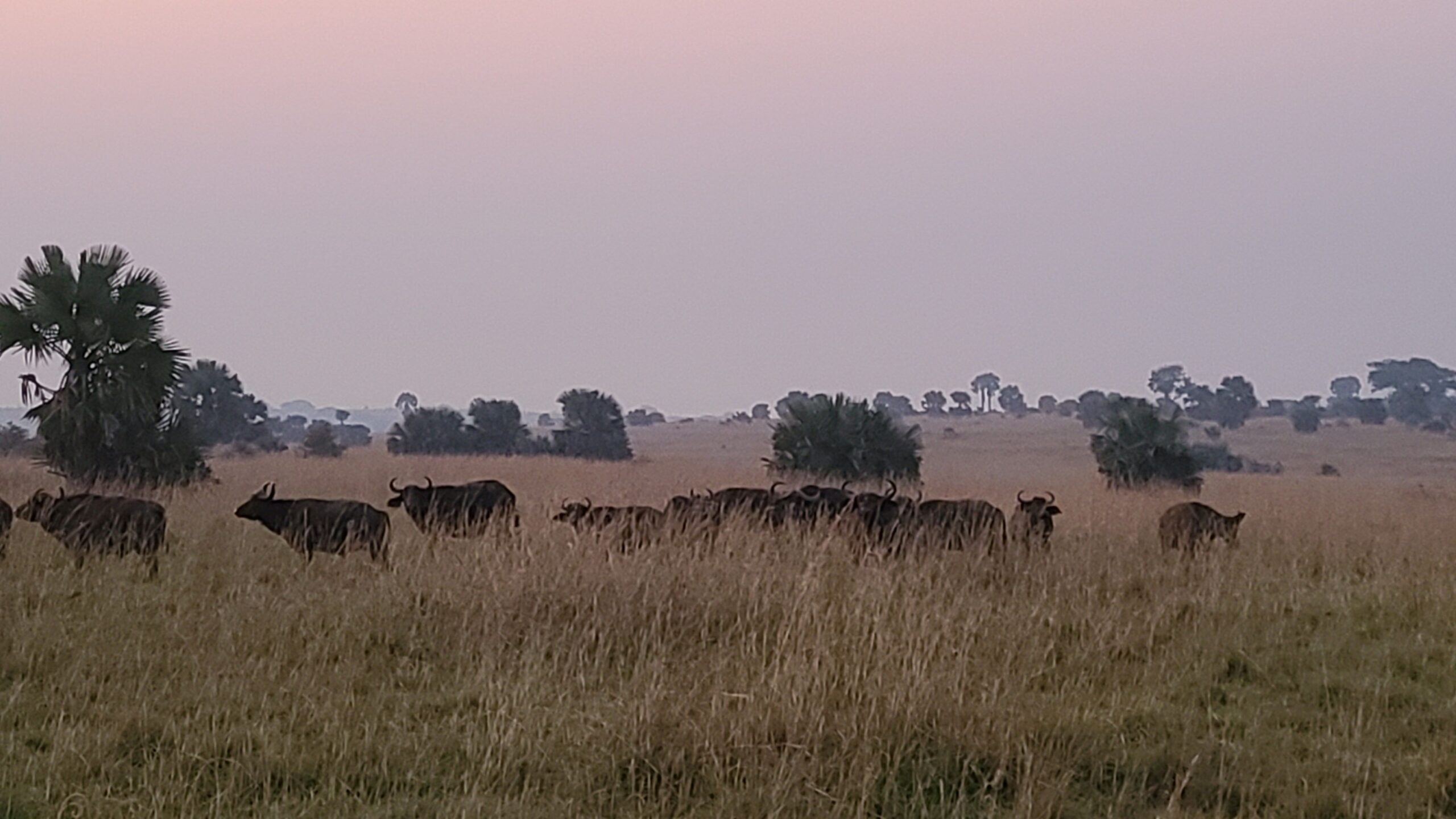
    Sunrise over the savannah in Murchison Falls National Park

    Sunrise in the savannah

    As youโ€™ve probably gathered, weโ€™re not morning people. But being near the equator meant a 6 a.m. wakeโ€‘up instead of the 5 a.m. horror show we endured in South Africa. Still not fun, but survivable.

    We were hoping to spot four of the Big Five. (elephant, lion, African buffalo, leopard, rhino). Weโ€™d already ticked off rhino the day before, so seeing all the others felt like a long shot. But guess what? We saw them all. The leopard was playing hard to getโ€”spotted from a distanceโ€”but the others swaggered in.

    One of the most memorable sightings was a young lioness casually strolling through the bush. She moved with the kind of grace that reminds you sheโ€™s very, very good at huntingโ€ฆ and you are very, very good at staying inside the car.
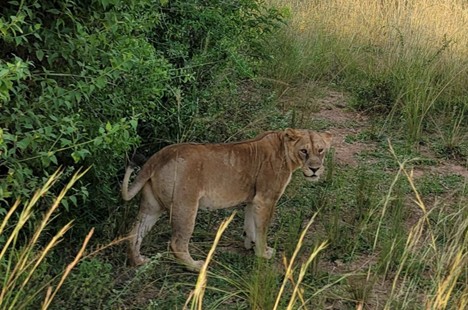
    Lioness walking through the savannah in Murchison Falls National Park

    Where was the lioness coming back from?
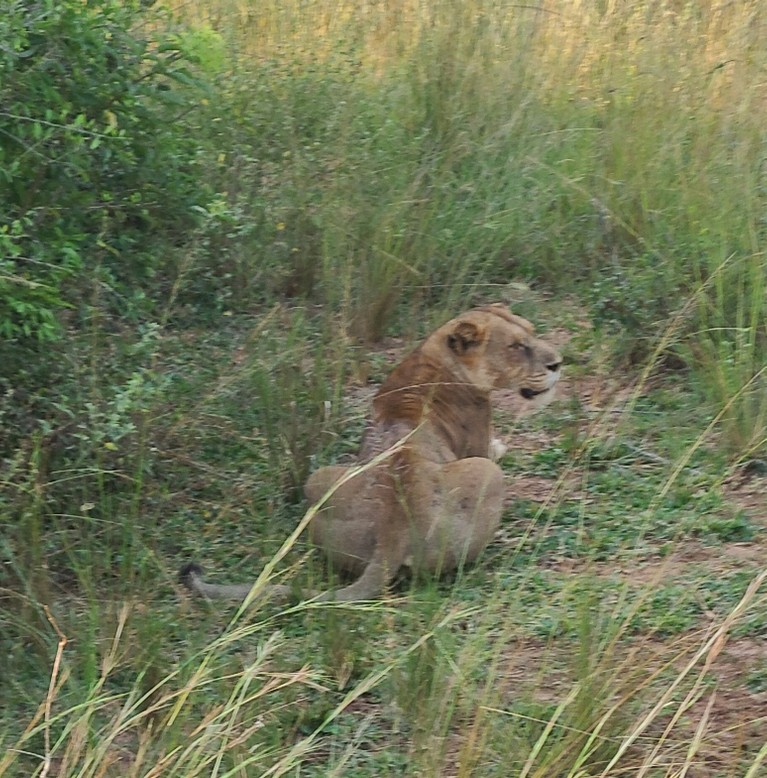
    Then she decided to sit and rest a bit.

    Things got a bit more intense when we saw a car stuck on the other side of the same bush. Three people were trying to fix it, including a ranger with a rifle who was also the designated mechanic.

    Joseph, our driver, jumped out to help. Brave? Maybe. Reckless? Possibly. But no one seemed too worried about the lioness. Josephโ€™s a big guy, but I doubt even he would fancy a wrestling match with a charging feline. Thankfully, the car got fixed and everyone drove off – no claws, no drama.
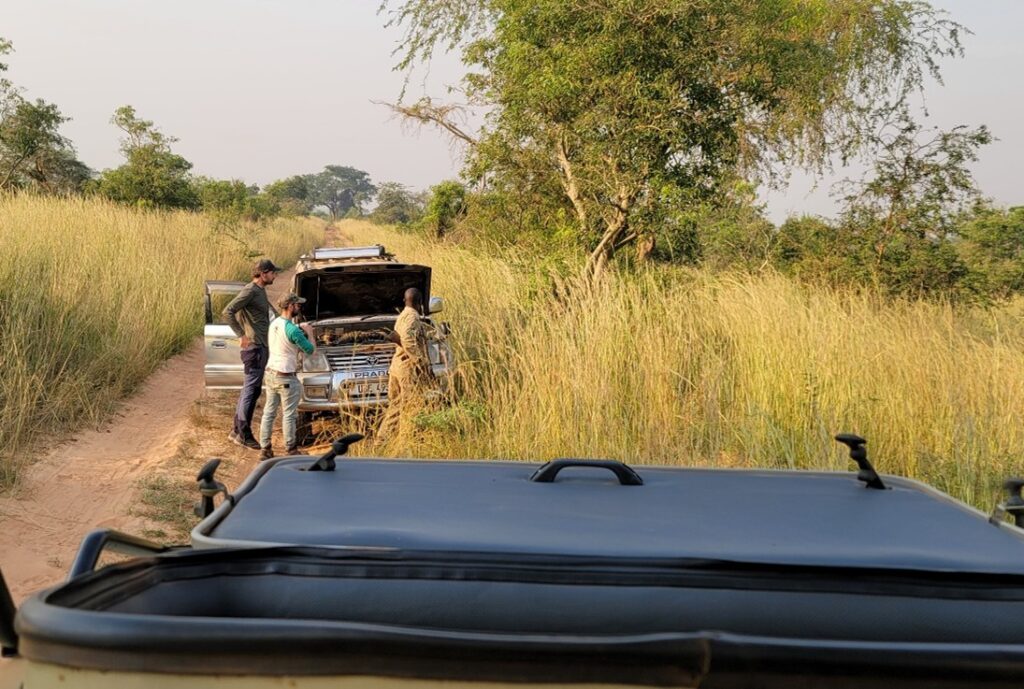
    These poor people got stuck in the middle of the savannah with the lioness on the other side of the bush

    Later, we encountered a herd of elephants that clearly didnโ€™t appreciate our presence. One of the big ones charged us. Joseph hit the gas and got us out of there. Scary? A bit. Cool? Absolutely. We trusted Joseph to know when to floor it.
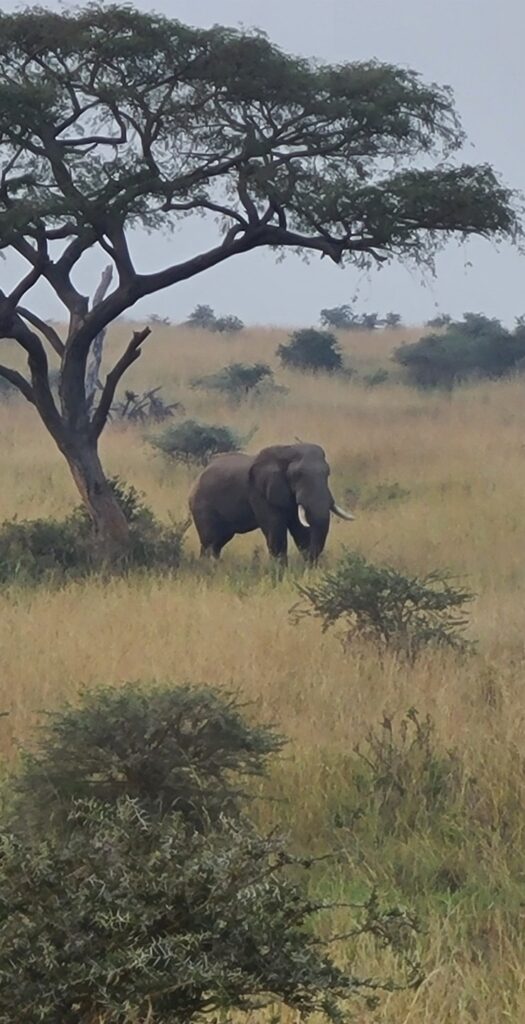
    Elephant mockโ€‘charging safari vehicle in Uganda

    He made it very clear that we should leave.

    In the afternoon, we took a cruise on the Nile. Hippos, elephants, and hundreds of birds. A water safari is a different vibe โ€” calmer, quieter, but not less thrilling.
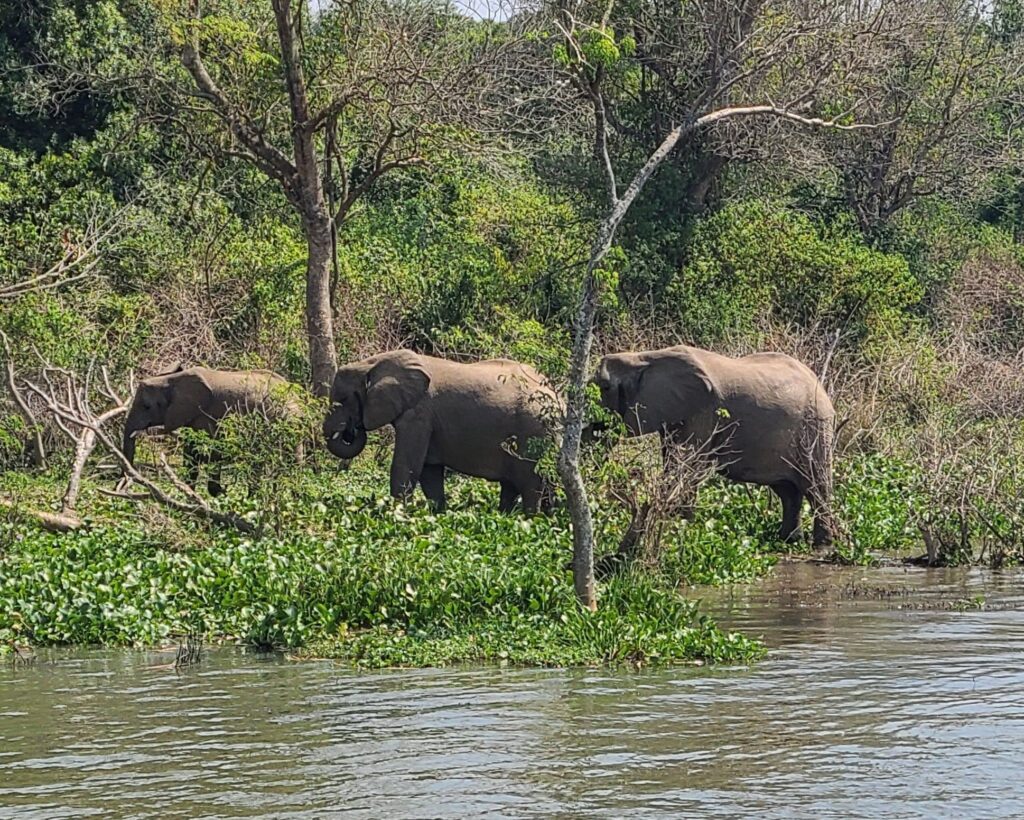
    Nile River cruise with elephants

    Elephants on Break: Do Not Disturb

    One thing weโ€™ve learned is that hippos are incredibly sun-sensitive, which is why they spend their days marinating in water. They have no sweat glands and hairless, permeable skin, so a few hours in direct sunlight and theyโ€™d end up looking like overcooked sausages.
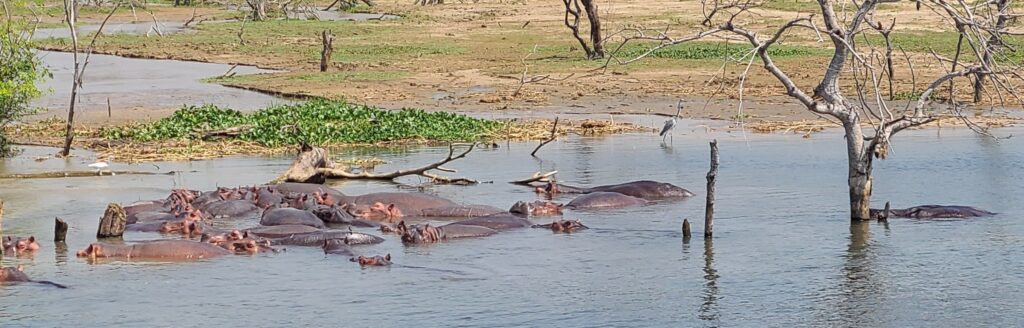
    Nile River cruise with hippos

    A Bit Crowded There

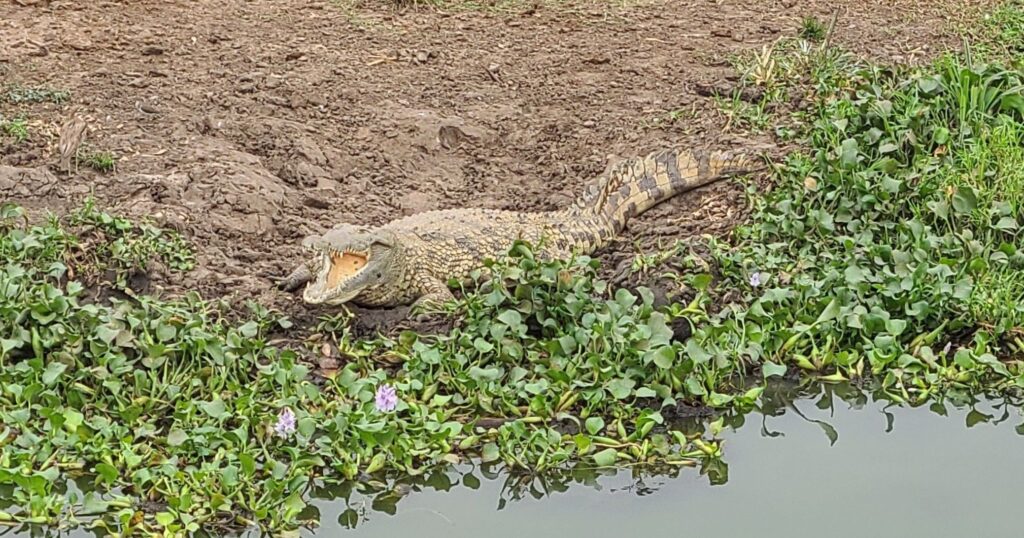
    There are crocs here also

    We couldโ€™ve gone for an evening game drive, but after our morning success and a healthy dose of adrenaline, we opted for something lazy: a dip in the pool and a few mysterious bar concoctions. No lions, no wake-up callsโ€”just fun. Pool bars are our happy place.
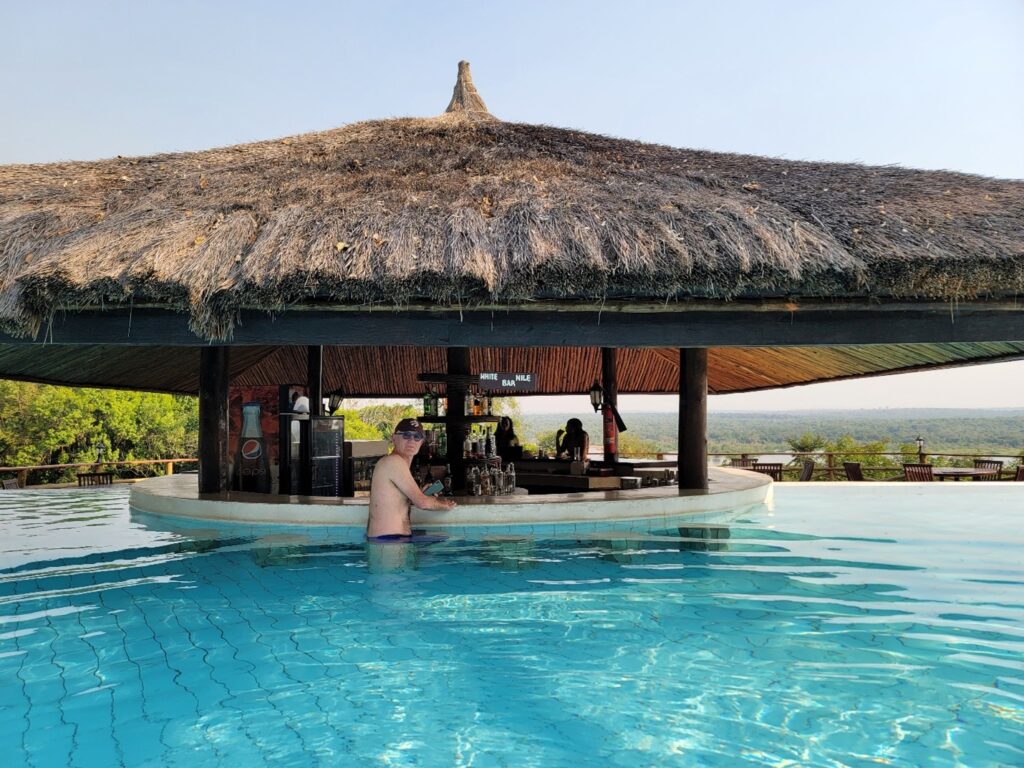
    Pool bar at Paraa Safari Lodge Uganda

    Thereโ€™s me sitting by the pool bar on a beautiful evening in Uganda.

    • Ziwa Rhino Sanctuary โ€“ A rare chance to watch Southern White Rhinos up close.
    • Murchison Falls at Sunset โ€“ The Nileโ€™s dramatic squeeze through a 7โ€‘meter gorge.
    • Paraa Safari Lodge Stay โ€“ Comfortable digs inside the park, with wildlife just outside.
    • 6 a.m. Game Drive โ€“ Early, painful, but worth it โ€” because animals donโ€™t do brunch.
    • Big Five Bingo โ€“ Elephant, lion, buffalo, leopard, rhino โ€” all spotted, some with flair, one with attitude.
    • Lioness Encounter โ€“ Graceful, powerful, and thankfully uninterested in us.
    • Nile River Cruise โ€“ Hippos, crocs, and an abundance of birds.
    • Pool Bar at Paraa Safari Lodge โ€“ Cocktails, calm, and zero predators. The only thing hunting us was the bartender.

    โ† Previous: Part 2 โ€“ 17 Hours, 5 Wines, and a Stork with low self respect: Welcome to Uganda

    Next: Part 4 – From Market Mayhem to Monkey Business: A Day in Kibale โ†’

  • Before the Trek: How We Prepped for Uganda (and What Youโ€™ll Wish You Knew Sooner)

    Before the Trek: How We Prepped for Uganda (and What Youโ€™ll Wish You Knew Sooner)

    About ten years ago, we visited South Africa and absolutely loved it. Yes, I was mugged in broad daylight in what was supposedly a safe area of Cape Townโ€”one of the โ€œsafestโ€ cities thereโ€”but Iโ€™d still go back in a heartbeat. South Africa is stunningly diverse, and the chance to encounter big wild animals up close is something you canโ€™t quite grasp until youโ€™re there, blinking at a lion from a jeep and wondering if your insurance covers eye contact.

    And then thereโ€™s the sun. Everyone talks about the African sun, especially the sunsets, but itโ€™s one of those things you have to see to understand. Photos donโ€™t do it justice. African sunsets are so beautiful, with vibrant colors, orange, red and yellow. This is partly due to the amount of dust and particles in the air, which refract the light.

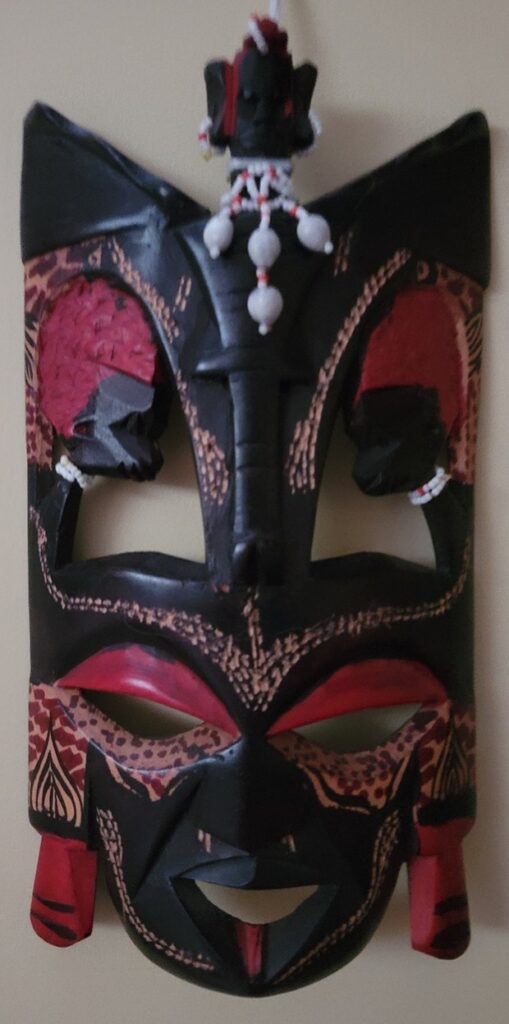
    We collect masks. Iโ€™m obsessed with African art, and the masks we brought home from South Africa are not just beautifulโ€”theyโ€™re deeply tied to the cultures that carved them. So even before we left, we promised ourselves weโ€™d return to Africa someday.

    traditional Ugandan mask carved from wood

    One of the masks we brought from Uganda

    Ugandan mask carved from wood similar to South African mask

    We bought this mask in South Africa, but found one exactly the same in Uganda.

    It took a decade, but we made it backโ€”this time to Uganda (and then to Morocco, but this is another story). A completely different country, with a culture just as rich, and people so friendly who smile all the time.

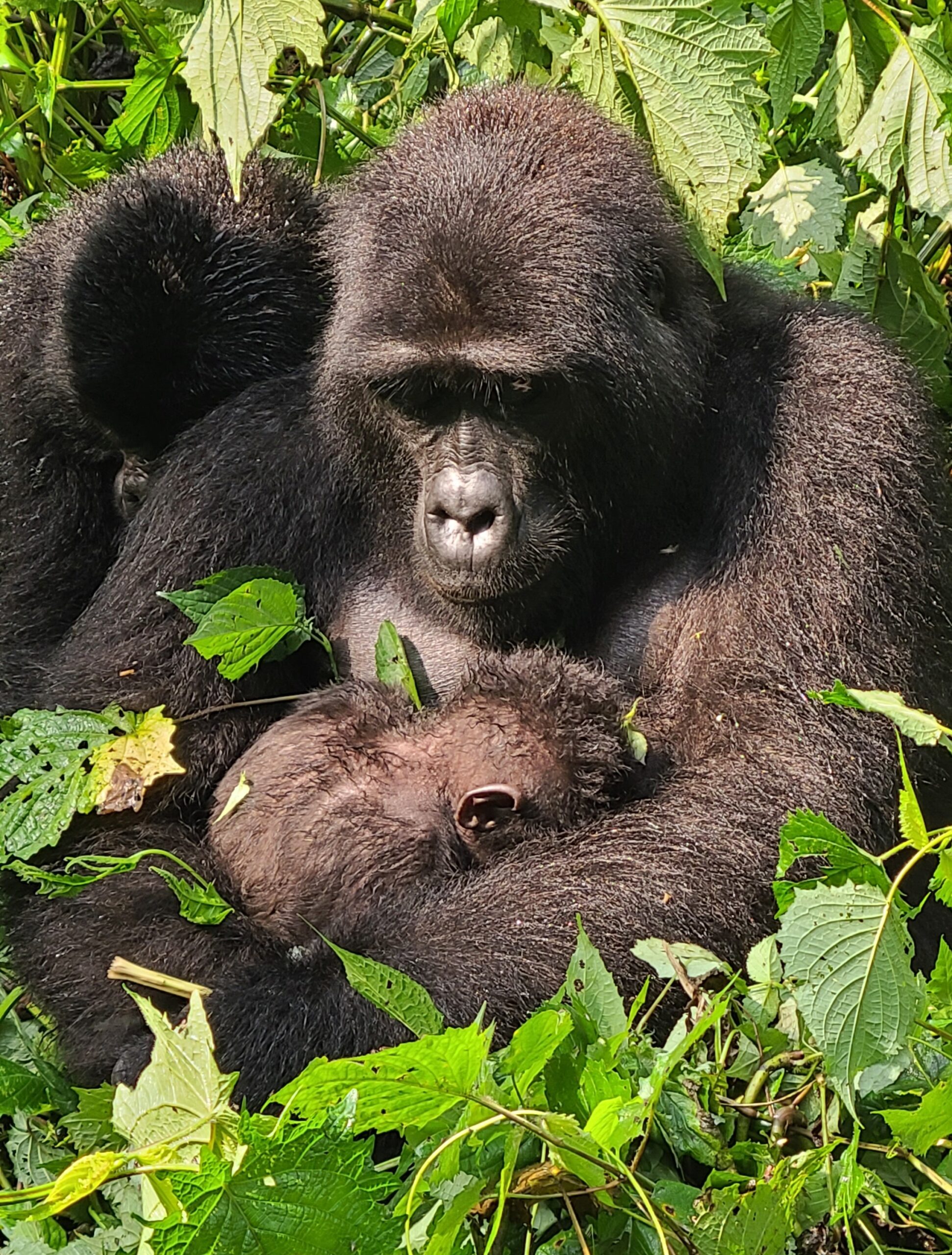
    Tracking mountain gorillas has been on my bucket list for about twenty years. A friend visited Uganda and came back raving about them, and ever since, Iโ€™ve wanted to see these gentle giants for myself.

    Mountain gorillas were very close to extinction. Poaching, habitat loss, and their naturally low reproductive rate makes them incredibly vulnerable. Thankfully, conservation efforts have helped their numbers climb from around 700 a decade ago to over 1,000 today. They live only in three countries near the equatorโ€”Uganda, Rwanda, and the Democratic Republic of Congoโ€”and make their homes in high-altitude bamboo forests (between 2,400 and 4,000 meters, or 8,000 and 13,000 feet). Theyโ€™re herbivores, though they occasionally snack on insectsโ€”because who doesnโ€™t like a little crunch now and then?

    Thereโ€™s a lot to learn about gorillas, and many books have been written on the subject. But this blog isnโ€™t one of them. If youโ€™re curious, google them. However, if youโ€™re planning a visit, I highly recommend checking out Gorilla Doctors. This NGO does incredible work balancing minimal human interference with the need to protect and support this fragile population. We visited their center the day before our trek, and one of their doctors gave us a fascinating presentation on their approach. But letโ€™s zoom outโ€”this post is about Uganda in general.

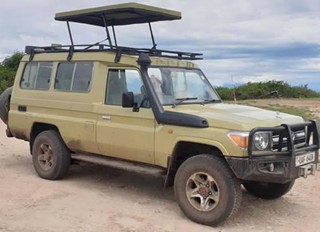
    About a week after returning from our long round-the-world trip (yes, I needed something to soothe my travel withdrawal), I started planning our Ugandan adventure. Two other couples joined us, which made the trip more affordable since we could fill a safari car (Toyota Land Cruiser, the unofficial vehicle of African road trips).

    Toyota Land Cruiser safari car in Uganda

    We spent long hours in this car during our Uganda Adventure

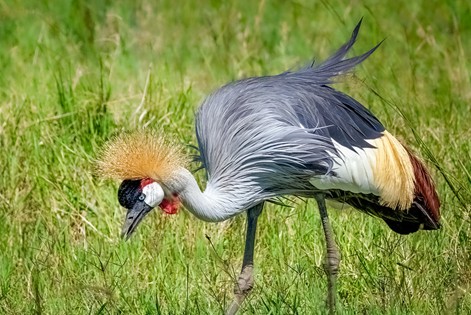
    As usual, I began by researching the country. All I knew was limited to โ€œIdi Amin = bad guy.โ€ But I quickly learned more: Uganda has a diverse landscape and climate, from freezing mountain peaks to scorching savannas. And where there are savannas, there are big animals. Also, birdsโ€”lots of them, with the grey crested crane (Ngaali) as Ugandaโ€™s national bird, proudly displayed on their flag.

    Grey crowned crane, Ugandaโ€™s national bird on flag

    Crested crane appears on the flag of Uganda

    Entebbe, where the international airport is located, sits on the shore of Lake Victoria and serves as a vacation town for people across Africa. The Nile even makes a dramatic appearance at Murchison Falls (more on that later).

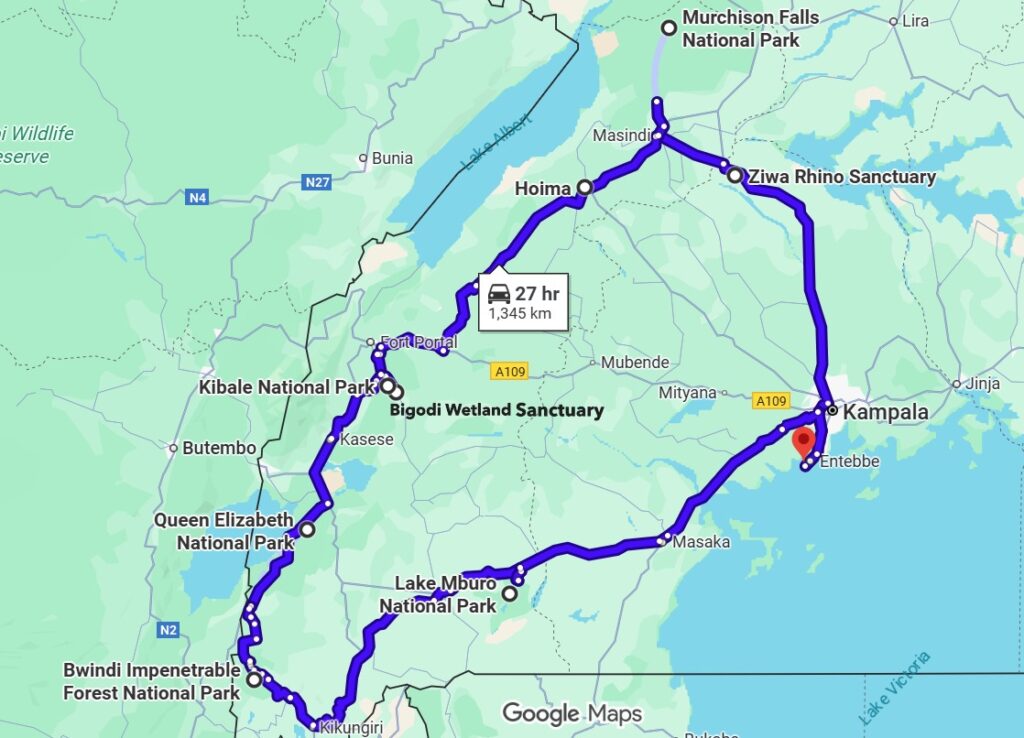
    It quickly became clear that going to Uganda just to see gorillas would be a missed opportunity. So I planned a 12-day itinerary that would take us nearly all around the country. We wanted to escape the Canadian winter (which was particularly brutal in 2025), so we chose Januaryโ€”a relatively dry season in the mountains and warm everywhere else. Uganda sits on the equator, after all. Itโ€™s not exactly sweater weather.

    To fit everything in, we had to endure some long drives. Ugandaโ€™s roads arenโ€™t exactly Autobahn-grade, and spending 4โ€“6 hours a day in a safari car (not every day, but too often for my back) was… character-building. Letโ€™s just say that 100 km in Canada โ‰  100 km in Uganda. The worst part? Driving through towns and villages. Each one greets you with a series of speed bumpsโ€”four or five at the entrance, and another set at the exit. Markets and central areas get their own bonus bumps. Our driver was excellent, but no matter how gently he approached them, we felt every jolt. The driving wasnโ€™t the highlightโ€”but everything else more than made up for it.

    Our 12-day itinerary in Uganda

    Once the itinerary was set, I realized organizing everything solo might be a bit of a challenge. Wasnโ€™t sure that gorilla and chimp tracking permits would be exactly click-and-buy. At the time, gorilla permits were $800 per person, and chimp permits $250. You need to apply about six months in advance, and theyโ€™re in high demand during peak seasons.

    So we used the โ€œhybrid methodโ€: I researched what we wanted to see and do, picked accommodations, and then contacted local agents to help finalize the plan and make reservations. I shortlisted three agencies that seemed professional and reached out.

    I prefer working with local companies over big international ones. They know their country best, theyโ€™re more affordable, and supporting local businesses is part of how we travel. We chose the agency that responded quickly, understood our pace (Iโ€™m an entrepreneurโ€”I move fast and expect others to keep up), and offered thoughtful suggestions. The company we picked wasn’t the cheapest, but it was responsive, organized, and reliable. They arranged our visas, secured the tracking permits, booked some of the hotels, and gave us solid advice on what to expect and how to behave. They even stayed in touch during the trip.

    One helpful tip they gave us: tipping. Wages are low, and tipping is a direct way to support local communities. Hereโ€™s a rough guide (in USD or Euros):

    • Driver Guide: $25 per person per day
    • Gorilla Trekking Rangers: $15
    • Gorilla Trekking Porters: $15โ€“20
    • Restaurant/Cafรฉ Servers: 10% of the bill
    • Other walking tour activities: $10 per day

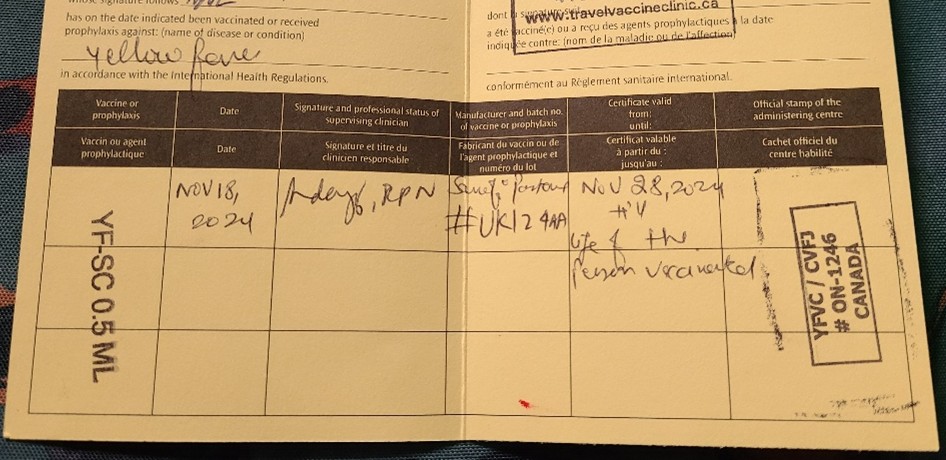
    We also got all the necessary shots: Yellow Fever, COVID, Flu, Hepatitis A. Malaria isnโ€™t endemic everywhere in Uganda, but we were advised to take daily preventive meds during our stay and for a couple of days after. We followed instructionsโ€”no one wants to bring home a souvenir parasite.

    Yellow Fever vaccine card

    Proof of yellow fever vaccination needs to be shown in Uganda. Nobody asked for it, but good to have it you, in case someone does ask.

    Planning a trip to Uganda isnโ€™t just about ticking gorillas off your bucket listโ€”itโ€™s about embracing the variety of adventures that the country has to offer. From misty mountains to sun-drenched savannas, from vibrant markets and beautiful African art to quiet forest trails, Uganda invites you to go deeper. And while the roads may jostle your spine, the journey will stir your soul. Stay tuned for the next chapter, where the adventure truly begins.

    • Uganda offers much more than gorilla trekkingโ€”its diverse landscapes, wildlife, and culture make it a destination worth exploring.
    • Mountain gorillas are endangered but recovering, thanks to conservation efforts; permits are limited and should be booked well in advance.
    • Travel logistics matter: if your time is limited, long drives and bumpy roads are part of the experience, but a well-planned itinerary makes it worthwhile.
    • Local travel agencies can be invaluable, especially for securing permits, arranging accommodations, and offering insider advice.
    • Tipping is appreciated and impactful, especially in the tourism sectorโ€”guidelines help travelers contribute meaningfully.
    • Health prep is essential: Yellow fever vaccination is mandatory and malaria prevention is strongly recommended for a safe trip.

    Next: Part 2 – 17 Hours, 5 Wines, and a Stork with low self respect: Welcome to Uganda โ†’