Tag: Fes medina

  • Chefchaouen & Fes Travel Guide: Blue Walls, Roman Ruins, and a Tagine We’ll Never Use

    Chefchaouen & Fes Travel Guide: Blue Walls, Roman Ruins, and a Tagine We’ll Never Use

    Morocco Series Part 3: Chefchaouen’s Blue Medina, Volubilis’ Majestic Quietness, and the Frenzied Maze of Fes


    New here? Start with Part 1 (Morocco: A practical guide, unsolicited opinions and some food heresyhttps://snarkyvoyager.com/guide-to-morocco-post/

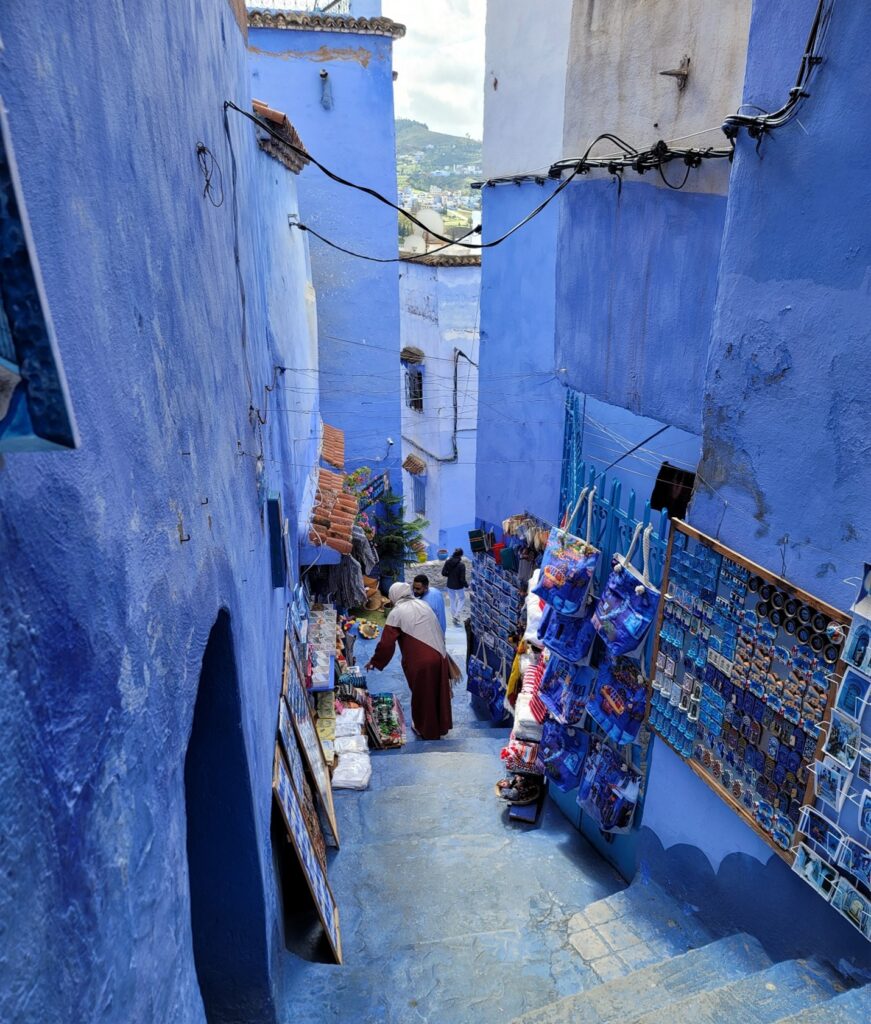
    Day 4 started with a short 1.5 hours drive from Tangier to Chefchaouen, a small, picturesque town nestled in the Rif Mountains. Its claim to fame? Blue. Lots of it. The old town is drenched in every shade of blue imaginable—like someone let a Smurf loose with a paint roller.

    If you’re wondering whether Chefchaouen is worth visiting, the answer is yes — especially if you love photography, blue walls, and mild uphill cardio.

    Why blue? Depends on who you ask. Some say it’s a Jewish tradition carried over from Spain. Others claim it keeps homes cool. Or repels mosquitoes. Or just looks good on Instagram (probably the most honest answer). One thing’s sure, the locals started painting their houses in blue in the 20th century and whatever the reason, they keep painting—and the authorities help by handing out money or free buckets of blue, because tourism is good business for the town.
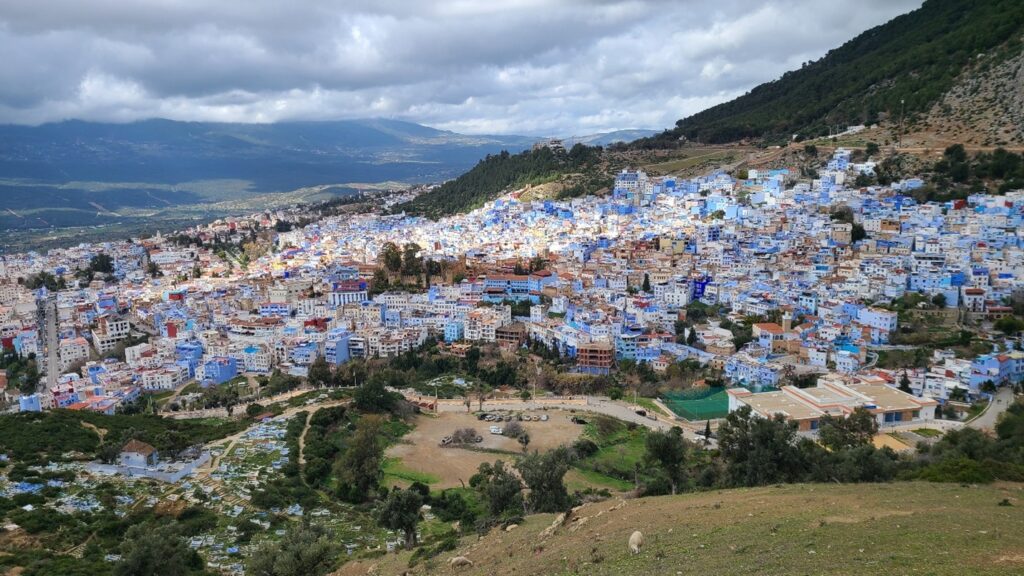
    Chefchaouen the blue city from above

    View of Chefchaouen from the hilltop

    The medina is charming and car-free, which sounds romantic until you’re dragging luggage uphill. We hired porters with carts again, paid double the “recommended” fee, and didn’t argue, especially that we were faced with the amount after the luggage was already in the hotel.

    This is a small town but perfect for a one‑day Chefchaouen itinerary, especially if you enjoy wandering, shopping, and pretending you hike regularly

    Fun fact: many locals here speak Spanish instead of French, thanks to Northern Morocco’s colonial history.
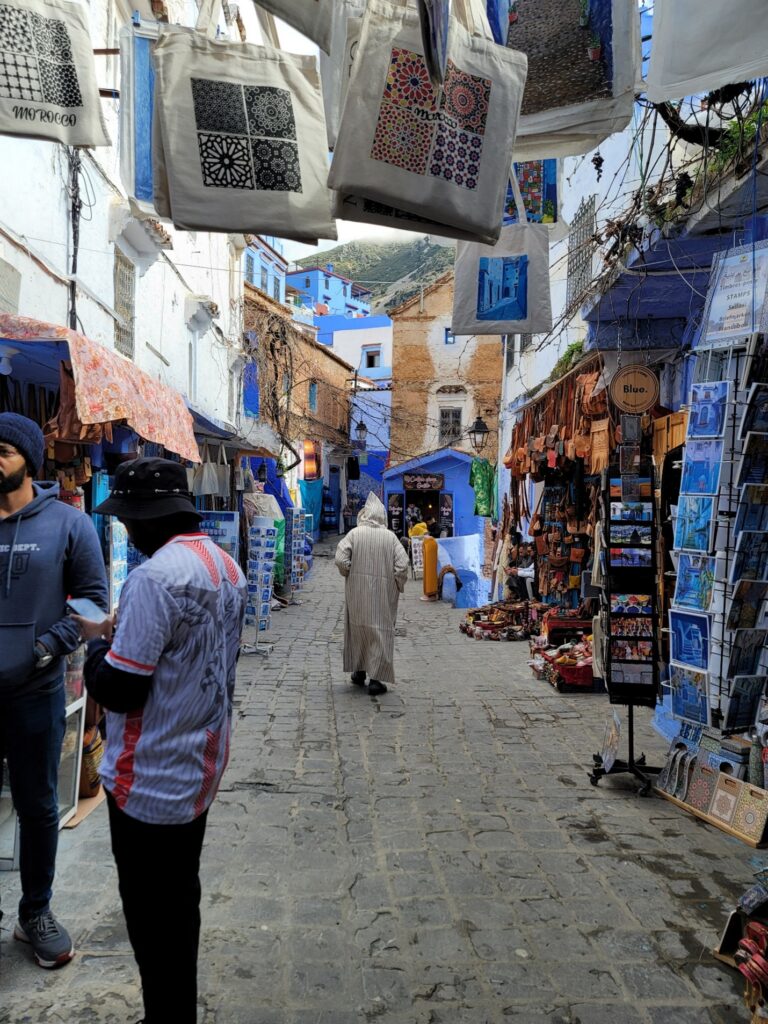
    The medina of Chefchaouen

    Shops in Chefchaouen Medina

    Chefchaouen blue medina — is Chefchaouen worth visiting? YES!

    Chefchaouen artisanal shop

    We spent the day strolling through the medina, browsing shops selling artisanal crafts made of leather and wool. We admired the Mendil—traditional red-and-white striped blankets worn by Rif women—and watched silk and wool being woven on looms that looked older than some of the ruins we’d later visit.
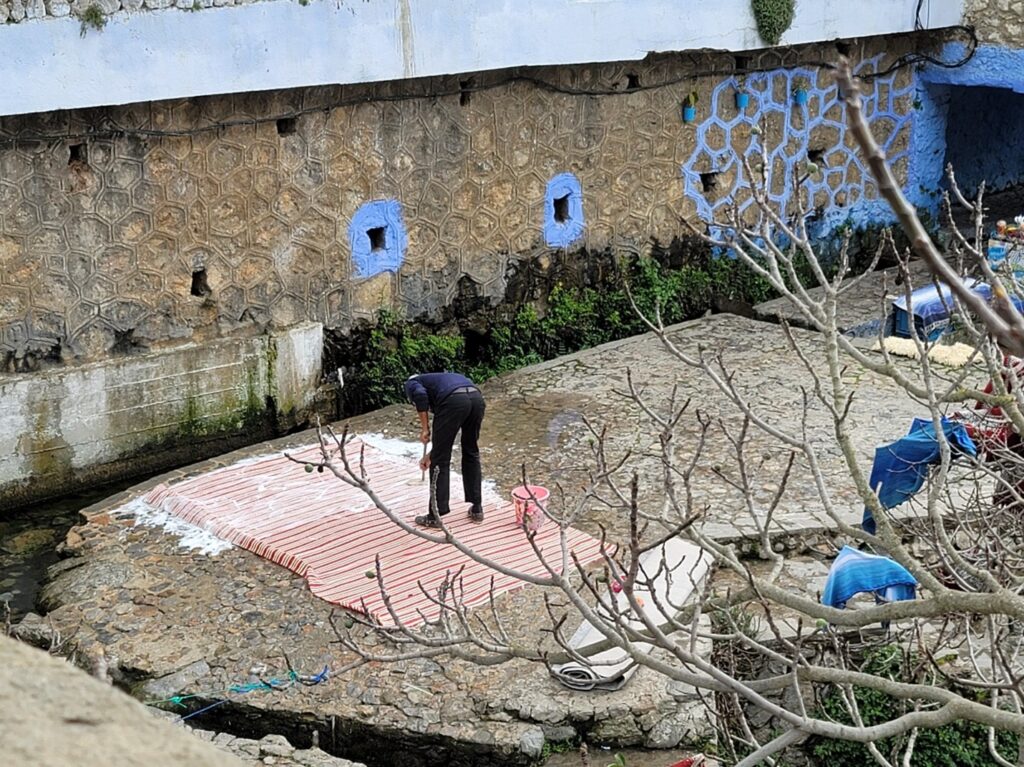
    Cleaning the traditional red and white blankets

    Washing the Mendil, the traditional blanket of the Rif Mountain region

    We hiked up the hill for a panoramic view, took the obligatory photos, and drank orange juice from a guy who squeezed it faster than we could blink.
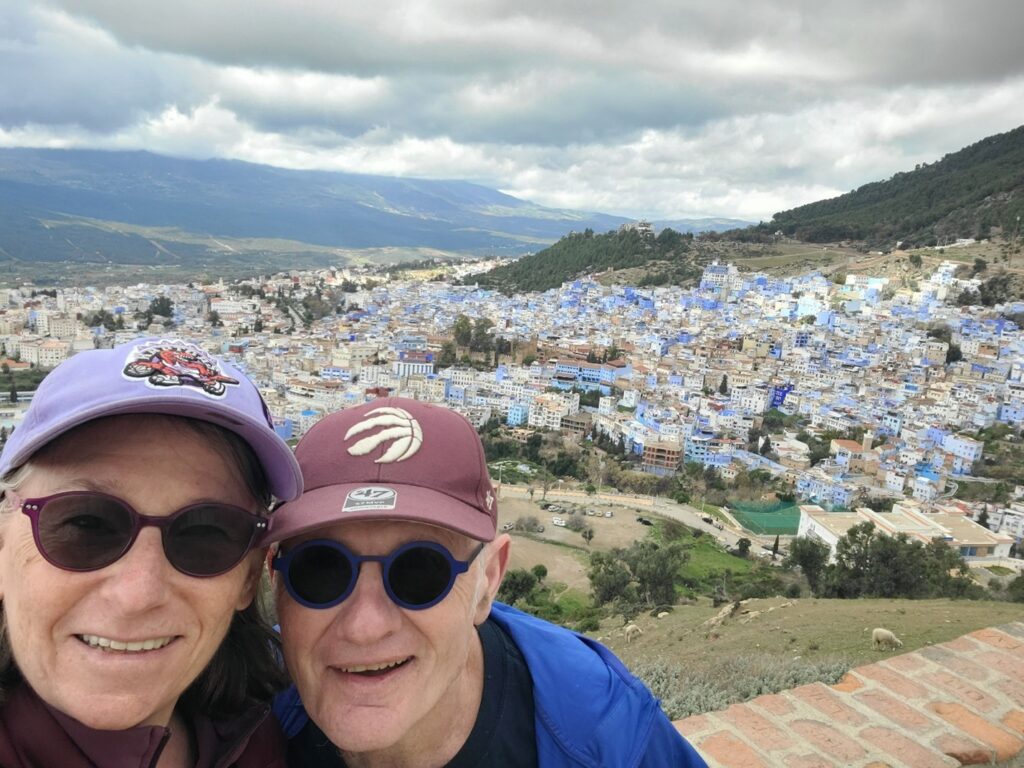
    Us and Chefchaouen

    I know it looks like I recorded at high speed. But no. This is how fast this guy’s hands really moved.

    Staying at Dar Meziana. It’s a small riad with questionable cleanliness (or should I say unquestionable uncleanliness?), claustrophobic and uncomfortable rooms, and heating that’s more symbolic than functional. Even for Canadians, winter nights in the mountains are not the time to test your tolerance for cold. Verdict: Chefchaouen is a must‑see, but Dar Meziana is a must‑avoid.

    Next day, we hit the road for Fes, with a stop at Volubilis—an ancient Roman settlement that’s both massive and impressive. After three hours of driving, we needed a break anyway.

    The ruins? Stunning.

    Our guide? Less so. He delivered his lines with the enthusiasm of someone reading cereal ingredients. The site deserves better. There probably are better guides, but we didn’t get lucky.

    If you’re planning how to visit Volubilis from Chefchaouen, it’s an easy stop on the drive between Chefchaouen and Fes—and absolutely worth the detour.
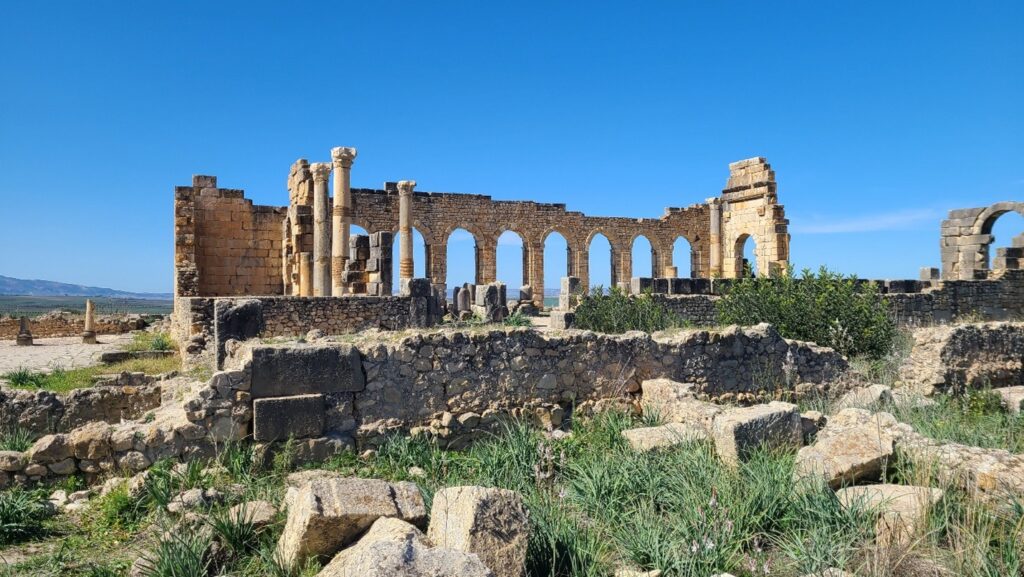
    Volubilis Roman ruins — how to visit Volubilis from Chefchaouen

    The Basilica of Volubilis, a key Roman administrative structure used for legal and civic proceedings
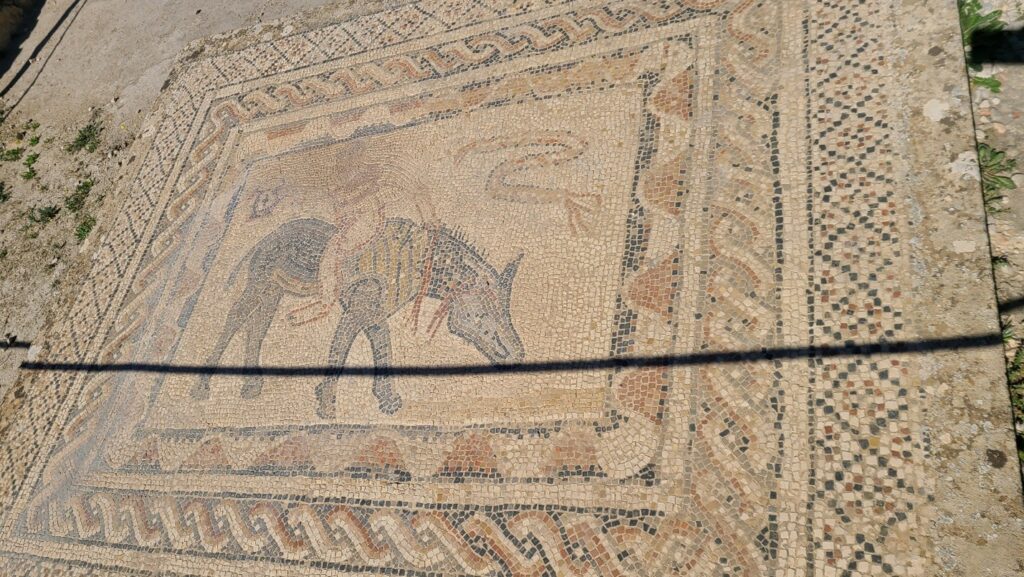
    Volubilis mosaic

    One of the Mosaics at Volubilis still well-preserved

    Back in the car, another 1.5 hours later, we arrived in Fes. The weather was beautiful, so we dropped our bags and wandered the neighborhood. Found a cozy café, ordered coffee, and let the late afternoon sun remind us why we travel.
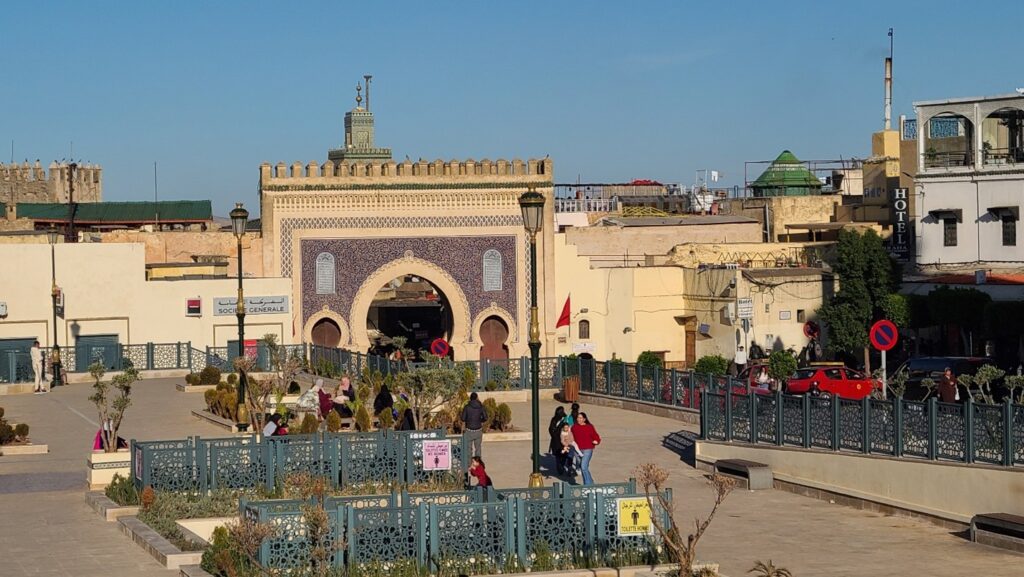
    Fes entrance to the medina

    Gate to the Fes Medina. We enjoyed the mild weather and a coffee at the coffee shop on the right

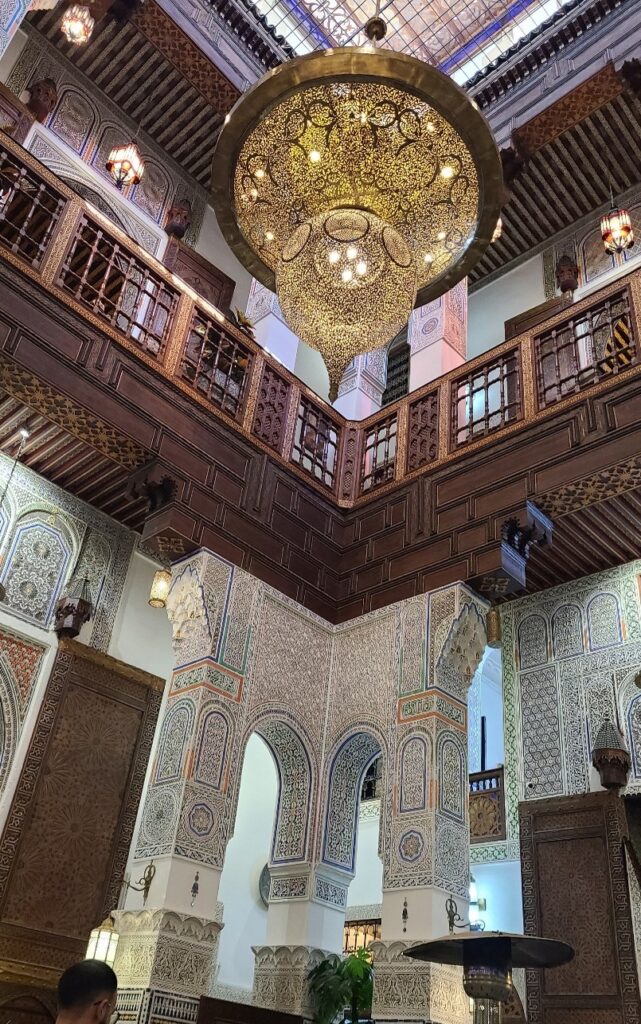
    We stayed at Riad El Yacout—a majestic hotel with spacious rooms and excellent staff. February is low season, so we scored a great deal. It was the perfect antidote to our Chefchaouen lodging trauma.
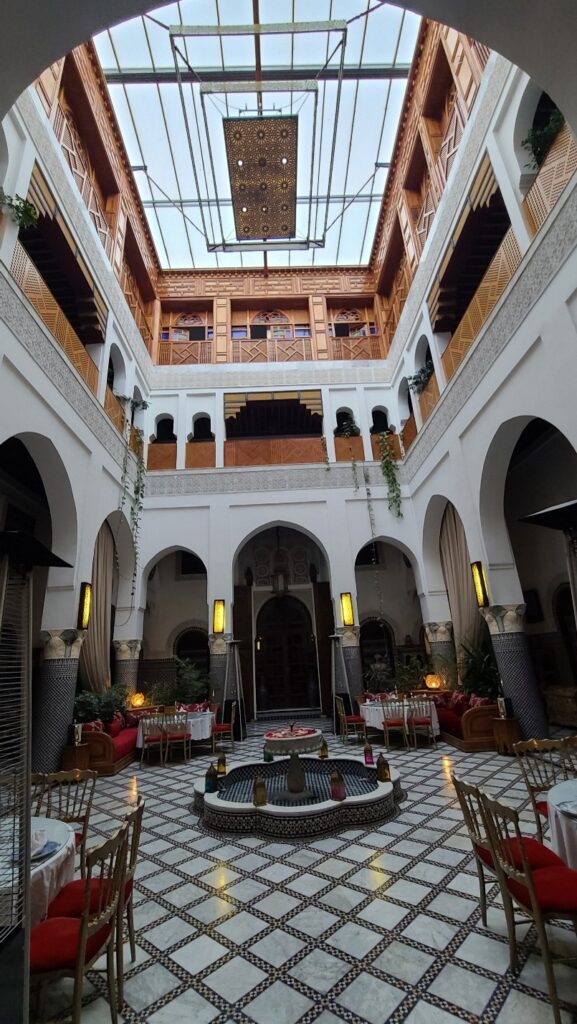
    The main hall at Riad el Yacout Fes

    Riad el Yacout, the main lobby

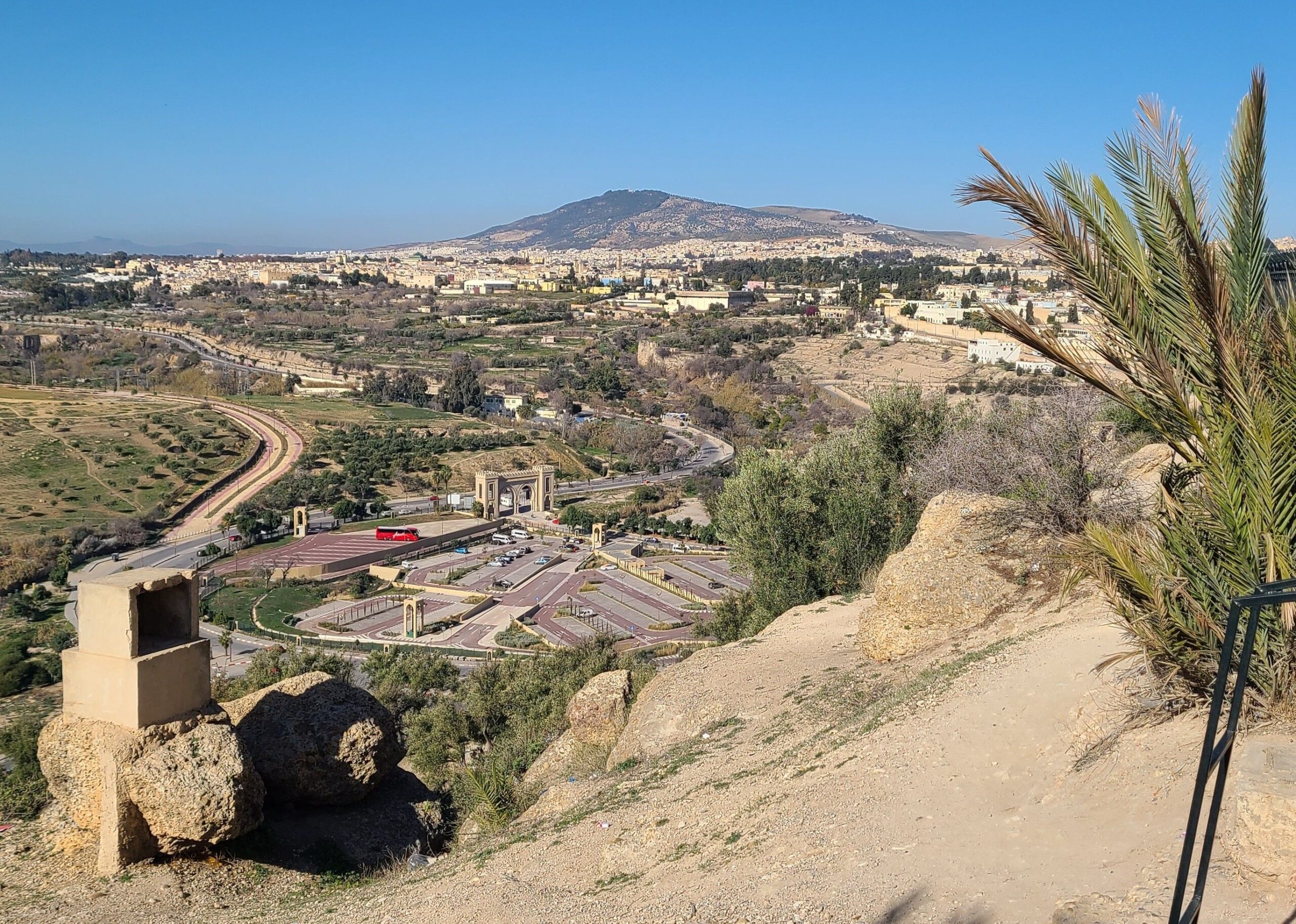
    Fes is one of Morocco’s largest and most exciting cities, and it delivers. We took a six-hour guided tour that started with ruined forts on the surrounding hills, offering a stunning panoramic view of the city and an excellent way to understand Fes’ size and history.
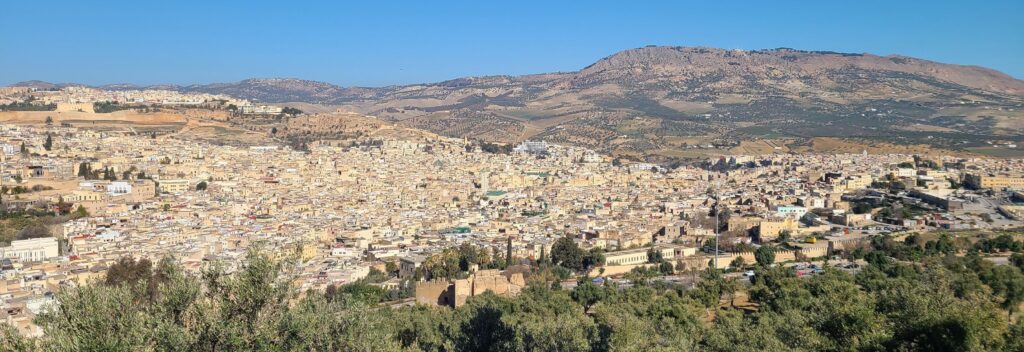
    Fes - panoramic view

    Panoramic view of Fes

    We watched artisans create Fes’ famous blue pottery and intricate mosaics. The craftsmanship was so impressive that we felt we had to buy a tagine. It is totally unusable for cooking (our friends tried; it cracked), but it looks great in our growing collection of decorative kitchenware we’ll never use.

    Ceramics are one of the most tempting answers to what to buy in Morocco—even if they end up purely decorative.

    Each small piece of mosaic is made by hand in this Fes pottery
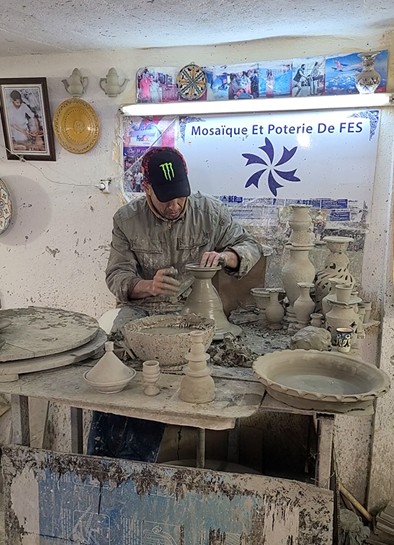
    Fes pottery workshop — what to buy in Morocco

    Making a tagine in a pottery in Fes

    A historic neighborhood with preserved architecture, cemeteries, and synagogues. Fes’ Mellah is one of the largest in Morocco and a testament to the enduring relationship between Jewish and Muslim communities in the country.
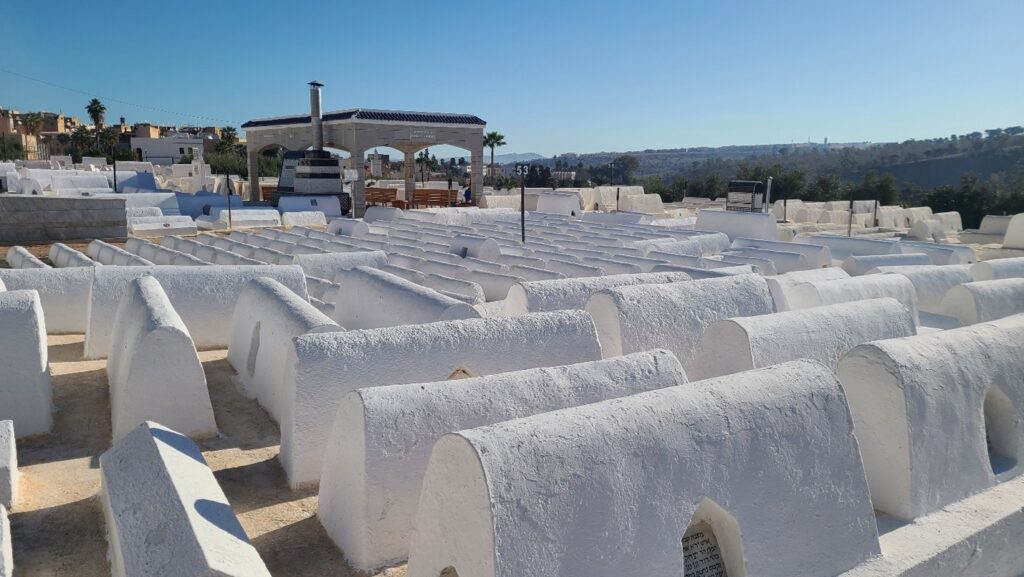
    Jewish cemetery in Fes

    Old Jewish Cemetery in Fes

    Grand, golden, and completely inaccessible. You can admire them, but don’t get any ideas.

    A sprawling labyrinth where even Google Maps throws up its hands. We were warned not to explore alone, and we listened. Our guide led us through artisan quarters where metalworkers, dyers, woodworkers, and silk weavers still practice their crafts. The tannery was a highlight—equal parts fascinating and pungent. They try to convince you to buy.  The quality is excellent, and we left with leather gifts we actually use.
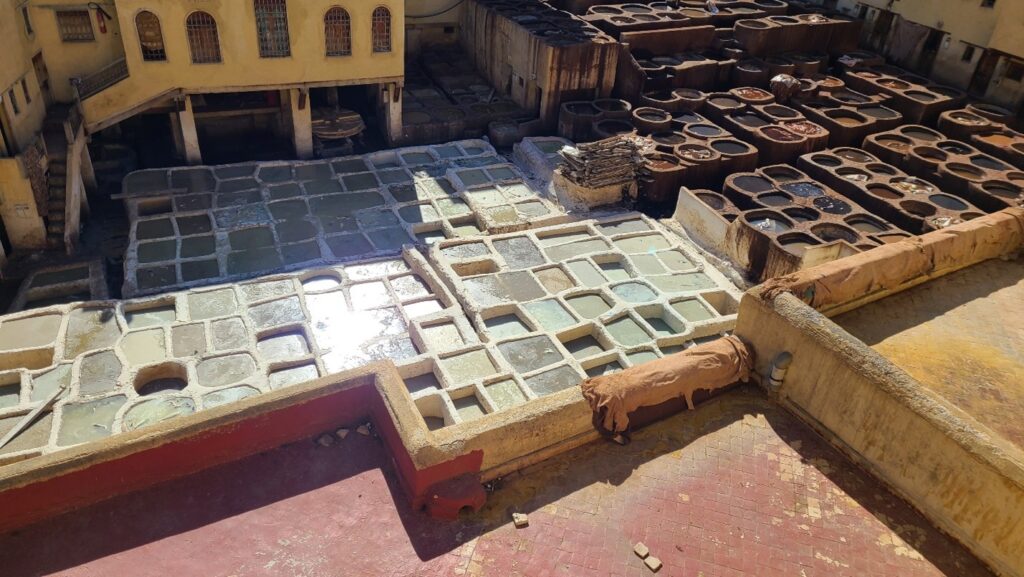
    Fes tannery — things to do in Fes medina

    The leather is processed in Fes the same way as it was done centuries ago
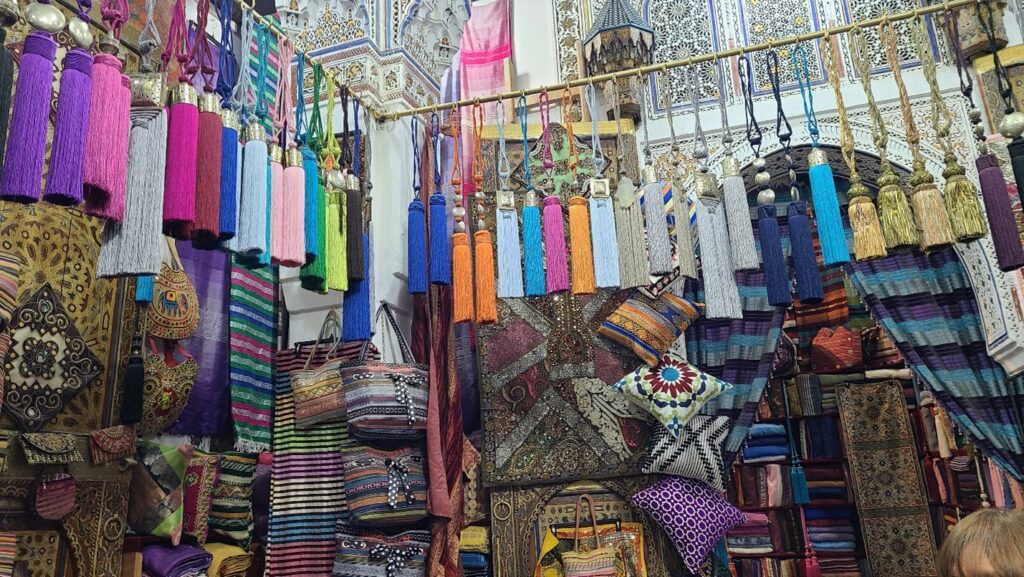
    Inside a shop in the souk
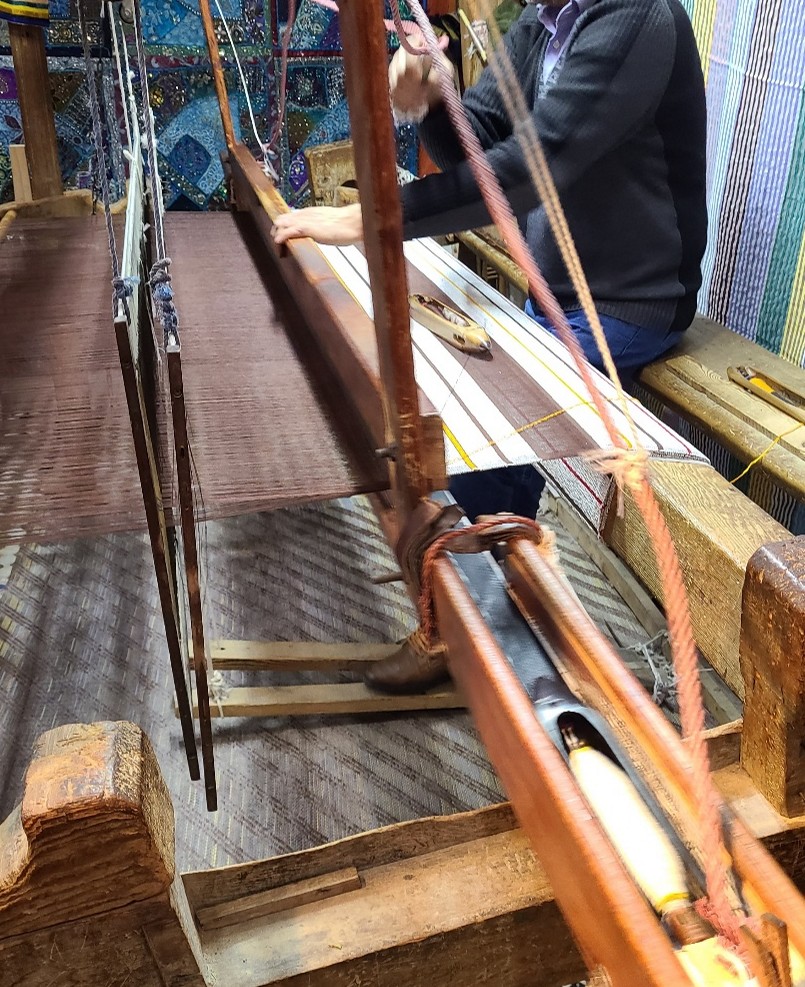
    Weaving a carpet with a loom in Fes Medina

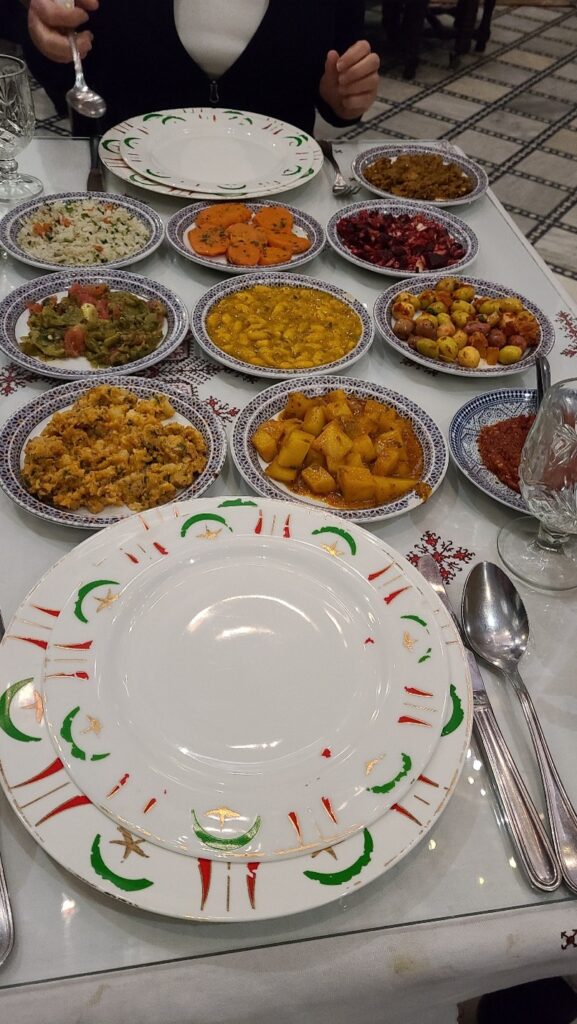
    By midday, we were starving, so lunch at Palais Lahlou was a welcome pause. It was Friday, so couscous was mandatory. The restaurant was a bit touristy, but the couscous was excellent and served in quantities that could feed a small battalion. We skipped dinner…
    Palais Lahlou restauarnt in Fes

    Palais Lahlou Restaurant

    The salads served before couscous at Palais Lahlou restaurant

    This is brought to the table even before the couscous arrives… there was no room in the frame to show the pitas.

    Chefchaouen and Fes offered two very different flavors of Morocco—one painted in blue and the other full of history, chaos, and the occasional olfactory challenge.

    We climbed hills, bought pottery we’ll never use and the odd leather gift that is already in use, and learned more about Moroccan culture than we ever expected. From the freezing riad in Chefchaouen to the royal gates we couldn’t enter in Fes, it was a journey of contrasts, color, and couscous. And while not every moment was comfortable, every moment was memorable—which, in travel terms, is basically the same thing.

    • Chefchaouen’s Blue Medina – It’s blue, it’s charming, and it’s aggressively ready for photography.
    • Orange Juice Guy – Peeled and squeezed faster than we could say “vitamin C.”
    • Riffi Blankets and Artisan Shops – Wool, leather, handmade textiles – the temptation to buy things we don’t need.
    • Hilltop Viewpoint in Chefchaouen – Best panoramic view of Chefchaouen, mild cardio, and pretending we hike regularly.
    • Volubilis Roman Ruins – Impressive relics, underwhelming guide, excellent excuse to stretch our legs.
    • Riad El Yacout (Fes) – Majestic rooms, warm staff, and actual heating (not so needed anyway). Strongly recommended. Chefchaouen, take notes.
    • Pottery Quarter in Fes – Gorgeous ceramics and mosaics we’ll never use but absolutely had to buy.
    • Fes Mellah (Jewish Quarter) – Rich history and architecture.
    • Fes Medina – A maze of artisans, markets, and sensory overload, so confusing even Google Maps gave up.
    • Lunch at Palais Lahlou – Friday is Couscous Day… plus other food for a battalion, but tastier.

    Is Chefchaouen worth visiting?
    Yes — especially if you love photography, blue alleys, and a medina that feels like a watercolor painting.

    How do you visit Volubilis from Fes?
    It’s an easy stop on the drive between Chefchaouen and Fes. You can visit independently or hire a guide (results may vary).

    What are the best things to do in Fes medina?
    The tannery, pottery workshops, artisan quarters, and getting lost under controlled supervision.

    What should you buy in Morocco?
    Ceramics, leather, textiles, and souvenirs you’ll never use but will absolutely display.

    ← Previous: Part 2 –Rabat and Tangier: The Cities You Visit Before the Real Drama Starts

    Next: Part 4 – Sahara: Camels, Sandstorms & One Majestic State of Mind 

  • Morocco: A practical guide, unsolicited opinions and  some food heresy

    Morocco: A practical guide, unsolicited opinions and some food heresy


    Morocco Series Part 1: Practical and Useful Tips, Unsolicited Opinions, and Culinary Controversies

    We’d long wanted to visit Morocco—a country where African, Arab, Berber, and European influences mix together in a kaleidoscope of color, sound, and occasional sensory overload. We came to see the cities and villages with their unique architecture, to get lost in the labyrinthine souks (on purpose, mostly), and to better understand Morocco’s ancient traditions. But let’s be honest: we mostly came for the Sahara.

    Valentin, wife and friends on camels in the Sahara

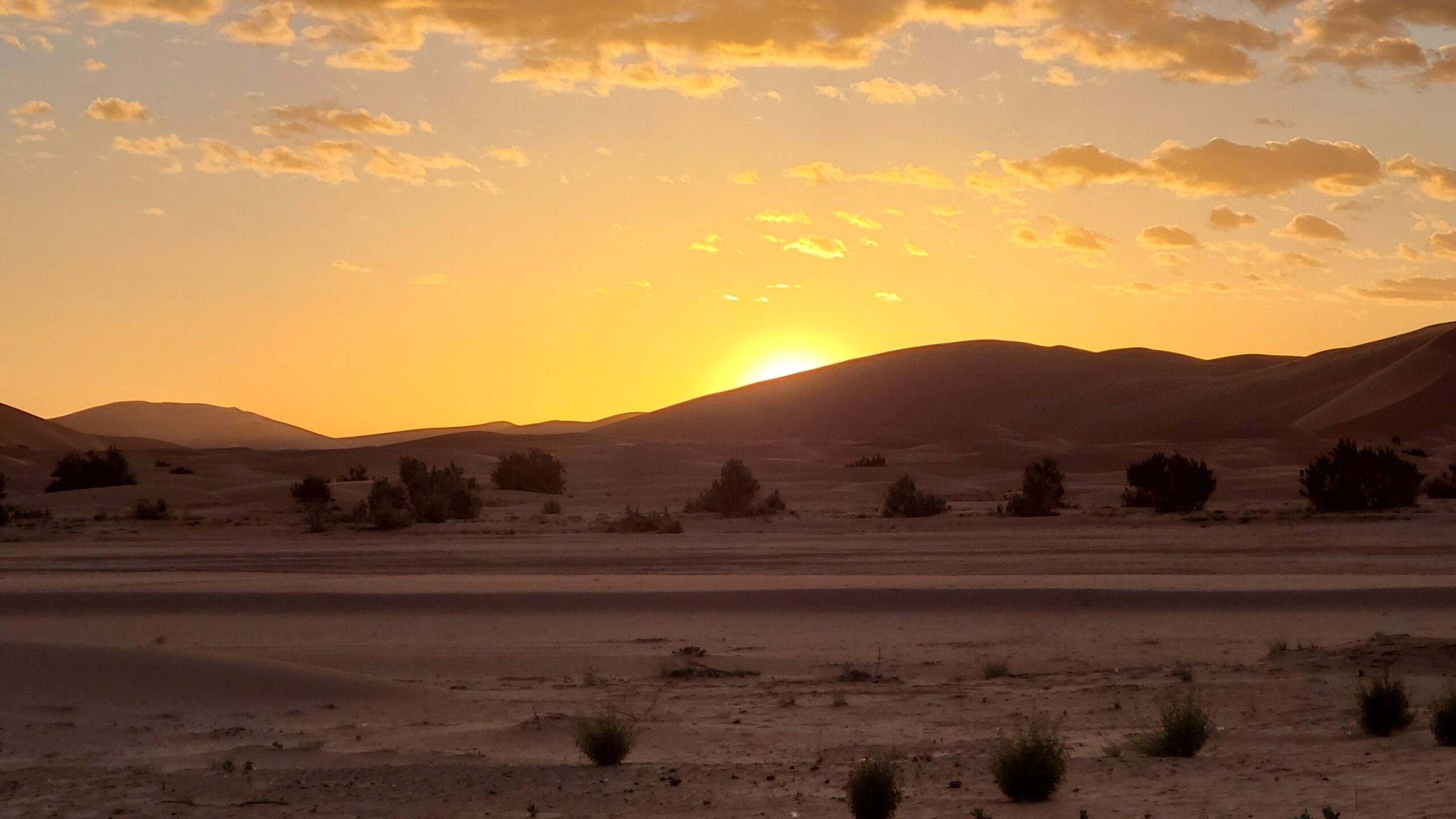
    Sunset in the Sahara

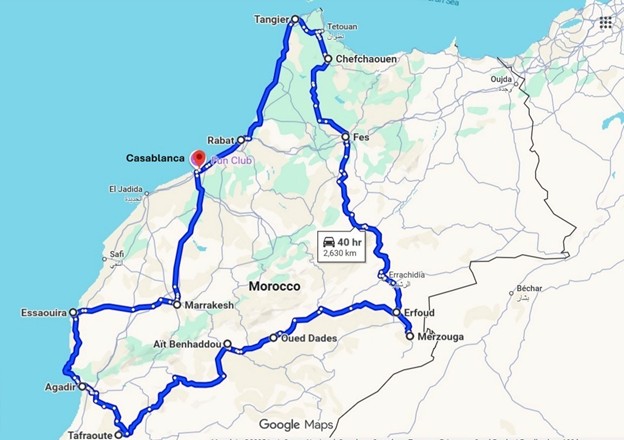
    Uganda gave us wildlife. The airline gave us a detour to Istanbul that defied physics. And yet, against all odds, we eventually landed in Morocco. We spent 18 days in Morocco, executing one of our loop itineraries—efficient, feasible and just at the edge of being chaotic but without triggering a logistical meltdown.

    Morocco tour map

    Our Morocco tour map (from Casablanca to Casablanca)

    Before diving into the details, credit where it’s due: Yassine, our travel fixer, was very good. He offered great suggestions, handled bookings that we could not make, and had someone on call whenever things got wobbly. He even reimbursed us for a hotel that didn’t live up to our expectations—a rare move in the travel industry, where “customer service” often means “we’ll get back to you never.” Thanks again, Yassine.

    The Moroccan Dirham (MAD) was worth about US$0.10. Canadian dollars? too exotic—don’t bother. Stick to Euros, Pounds, or USD. ATMs are plentiful, Visa and Mastercard are widely accepted, and AMEX is mostly treated like a distant cousin who shows up uninvited. Always ask for a receipt when exchanging money. You may need it later, especially if you try to convert leftover Dirhams back—though frankly, it’s easier to spend them on snacks and souvenirs you didn’t know you needed.

    Moroccans are persuasive. They can sell sand to desert people. You’ll walk into a shop “just browsing” and leave with a lamp, a rug, and a leather pouf you’ll have to leave at the airport because of overweight. Haggling is expected and oddly enjoyable once you accept that the first price is fiction. If you agree on a price, buy the item—backing out is considered rude. Think of it as theatre with a financial twist.

    Morocco offers everything from backpacker hostels to palatial hotels. Most tourists opt for riads—traditional homes with courtyards, often located inside medinas (the old, historic, and often walled part of a city). Some are stunning. Others are… character-building. A beautiful riad is a dream. A bad one is a medieval Airbnb. Do your homework before booking, especially if you value sleep and clean, functioning showers.

    Tipping is customary and expected:

    • Hotel porters: 5 MAD per bag
    • Medina trolley porters: 20–50 MAD (could even go up to double) depending on distance and drama
    • Hotel staff: 5–10 MAD per person/day
    • Restaurant servers: 10%
    • Public toilets: 1 MAD (worth it)
    • Drivers: 75–100 MAD/day
    • Guides: 80–120 MAD/day
    • Camel drivers: 20–30 MAD per person
    • Desert camp staff: 20–30 MAD per person

    Morocco is generally safe, but don’t tempt fate. Use common sense when walking in unknown places, especially at night. Keep valuables close and carry your bag in front of you especially in souks and beaches. If you’re traveling with a driver, take your bag when you leave the car—he’s a driver, not a bodyguard. And yes, pickpockets exist. They’re fast and very discreet.

    Morocco is diverse, but modesty is appreciated. The traditional “djellaba” is worn by locals, but tourists aren’t expected to adopt it unless they’re feeling theatrical. In rural or conservative areas, modest clothing helps avoid unwanted attention.

    Two types:

    • Grand taxis (big, usually Mercedes, intercity)
    • Petit taxis (small, city-bound, take up to 3 persons)

    Always negotiate the fare unless the driver agrees to use the meter—which is about as common as coconut trees in Sahara.

    I read that they just introduced Uber in Casablanca and Marrakech. Don’t know how reliable it is. Worth checking.

    We arrived with high hopes and empty stomachs. Let’s start with the basics: olive oil here is fantastic—and so cheap we half‑seriously wished we’d hired a tanker to haul it across the Atlantic back to Canada. The same goes for saffron (minus the tanker, but definitely for the quality and price).

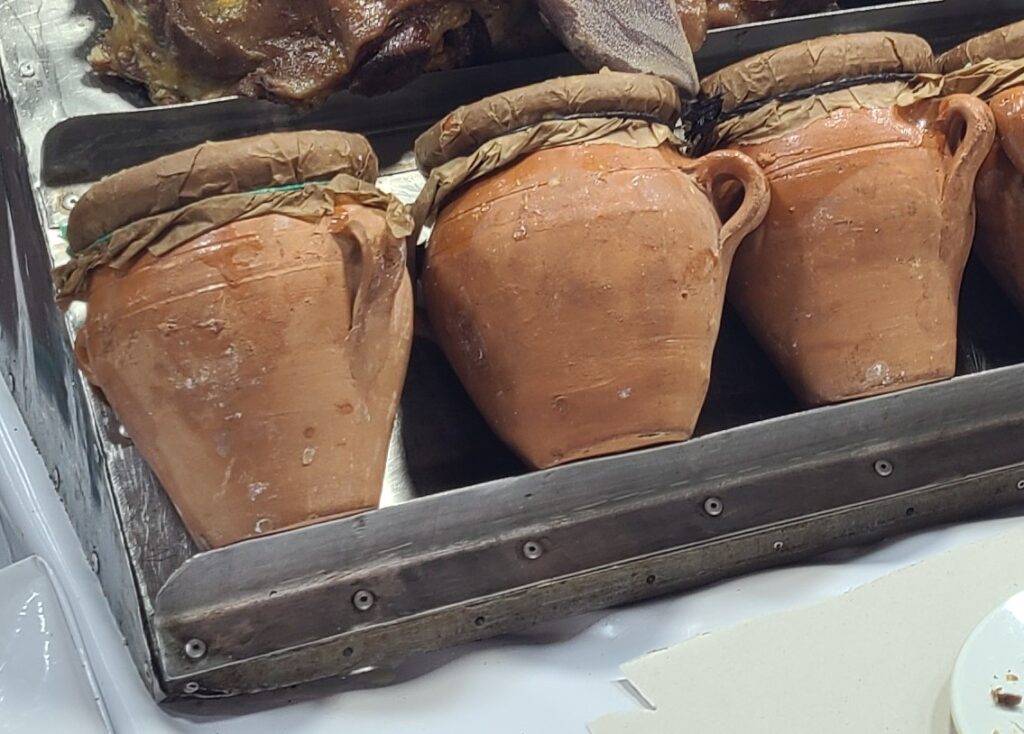
    Moroccan cuisine is famous, and rightly so—especially the street food. Briouats (crispy pastries stuffed with meat or cheese) were addictive. Tangia (not tagine!), a slow-cooked stew of beef or lamb with preserved lemon and spices, was a highlight—especially in Marrakech’s Jemaa El Fna square, where the food is good and the chaos is for free.

    Tangia pots in Jemaa el-fnaa square in Marrakech

    Tangia Pots

    Couscous deserves its reputation. In Morocco, it’s fluffy and delicate. It’s not just technique—its knowledge passed down through generations and seasoned with love.

    But then there’s the sweet-savory conundrum, but much sweeter than savory. Moroccans love sugar. Not just in desserts, but in main courses. For someone who prefers salty, spicy, and hot food, this was a challenge. Take pastilla: a sweet chicken pie topped with powdered sugar and cinnamon. It’s like dessert crashed into dinner and nobody called the authorities.

    Now, brace yourself for heresy: I don’t like tagine. There, I said it. The ones I had in restaurants were underwhelming—boiled meat or vegetables with a hint of spice and a lot of sweetness. Maybe homemade tagine is better. Maybe I just don’t like boiled meat. Either way, it wasn’t my cup of tea (pun intended).

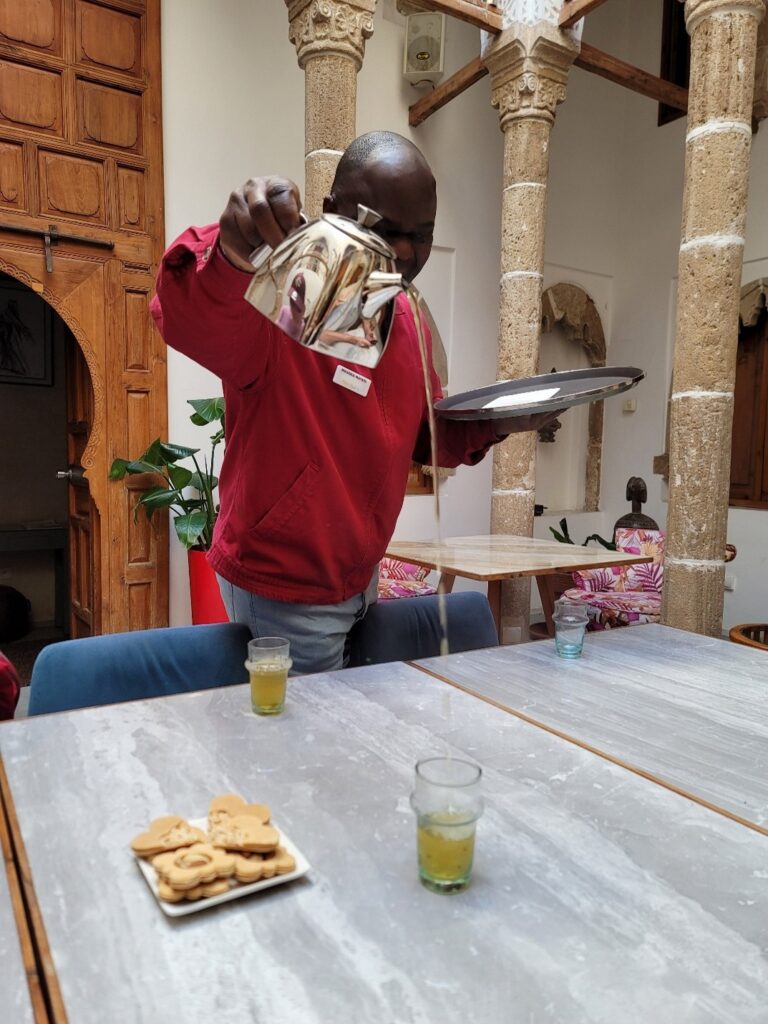
    Speaking of tea: I don’t drink it unless I’m so sick I forget my own name. So I can’t comment on Moroccan mint tea, except to say the pouring technique is impressive enough to warrant its own TED Talk. Pouring tea from height is part of a hospitality ritual to guests, symbolizing respect and the host’s skill. It also aerates the tea to enhance its aroma, mixing the ingredients (tea, mint, and sugar) in the pot, creating a layer of foam (or “crown”) on top, and quickly cooling the hot tea to a drinkable temperature. 

    What’s interesting is that in Asturias, the region in Northern Spain which is probably the farthest from Morocco than any other part of Spain, they pour cider (which is their main alcoholic beverage) in the same way. It is a ritual called escanciar, and they say it releases the cider aromas.  I could not find any connection between the two practices, which probably evolved separately.

    Pouring tea in Morocco

    That’s how they pour tea in Morocco. This is what I call skill.

    Our tour of Morocco started and ended in Casablanca. I cannot say that we covered the entire country, but I feel that we did not miss any important spot, except perhaps Meknes that was undergoing complete renovations.

    We landed in Casablanca and Muhammad, the driver who self-proclaimed himself as “the best driver in Morocco” picked us up from the airport and drove us to Rabat, our first stop on the 18-day visit.  He was supposed to be with us only for this short drive, but ended up driving us the entire tour. He is funny, knowledgeable and helpful. He always went beyond his responsibilities as a driver to make our trip more efficient and pleasurable (including some haggling on the price of olive oil).  We liked him very much and I am sure that he could be as good a guide as he is a driver, maybe even better…  Just to clarify that in Morocco, drivers are not allowed to also be tourist guides.

    Eighteen days in Morocco gave us souks, sugar bombs, Sahara dreams, and a driver who did a great job. Between haggling theatrics, riad roulette, and food that ranged from divine couscous to dessert‑crashed dinners, we discovered that Morocco is equal parts chaos, charm, and culinary contradictions.

    There’s more to come about Morocco. If you’re interested, come back soon and you’ll find more posts.

    • Loop itinerary: 18 days of efficient, borderline chaotic travel without a meltdown.
    • Money matters: Dirham ≈ US$0.10; Canadian dollars = exotic paperweights.
    • Shopping & haggling: Theatre with a financial twist; expect to leave with lots of stuff you didn’t plan on.
    • Accommodation: Riads range from dreamy courtyards to medieval Airbnb nightmares.
    • Tipping cheat sheet: From 1 MAD for toilets to 120 MAD for guides.
    • Safety tips: Morocco is safe, but pickpockets are faster than your reflexes.
    • Dress code: Modesty appreciated.
    • Transport: Grand vs petit taxis; meters are mythical. Uber may have just arrived in Casablanca/Marrakech.
    • Food adventures:
      • Briouats = addictive pastries.
      • Tangia = slow‑cooked heaven.
      • Couscous = fluffy perfection.
      • Pastilla = dessert crashed into dinner.
      • Tagine = boiled meat disappointment (heresy admitted).
    • Olive oil and saffron – bring an extra suitcase… and take home as much as you can.
    • Mint tea ritual: Pouring from height = Moroccan hospitality.
    • Driver Muhammad: Self‑proclaimed “best driver in Morocco,” funny, helpful, and olive‑oil negotiator extraordinaire.

    What should I know before visiting Morocco?
    Money, haggling, tipping, safety, and food expectations all matter more than you think.

    Is Moroccan food spicy?
    Not usually — it’s more sweet than spicy, which may surprise some travelers.

    Are riads better than hotels?
    Often yes, but quality varies wildly. Research is essential.

    Next: Part2 – Rabat and Tangier: The Cities You Visit Before the Real Drama Starts