

Morocco Series Part 2: Rabat’s Royal Calm, Tangier’s Gibraltar Views, and a Gentle Intro to Morocco
Missed the beginning? Start with Part 1 — Practical Guide (Morocco: A Practical Guide, Unsolicited Opinions, and Some Food Heresy)
Rabat is the capital of Morocco—but not the biggest city, nor the loudest, nor the most exciting. It’s relatively quiet, relaxed, and modest in size. One full day was enough to see the highlights. Don’t get me wrong—we liked it. It’s worth visiting. But it’s not Fes or Marrakech, and it knows it. We stayed at Riad Kalaa in the medina. It was… fine. Spacious room, but the layout felt like someone assembled it using leftover pieces from three other rooms. Nothing to write home about unless your standards are “roof and walls.” It’s located far from where cars can park, so we needed porters with hand carts to haul our luggage through the medina maze. We were told the cart would cost 50 Dirhams. We paid 75. Maybe the handles were made of gold. Maybe we were too tired and hungry to negotiate. Probably all of the above.
What’s a Medina?
“Medina” means city in Arabic, but in Morocco it refers to the historic, walled old quarter. Think narrow, winding streets, chaotic souks, and a sensory buffet of spices, vegetables, meat, leather goods, and the occasional knockoff iPhone. It’s part residential, part commercial, and part obstacle course. Most riads are located inside these medinas. It is charming, but the price of admission is dragging your suitcase through a labyrinth.
The “Free” Walking Tour
We joined a walking tour with GuruWalk the next morning. We use them whenever available—they’re well-organized and educational. Technically “free,” but you’re expected to tip the guide at least US$10 (or the same in Euros). And honestly, they earn it. Our guide in Rabat was knowledgeable, entertaining, and didn’t once try to sell us a rug. That’s professionalism.
We visited the major sites:
- King Mohammed V Mausoleum – Impressive. Quietly majestic.
- Oudayas Garden – A beautiful Andalusian garden redesigned in 1919 by the French.
- Rabat Cathedral – Not exactly San Pietro or the Notre Dame, but still interesting for a short visit.
- Hassan Tower
- The Royal Palace – You can look, but don’t touch. Or enter. Or linger. Or breathe too enthusiastically.
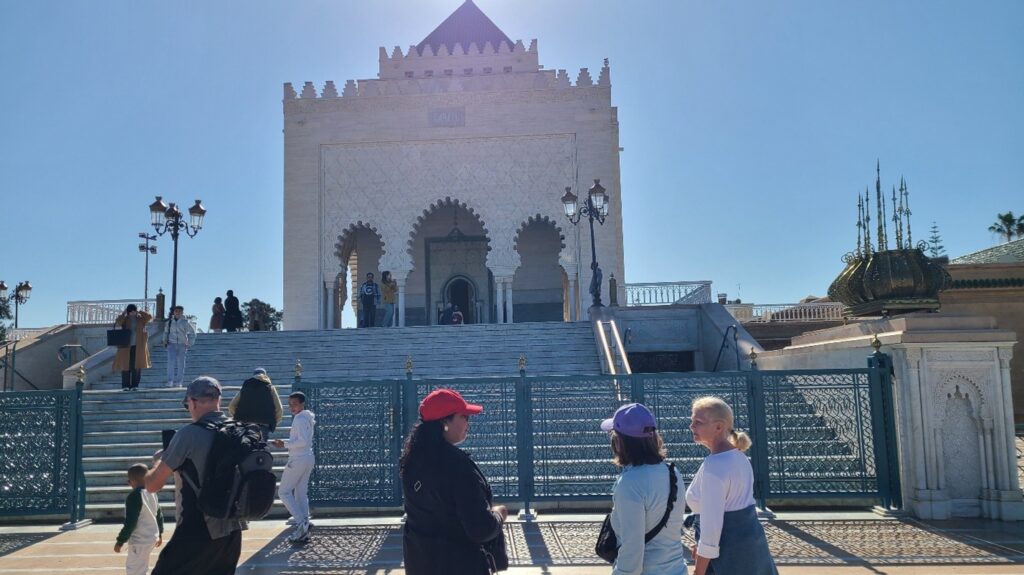
King Mohammed V Mausoleum
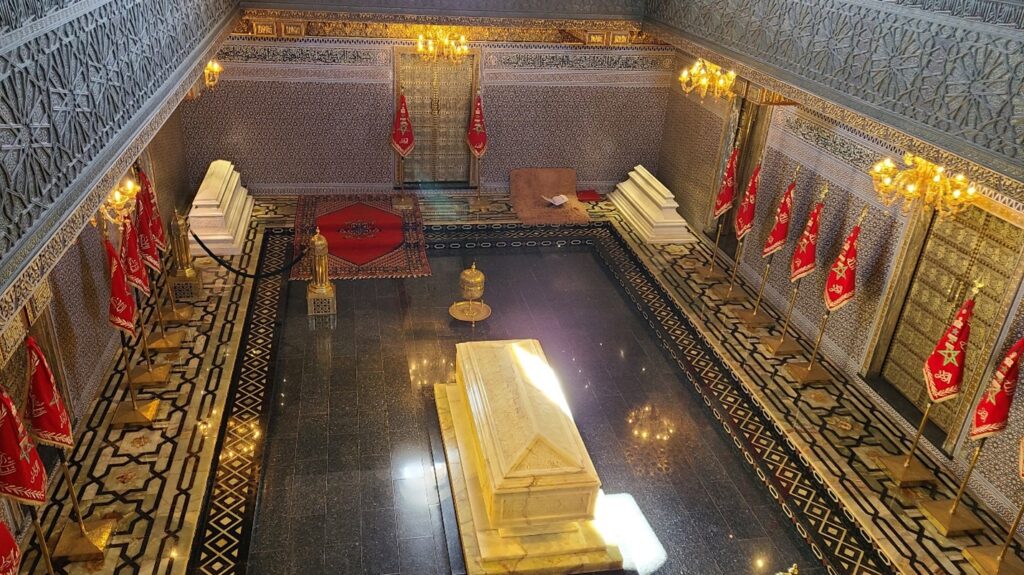
King Mohammed V Mausoleum
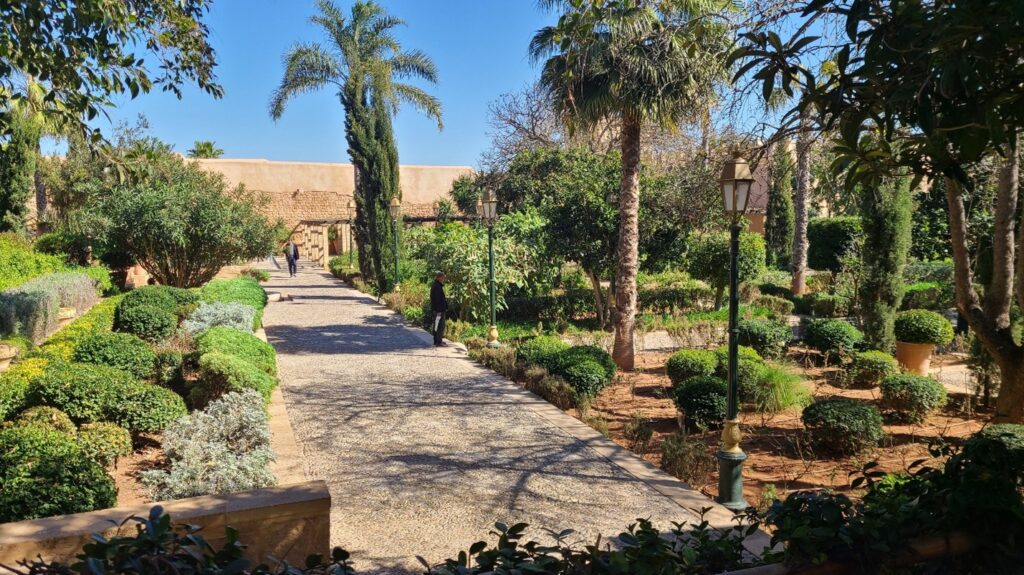
Oudayas Garden
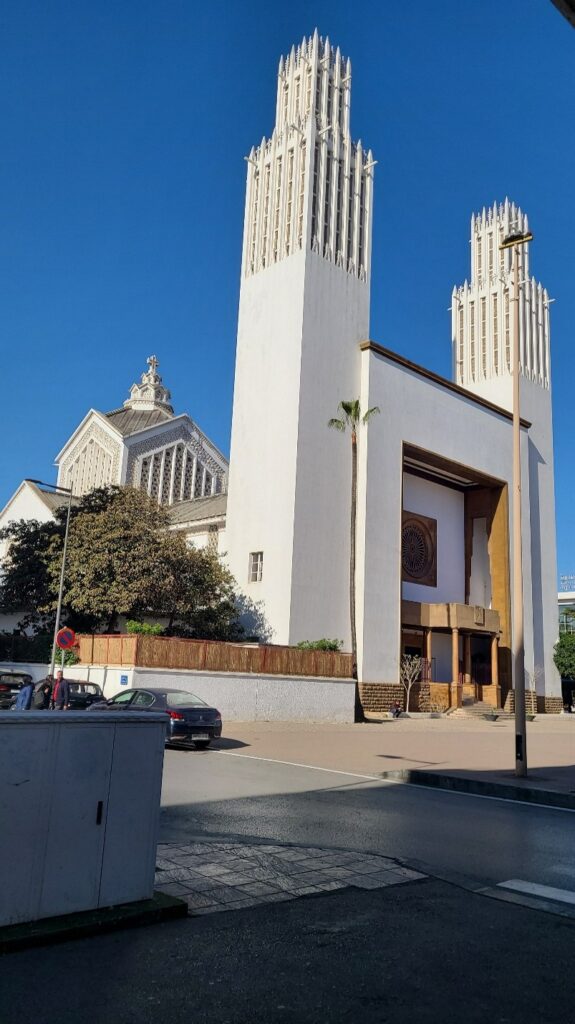
Rabat Cathedral
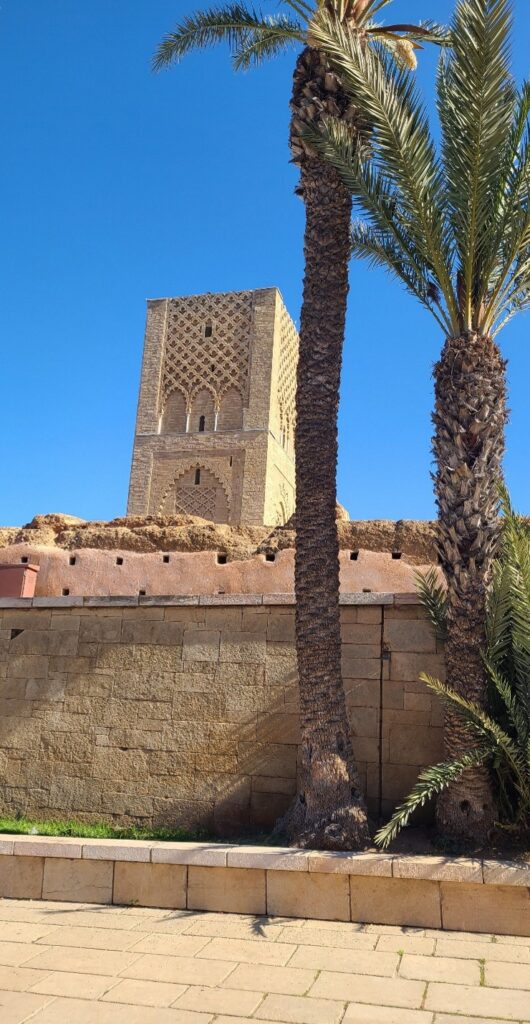
Hassan Tower
The guided tour added value—we learned about Morocco’s layered history, the Amazigh (Berber) people, their culture, their relationship with the Arab-Muslim population (that conquered the area around the 7th century), and the French influence, which is still visible in architecture and bureaucracy. Morocco is like a historical lasagna.
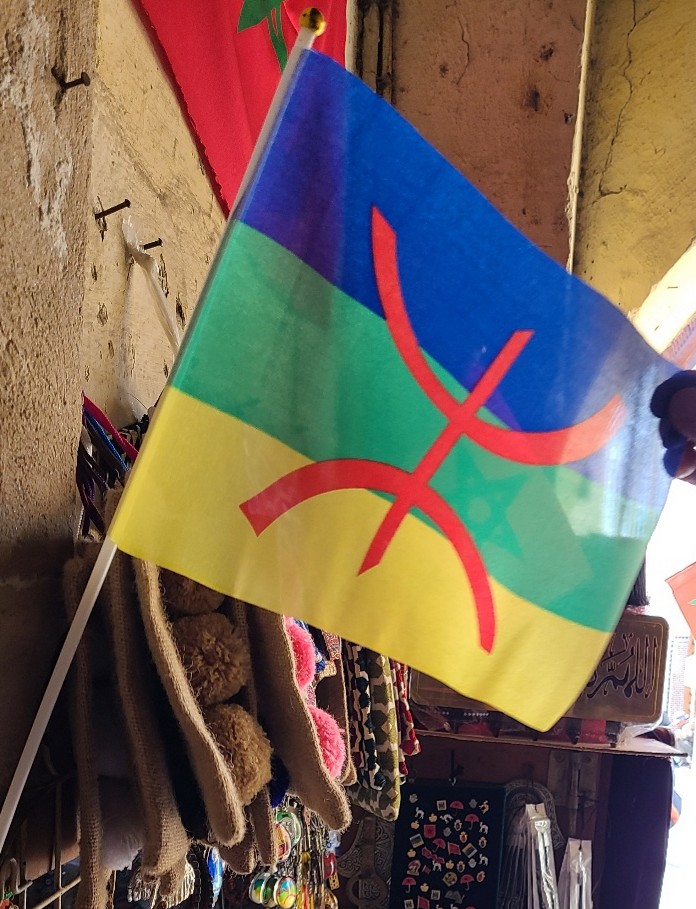
Amazigh flag
Leather, Fire, and Rooftop Wine
Rabat’s medina is not so big, so we visited it by ourselves and found some hidden gems.
In a leather shop, we were taught how to test for genuine leather: set it on fire. If it doesn’t burn, it’s real. If it does, congratulations—you’ve just torched a fake bag and possibly the shop. A thrilling test of authenticity and fire safety.
That’s how to test if it’s made of genuine leather
We wrapped up Rabat with a visit to Azour Rooftop and Lounge. We drank a bottle of “Domain des Ouled Thaleb”, Medaillon Sauvignon Blanc, a decent Moroccan white wine. It was crisp with citrus and some grassy notes, and had nice acidity and minerality. We also had a few bites, and a sunset. Highly recommended—just ignore the antennas and cranes photobombing the skyline.

Sunset over Rabat as seen from Azour Rooftop Lounge
Tangier: The Gibraltar Tease
On Day 3, we left Rabat for Tangier—a three-hour drive and a mild existential shift. Tangier is modern, polished, and not exactly bursting with must-see attractions. For some, the highlight is seeing Gibraltar from Africa. For others, it’s leaving Tangier. Both are valid experiences although we prefer the first.
We took another guided tour (because we’re gluttons for structure) and visited:

The most elevated part of Tangier’s kasbah
- The Kasbah – A fortified quarter, sometimes a citadel, within the city. It is surrounded by high walls, has narrow alleys, and it is often located in a strategic, elevated location for better defense. Pleasant to stroll, especially if you enjoy whitewashed houses and the illusion of medieval defense.
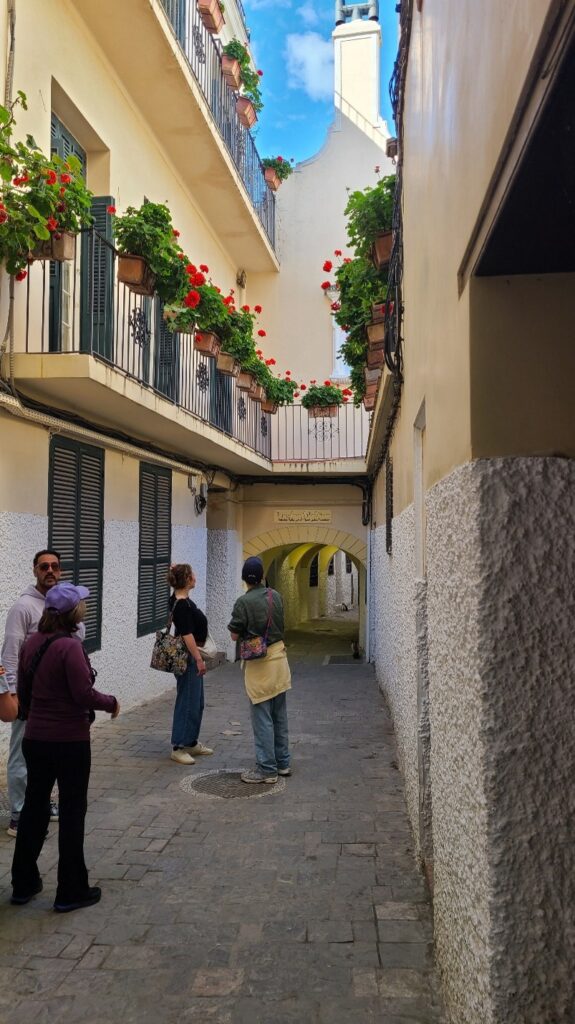
Inside Tangier’s kasbah
- The Souk – Yes, again. This time we tasted Jben, a fresh white cheese made from goat or cow milk (ours was goat). It was good. Not life-changing, but good.

Jben – a specialty of Northern Morocco
- The Jewish Area – Small, quiet, and home to an old cemetery. A reminder of Morocco’s complex religious history.
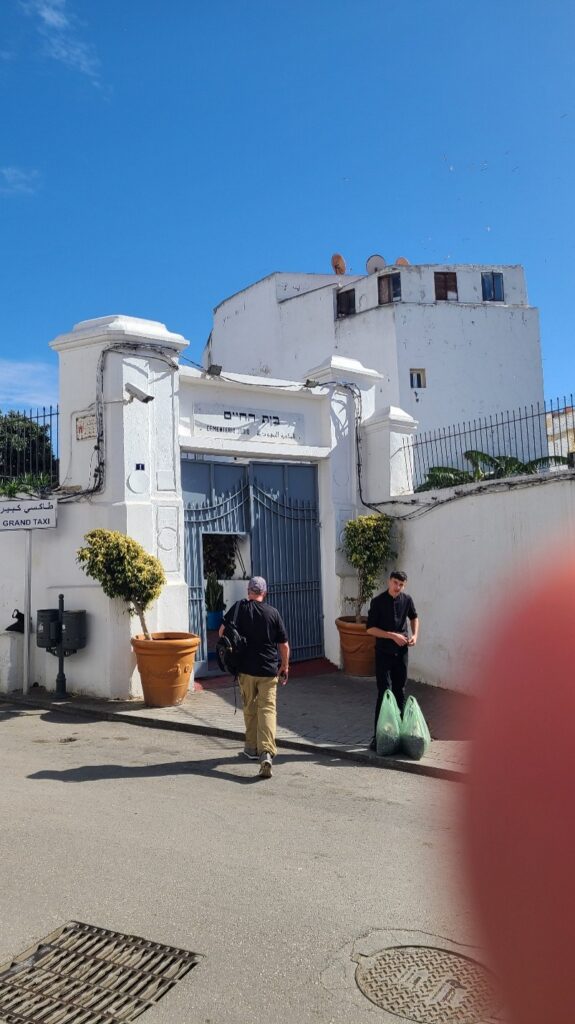
The entrance to the Jewish Cemetery
- The Viewpoint – From here, we saw the harbor and Gibraltar in the distance. Europe, waving politely.
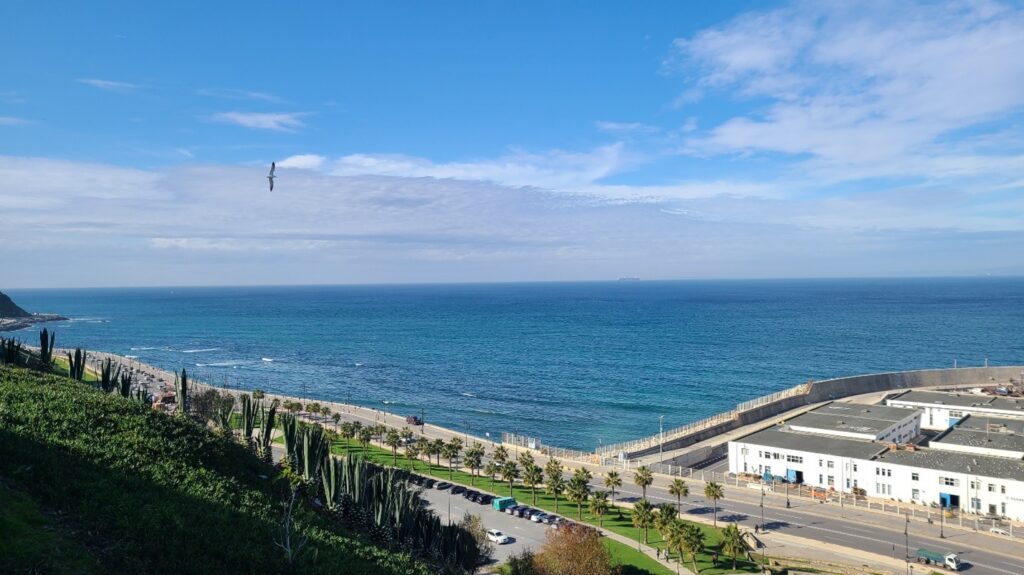
Looking towards Gibraltar from Tangier
The weather was sunny and not too hot—ideal for walking.
Palais Zahia and the Seafood That Wasn’t
We stayed at Palais Zahia, a lovely and elegant riad in the kasbah.

The entrance to Palais Zahia
The restaurant we went to for dinner, however, was a culinary joke. We picked it because they had oysters in the menu. We asked for oysters. They didn’t have oysters. The fish was overcooked, and their wine knowledge was roughly on par with a toddler’s juice preferences. Good for them, I don’t remember the name of the place.
Is Tangier worth visiting?
Tangier doesn’t demand a long stay. Half a day was enough. We didn’t fall in love with it, but we didn’t actively plot our escape either. It’s the kind of place you appreciate in hindsight—like a polite handshake with no follow-up.
Did you know about the genuine leather test? Do you know any other ways to confirm leather is genuine? That’s what comments are for.
Highlights
- King Mohammed V Mausoleum – Majestic, solemn, and refreshingly free of souvenir stalls.
- Oudayas Garden – A peaceful Andalusian garden redesigned by the French, who clearly liked symmetry.
- Rabat Cathedral – Yes, Morocco has one.
- Hassan Tower – A minaret with ambition, but no mosque to match.
- The Royal Palace (Rabat) – Grand gates, zero access—classic royal tease.
- Rabat Medina – Compact, navigable, and only mildly confusing.
- Azour Rooftop Lounge – Sunset, wine, and snacks.
- Tangier Kasbah – Whitewashed charm with a hint of fortress nostalgia.
- Tangier Souk – Where we met Jben, the cheese that briefly stole the show.
- Jewish Quarter (Tangier) – Small, historic, and testimony of the strong connection between Moroccan Jews and non-Jews.
- Gibraltar Viewpoint – Europe in the distance.
- Palais Zahia – Elegant and pleasant riad.
FAQ Rabat and Tangier
Is Rabat worth visiting?
Yes — it’s calm, clean, and culturally rich, perfect for a one- or two‑day stop.
How long do you need in Tangier?
Half a day is enough for most travelers.
Can you see Gibraltar from Tangier?
Yes — on a clear day, Europe waves politely from across the water.
← Previous: Part 1 –A practical guide, unsolicited opinions and some food heresy