Morocco Series Part 7: Hammams, Grappa, Tassel Physics & A Time Zone Plot Twist
A Cultural Marathon with the Best Guide in Morocco
The next day was a full-on cultural marathon. Our guide, Amine, was a rockstar—smart, open‑minded, professional. Simply the best guide we had on the trip. We started at the Koutoubia Mosque (viewing only, as non‑Muslims aren’t allowed inside), then dove straight into the medina’s chaos: souks, bakeries, spice shops, galleries, and a hammam.
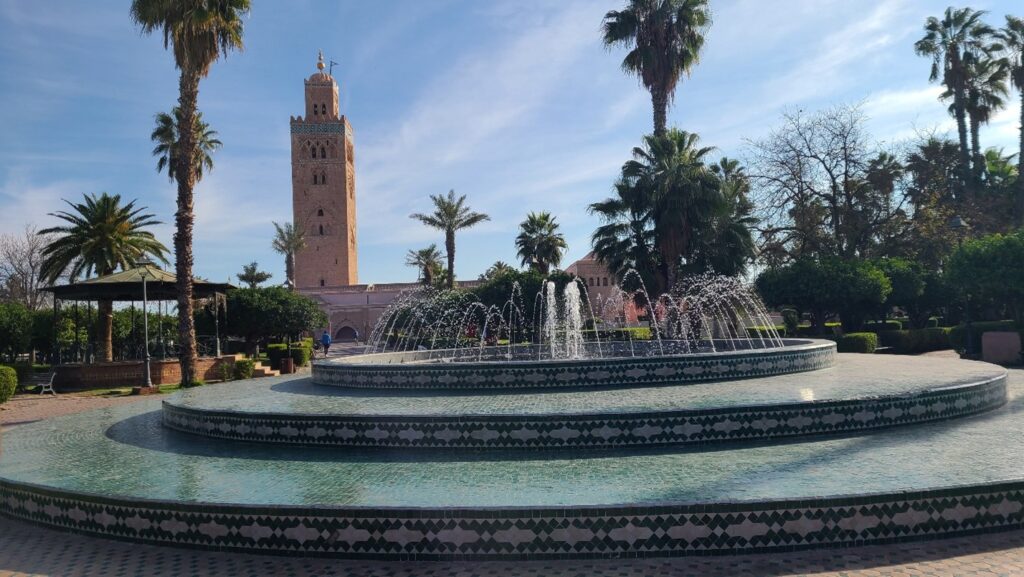
Koutoubia Mosque Marrakech
We learned the difference between Moroccan and Turkish hammams. Turkish = spa‑lite, foam massage, gentle sighs. Moroccan = industrial‑grade exfoliation, black soap, a Kessa glove, and a heating room usually located in the basement. Oppressive heat radiates from every surface, and the smoke clings to the air, making each breath a challenge. It feels like Satan’s sauna. The workers down there deserve medals—or at least hazard pay.
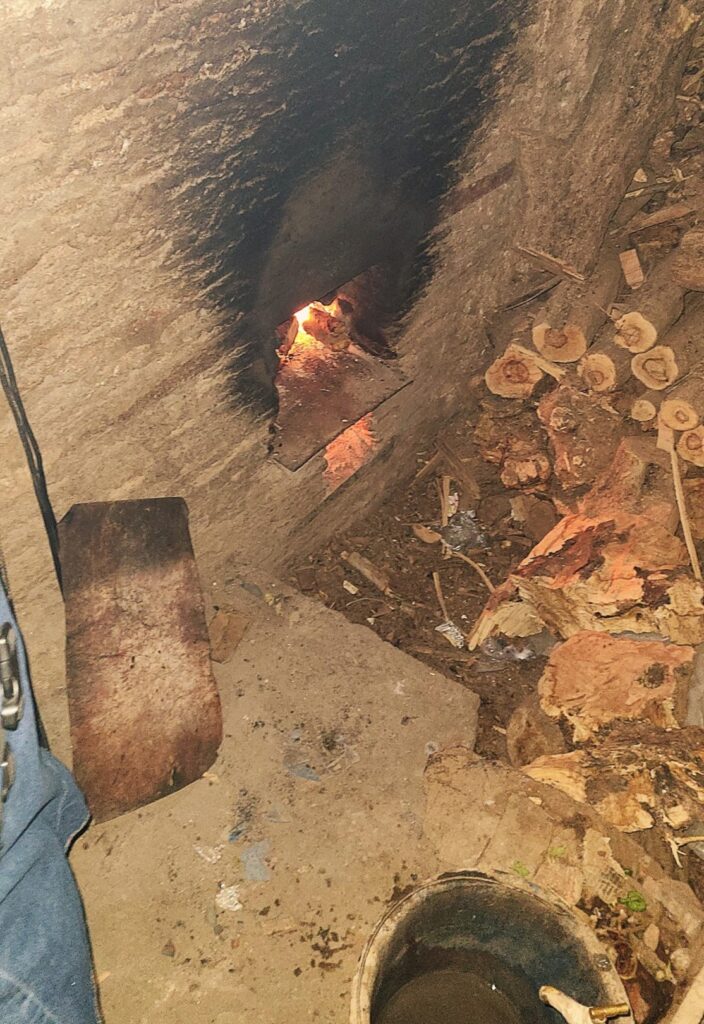
The heating room of a hammam in Marrakech
Marrakech’s Architectural Greatest Hits
Historical highlights included:
- Palais Bahia – a 19th century palace of the Grand Vizier – the ceiling of all the halls is magnificent with its intricate geometric and floral patterns and richly painted woodwork
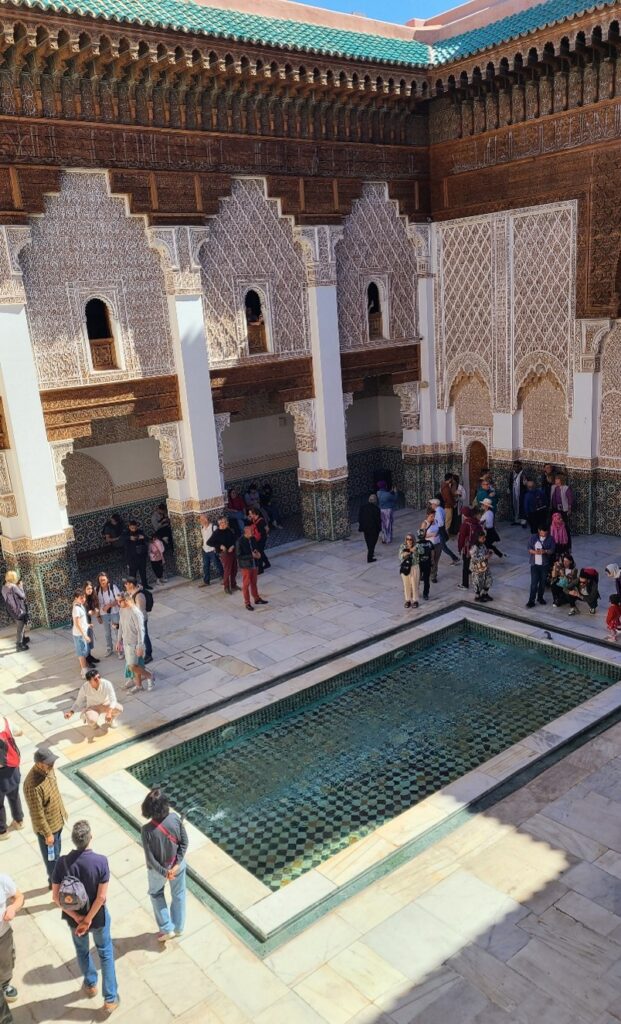
Bahia Palace patio
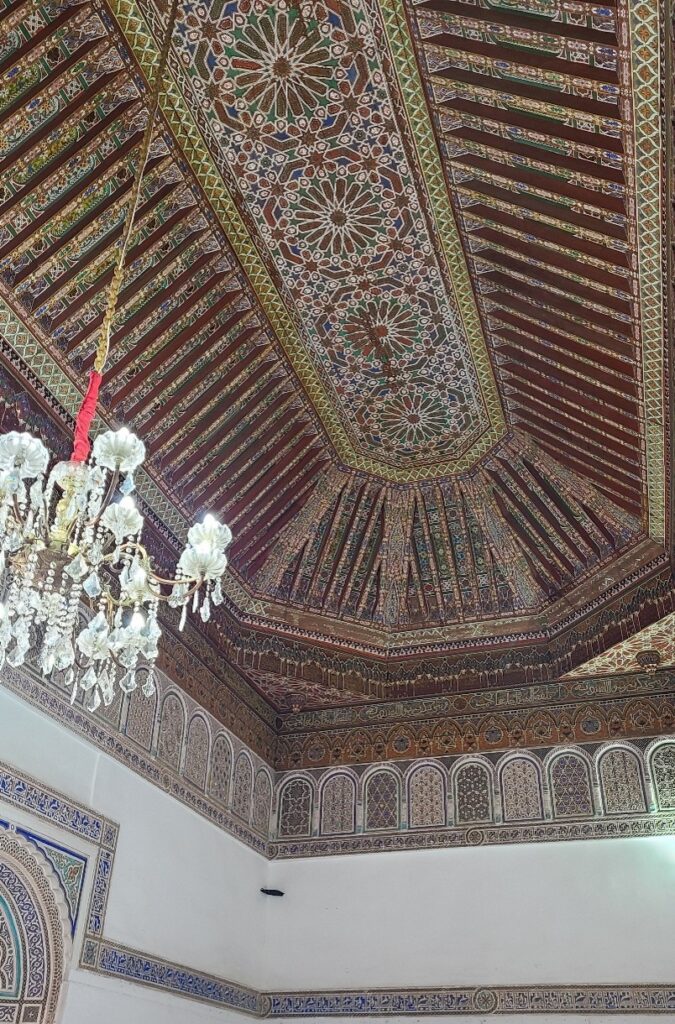
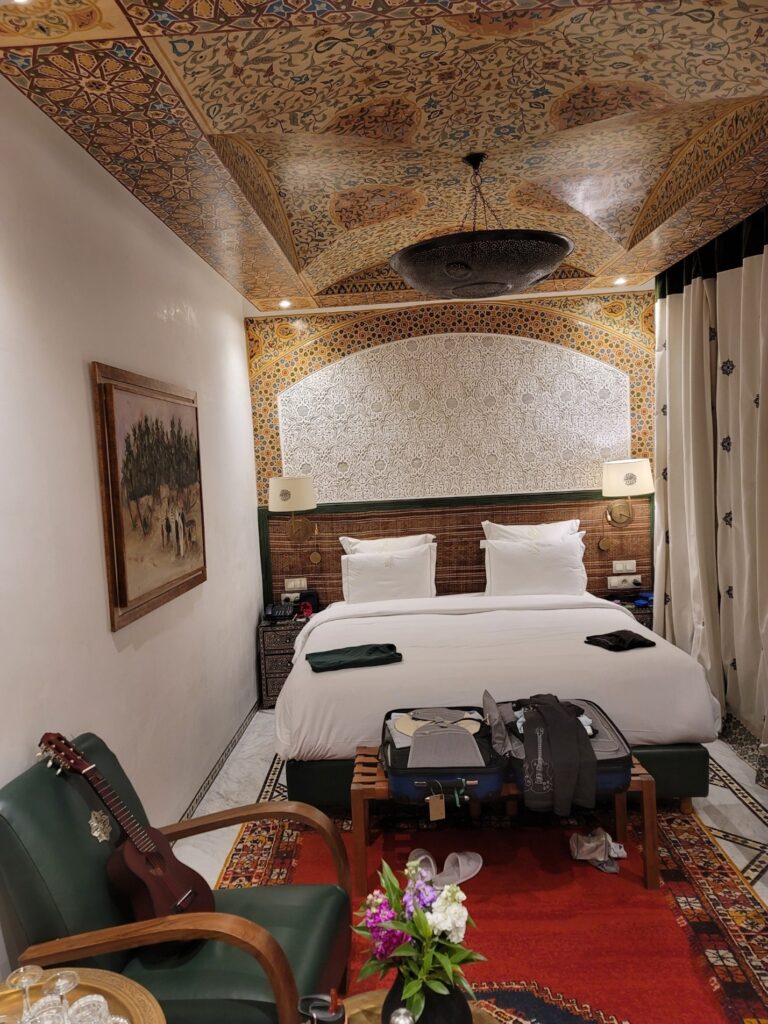
The ceiling of one of the halls of the Bahia Palace
- The Jewish synagogue and cemetery that includes a museum showcasing the life of jews in Marrakech.
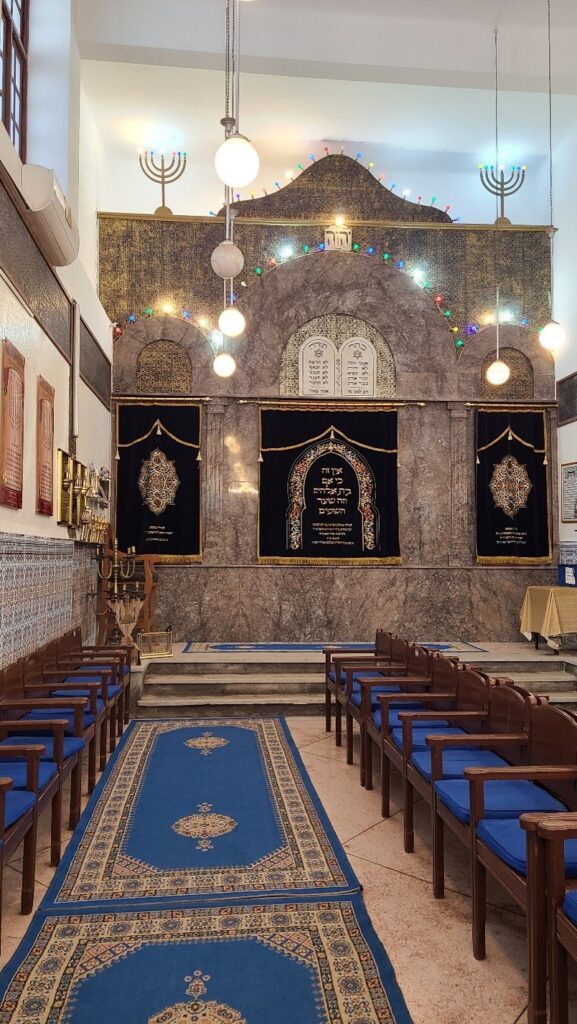
Marrakech Synagogue
- The Saadian tombs – a historic royal necropolis located in the Kasbah. They date to the 16th century although members of Morocco’s monarchy continued to be buried there for a time afterwards. The complex is regarded as the high point of Moroccan architecture due to its luxurious decoration and interior design
- Madrasa Ben Youssef – built in the 14th century. It was originally built as a religious school for Islamic studies one of the most popular spots in Marrakech. Surprisingly peaceful and quiet despite being in the heart of the medina.
A Lebanese Intermission Before La Mamounia
At the end of a long day we went for dinner at Yazel, a small Lebanese spot with a breezy balcony and a menu of hummus, baba ghanoush, falafel, and fresh salads. Light, tasty, and just what we needed before the evening’s main event: the Churchill Bar at La Mamounia.
InDrive: Ride‑Hailing with a Side of Negotiation
We took an InDrive cab—Morocco’s unofficial Uber. It’s technically illegal, operates in a legal gray zone. It’s ride-sharing meets bazaar economics: you name a price, they decide if you’re worth the gas. It doesn’t that it is cheaper than a regular cab, but regular cabs are elusive during peak hours. Now there’s Uber in some of the big cities. Not sure how reliable it is. Worth trying anyway. Bottom line: use whatever works.
La Mamounia: Where Drinks Become a Mood Board
La Mamounia is stunning. The gardens glow at night, the lobby oozes elegance, and the bars are not just bars, they are curated mood boards of drinking experiences. We chose the Churchill Bar named after the British PM who was a frequent guest at the hotel. It is small and intimate (two small tables and 12 seats surrounding the bar itself) and unapologetically old-school. The bartenders are pros, mixing drinks with quiet confidence and zero flair bartending nonsense. The focus here is whisky, but the free Moroccan olives and macadamia nuts deserve their own honorary mention.
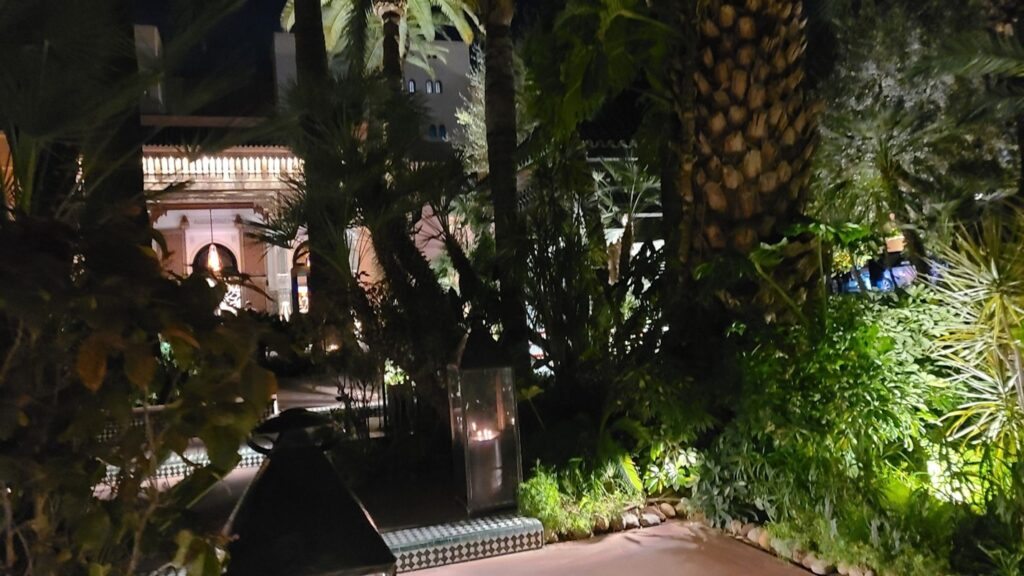
La Mamounia Hotel Garden at night
We went rogue and ordered a 21-year-old grappa: La Mamounia Gran Riserva. Amber-hued, nutty, with vanilla, dried fruit notes and even some smokiness. Not your typical grappa, but complex and memorable.
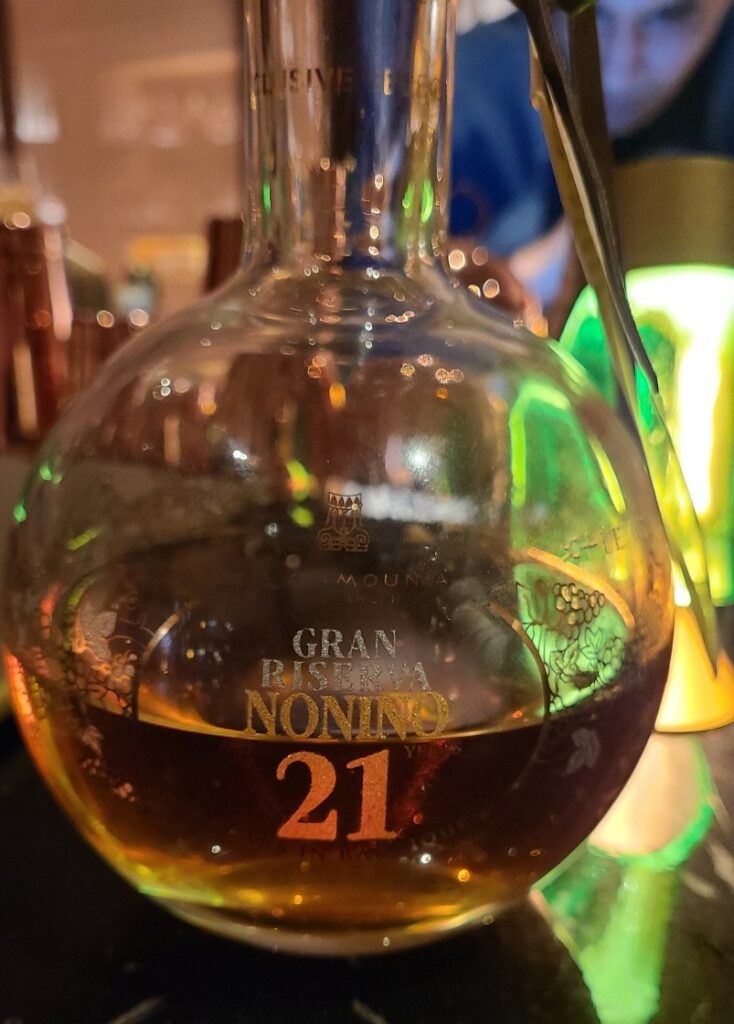
Grappa Nonino La Mammounia Gran Riserva – worth every penny
We chatted with a lovely Moroccan couple and their daughter, a physician visiting from Spain. The evening was a perfect blend of luxury, conversation, and alcohol-induced wisdom.
YSL Museum: Yes. Jardin Majorelle: No (Unfortunately)
The next morning, we tried to visit Jardin Majorelle and the Yves Saint Laurent Museum. No luck with the garden—sold out. The museum, however, was a win. It’s well-curated, with exhibits on YSL’s life, inspirations, and iconic designs. There’s even a short documentary in a cozy little theatre. Pro tip: book your tickets in advance, especially if you want to see both. Don’t trust the websites. Call. Seriously.
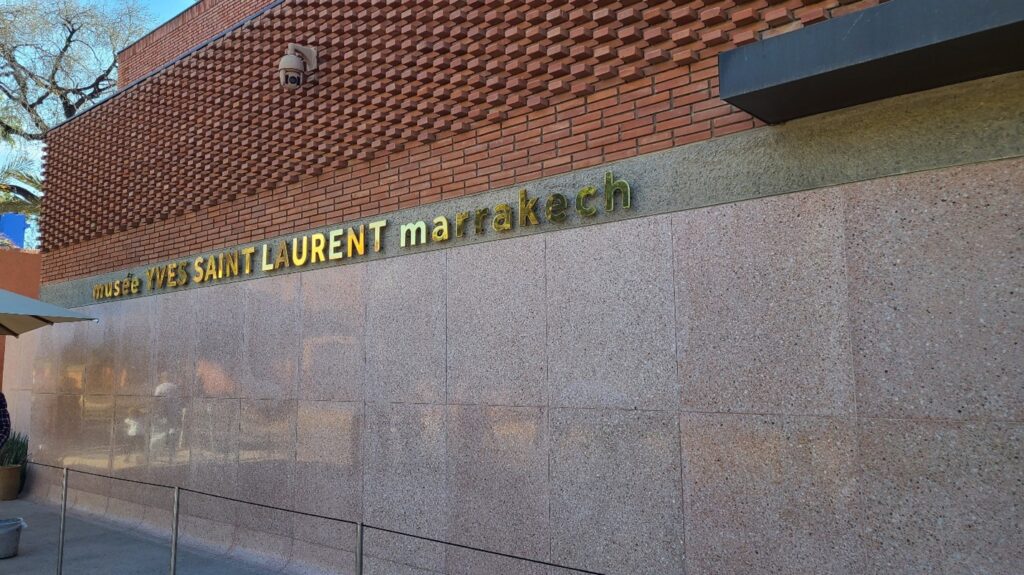
Yves Saint Laurent Museum in Marrakech
A Final Night in Marrakech: Tangia, Tassels & Rooftops
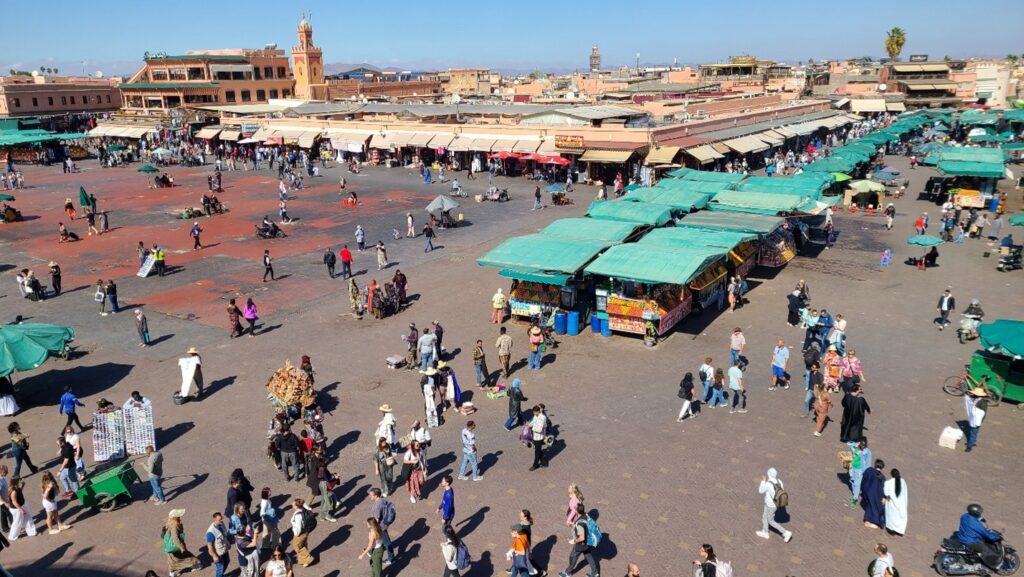
For our final night in Marrakech, we returned to Djemaa el-Fna for the full nocturnal experience. We ate tangia at Chez Hassan— lamb stew slow-cooked in a clay pot with preserved lemon and spices. Add fries and salad, and you’ve got Moroccan comfort food at its finest. The staff were warm, welcoming, and clearly proud of their craft.
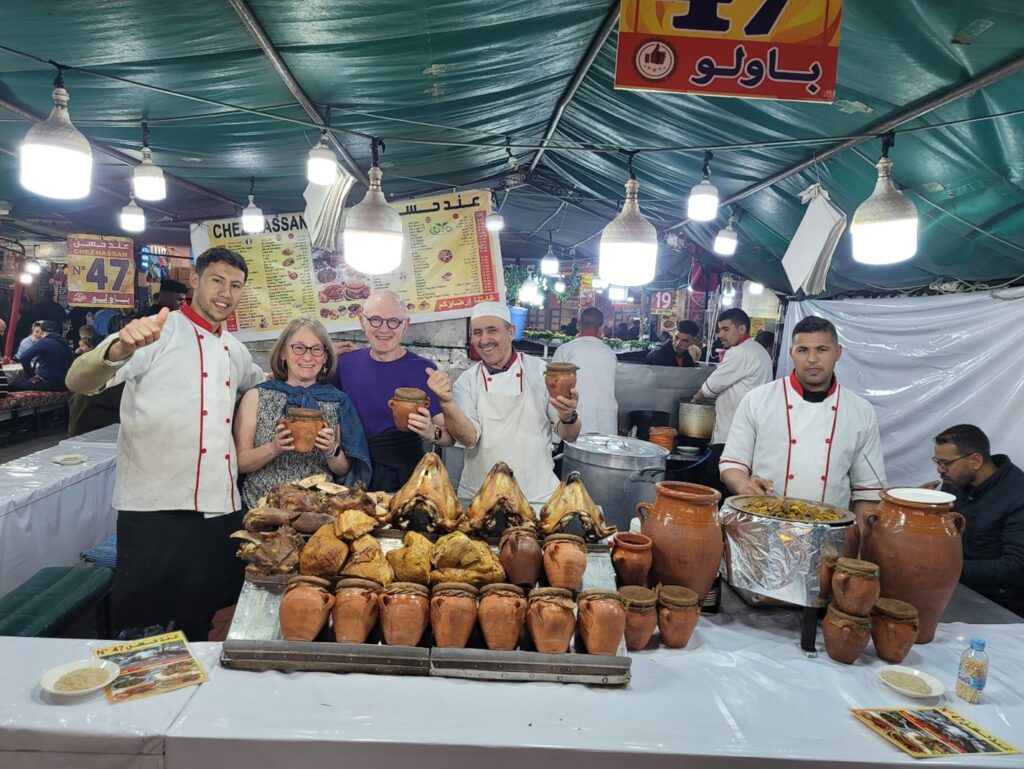
Chez Hassan in Jamaa el Fnaa. We are holding tangia pots in which the stew is made.
After dinner, we caught a spontaneous Berber percussion concert. One dancer spun his tassled hat with such intensity I’m convinced he’s immune to vertigo. We ended the night with a rooftop drink, saying goodbye to this beautiful and fascinating city.
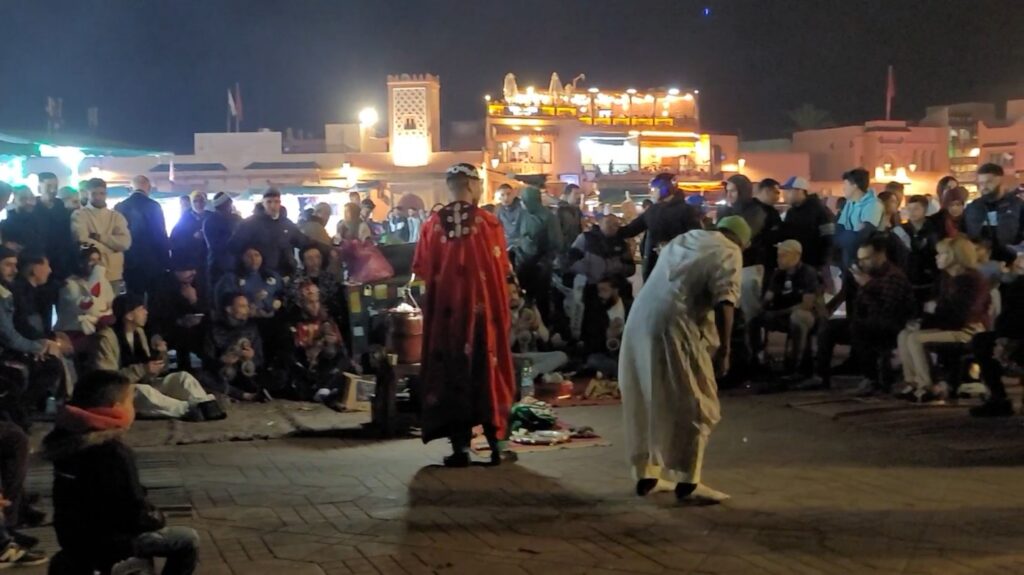
Many small groups of percussionists perform in Jamaa el Fnaa during the evening and night. The rhythm is thrilling and sometimes a man starts dancing with the shashiya (hat with a twirling tassel).
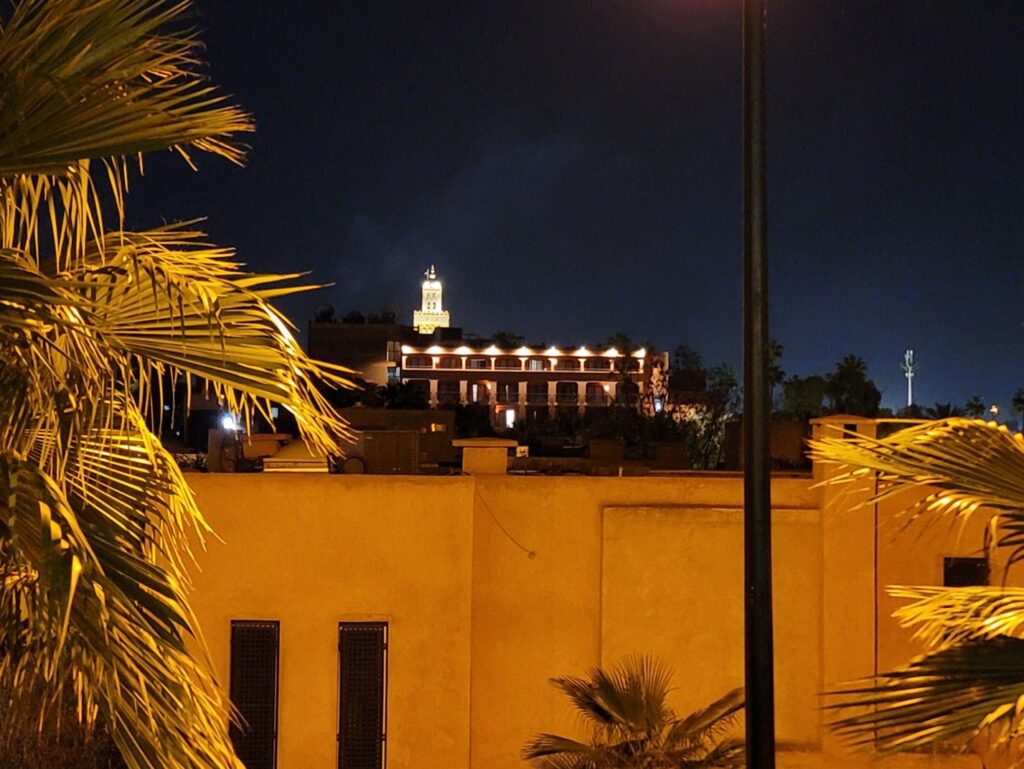
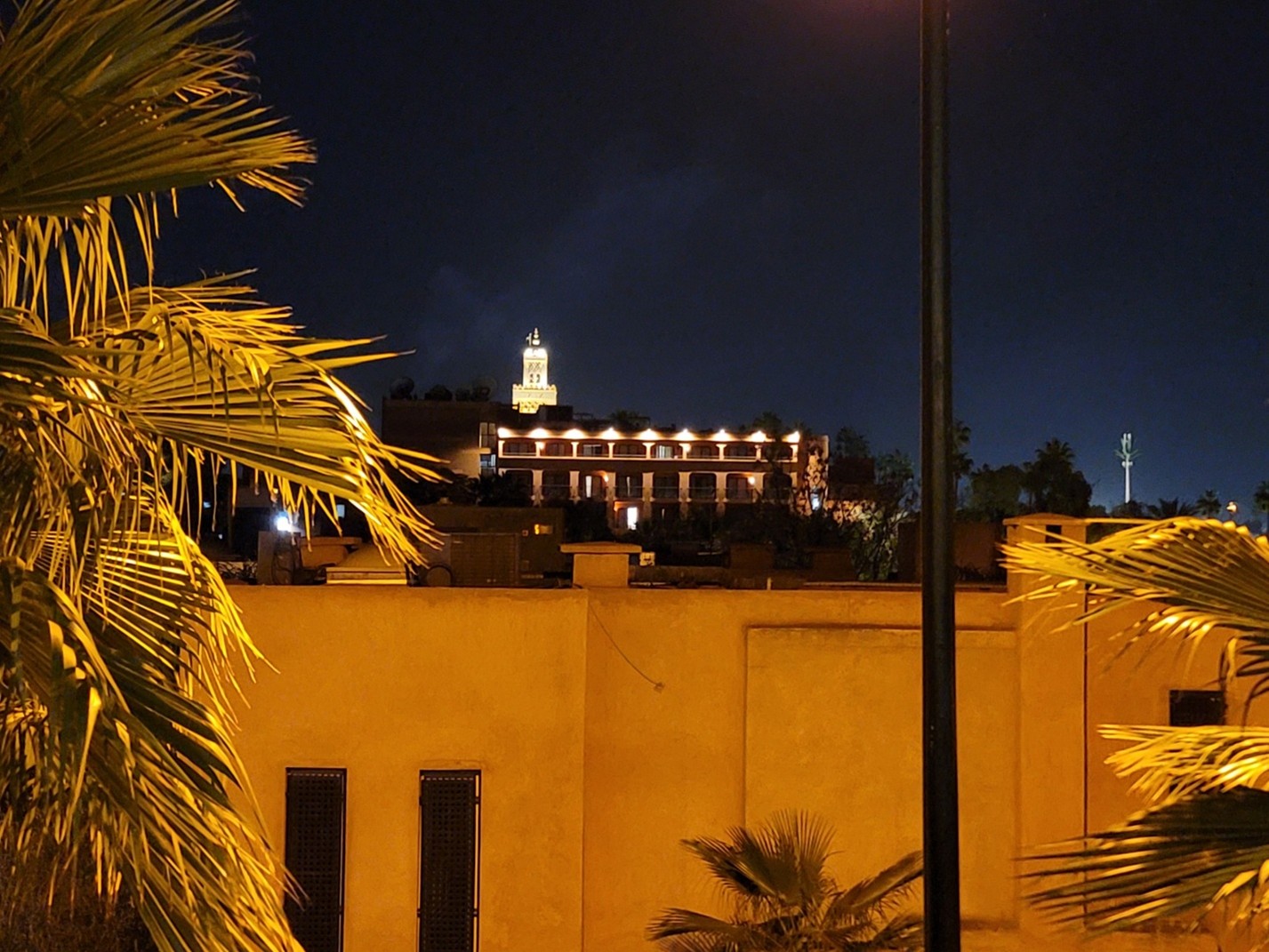
Koutoubia Mosque at night as seen from the rooftop bar we said goodbye to Marrakech
Casablanca: A Quick Reality Check
The next morning: Casablanca. Big, gritty, and not exactly charming. It’s lost much of its mid-century allure and isn’t known for safety or ambiance. We had half a day, and our main goal was the Hassan II Mosque—the only one in Morocco open for visit to non-Muslims. It’s a majestic architectural masterpiece.
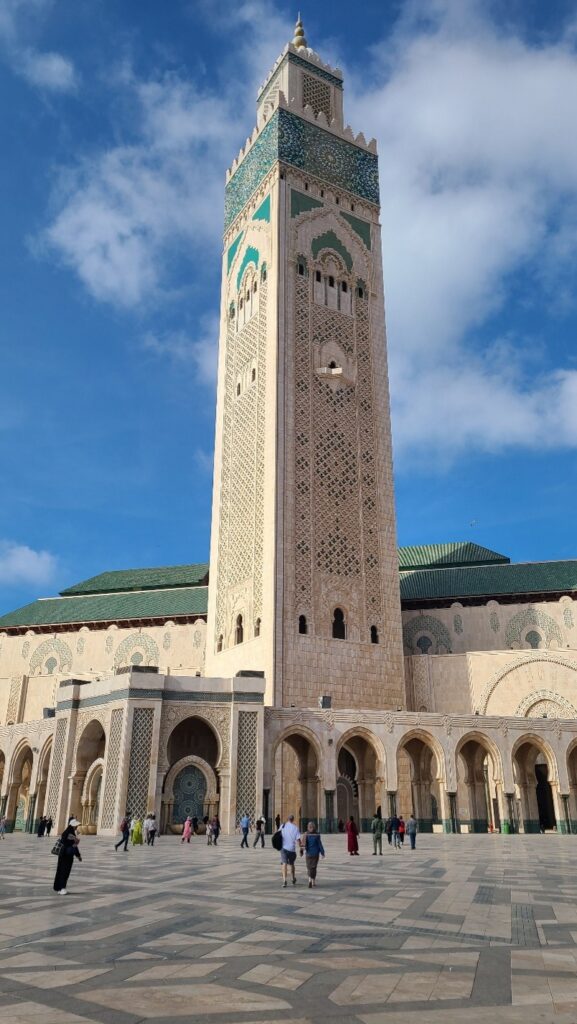
Hassan V Mosque in Casablanca
Unfortunately, Morocco switched time zones (GMT+1 to GMT) for Ramadan, and the mosque’s website forgot to mention it. We arrived too late for the guided tour. No entry. Lesson learned: always call ahead, especially during Ramadan. Websites are not always accurate.
We passed Rick’s Café on the way back. Didn’t feel the need to eat a burger there, but snapped a photo for nostalgia’s sake. Because yes, we’re old enough to know that there was a movie named Casablanca.
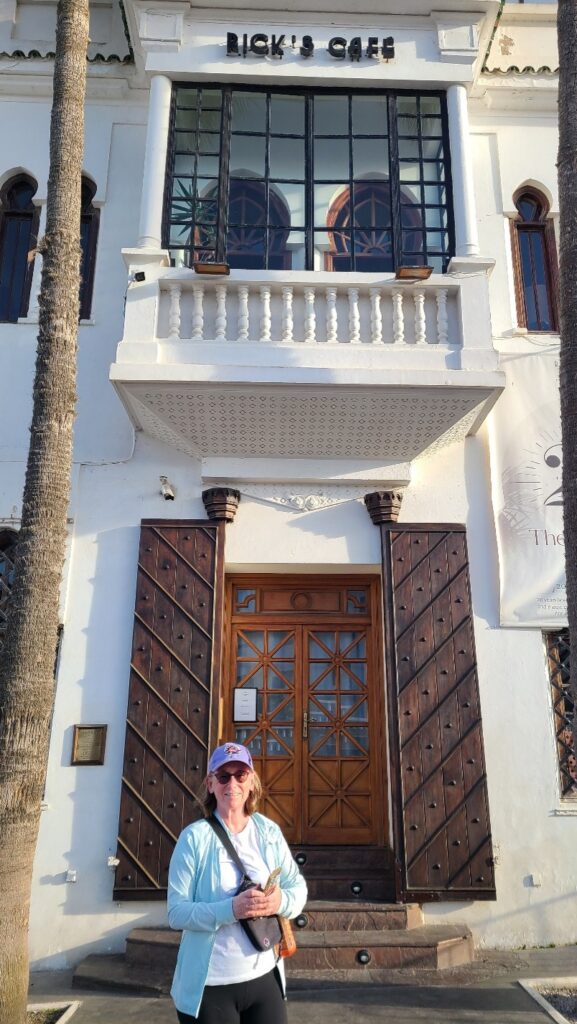
Netta in front of Rick’s Cafe in Casablanca
Did you try Uber in Morocco? Drop a comment and let me know how it was. You’ll get points for it. What to use the points for? That’s your problem.
Highlights
- Amine, THE guide we had in Morocco
Souks, hammams, and historical sites with actual insight and zero fluff. - Hammam heat and exfoliation trauma
Moroccan hammams: where relaxation goes to die and your dead skin cells go to heaven. - Palais Bahia, Saadian Tombs, and Madrasa Ben Youssef
Architecture so ornate it makes your IKEA bookshelf feel like a war crime. - Yazel’s Lebanese palate cleanse
Simple and tasty falafel and hummus before diving into La Mamounia’s liquid luxury. - InDrive: Morocco’s ride-hailing app with trust issues
Like negotiating in a souk, but with fewer rugs. - Churchill Bar at La Mamounia
Grappa, macadamias, and Moroccan olives in a whisky temple that whispers elegance. - Yves Saint Laurent Museum (but not the Majorelle garden)
Fashion, flair, and a reminder to always book ahead—especially when websites are not completely accurate. - Tangia at Chez Hassan in Djemaa el-Fna
Clay-pot lamb stew, fries, and salad served with genuine warmth and zero pretension. - Berber percussion concert & tassel physics
A dancer defies dizziness while your brain defies logic. - Casablanca’s brief cameo
Hassan II Mosque missed due to time zone trickery. Rick’s Café visited for the photo,
FAQ – Marrakech (cont.) & Casablanca
Is a Moroccan hammam really that intense?
Yes. If a Turkish hammam is a warm hug, a Moroccan hammam is a full-body audit. Expect heat, steam, black soap, and exfoliation that removes sins you didn’t know you committed.
Is La Mamounia worth visiting even if you’re not staying there?
Absolutely. Go for a drink or for dinner at one of their 4 bars or 4 restaurants, admire the gardens, and enjoy great service.
Should I use InDrive in Marrakech?
Use whatever gets you from A to B. InDrive works, but it’s negotiation‑based and technically not legal. Regular cabs vanish at peak hours, so flexibility is your friend. Now there’s Uber in a few big cities. Not sure how it works.
Do I need to book Jardin Majorelle and the YSL Museum in advance?
Yes. Online info can be unreliable, so call. Some Moroccan websites have a casual relationship with accuracy.
What’s the must‑eat dish in Marrakech at night?
Tangia at Chez Hassan in Djemaa el‑Fna. Clay pot, slow‑cooked lamb, preserved lemon, fries, salad. Zero pretension, maximum comfort.
Is Casablanca worth more than a half‑day?
Depends on your tolerance for grit. It’s not Morocco’s prettiest city, but the Hassan II Mosque is spectacular—if you manage to catch the tour.
Why did we miss the Hassan II Mosque tour?
Morocco switched time zones for the month of Ramadan and the website didn’t update. Moral of the story: always call ahead.
← Previous: Part 6 – From Goat Poop to Sardines: A Moroccan Odyssey