Tag: Uganda

  • A Family Gathering Where You’re the Awkward Cousin — and a Walking Safari for Dessert

    A Family Gathering Where You’re the Awkward Cousin — and a Walking Safari for Dessert

    Uganda Series Part 7: Gorillas Ignoring Us, Buffalos Disliking Us, and Us Loving Every Minute

    After a pretty chilly night, we woke before 7 a.m., grabbed a quick breakfast, and headed to the park office for orientation. The weather was foggy, around 17°C (62.5°F)—perfect for gorilla tracking. Like with the chimp tracking, we were split into groups led by a ranger and a couple of scouts armed with rifles… just in case a forest elephant decided to make a surprise appearance. (Highly unlikely, but better safe than sorry).
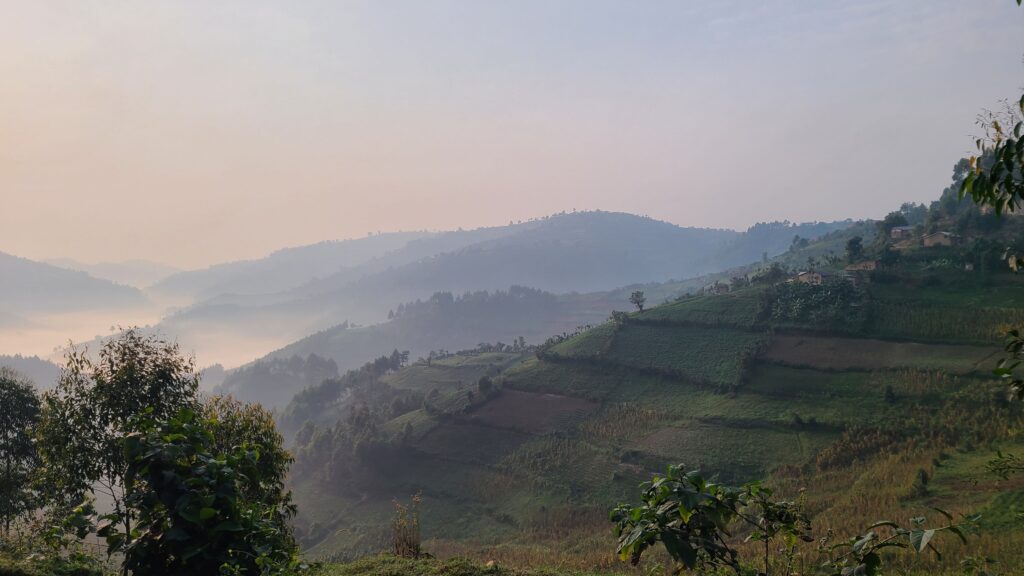
    Morning fog over Bwindi Impenetrable National Park

    Bwindi Impenetrable National Park misty in the morning

    During orientation, we were reminded that although the Mountain Gorillas are habituated to humans, they’re still wild animals. That means keep your voice low, your movements slow, and your ego even lower. Running is strictly discouraged—unless, of course, you see the rangers run. Then, by all means, good luck.
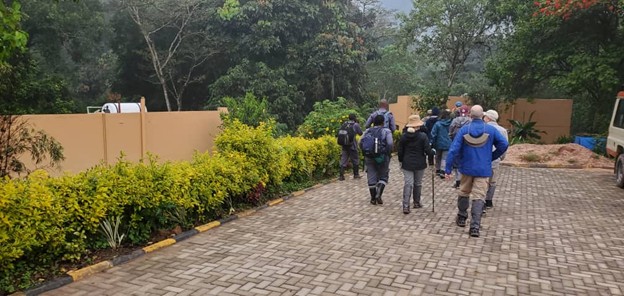
    Start of gorilla tracking trail in Bwindi

    Here we started gorilla tracking

    The trek itself was a full-on jungle adventure. We pushed through dense, humid vegetation with no visible paths—just machete‑wielding guides carving out trails. We climbed steep slopes, clung to branches and roots like amateur Tarzans, and crossed a narrow river via a tree stem that definitely hadn’t passed any safety inspections. A few people slipped, but nothing tragic—unless you count the dramatic gasps from the group. I’m not sure what color their behinds turned after those landings, but no one was brave enough to admit the pain.

    The porters were calm, helpful, and clearly used to watching tourists wrestle with gravity. We felt safe and well-supported the entire time.
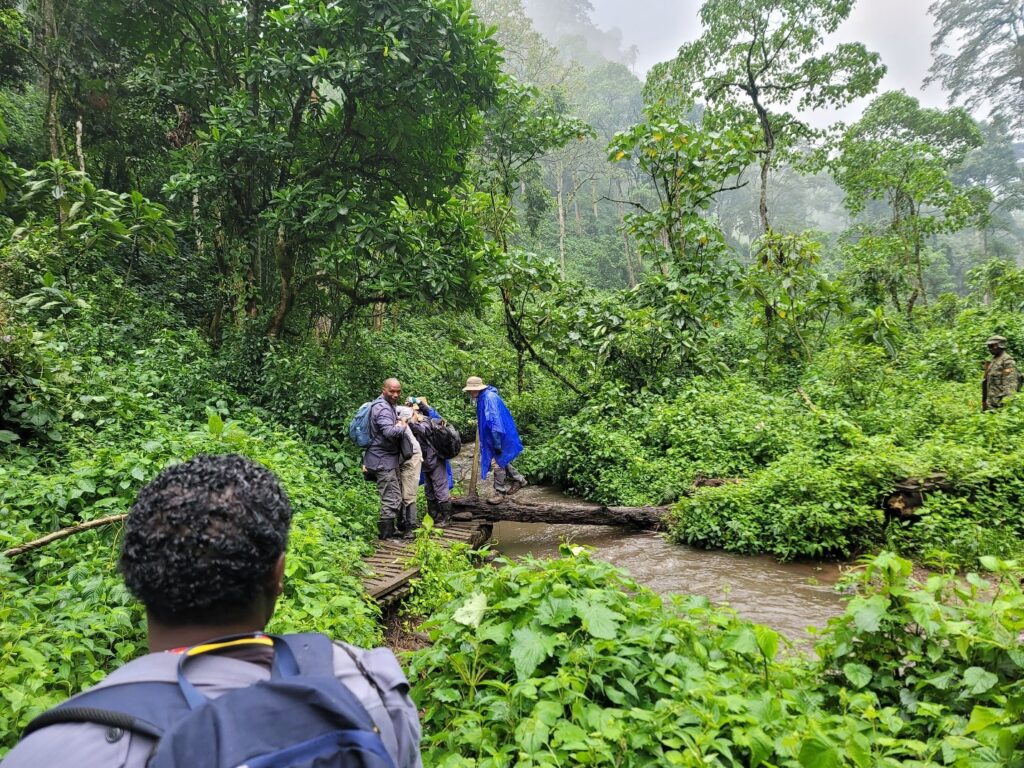
    Narrow creek crossing during Bwindi gorilla trek

    The narrow creek we had to cross on our way to the gorillas

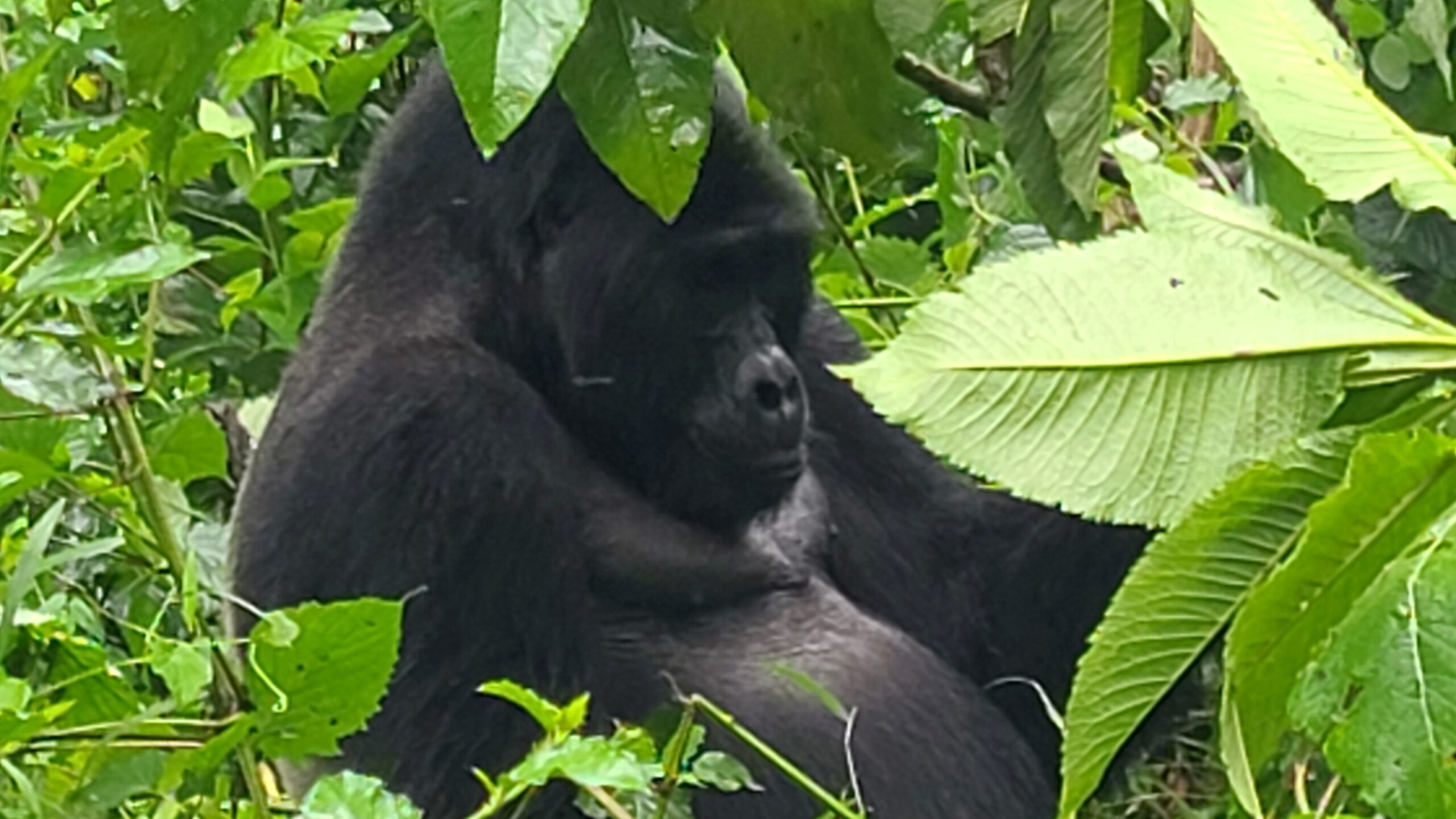
    Eventually, we stopped to put on our masks—a pandemic requirement that still holds. That’s when we knew we were close. And then… boom. The silverback appeared right in front of us. The proof is in the short clip below, filmed by my fearless wife. Sure, the quality isn’t Hollywood‑level, and the clip is quite short, but honestly — let’s see you hold a camera steady while a 200‑kg gorilla charges straight at you.

    He was in full “protect‑my‑family” mode, charging toward us like a very motivated refrigerator on legs. We had to hold our ground, lower our eyes, and radiate non‑confrontational energy. Easier said than done when a 200‑kg gorilla is making direct eye contact. We didn’t run, but we definitely redefined the word “retreat”.

    One of the rangers smacked a nearby bush with his machete, and just like that, the tension evaporated. The silverback simply wanted to remind us who’s boss—and it was absolutely not us.
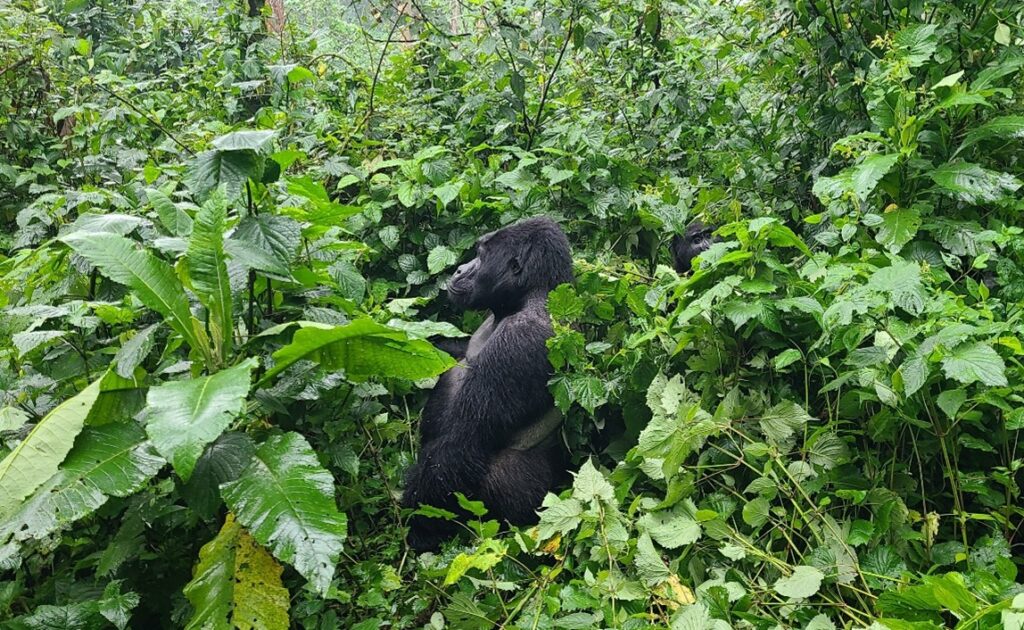
    Silverback watching his family

    The Silverback makes sure that the family is safe
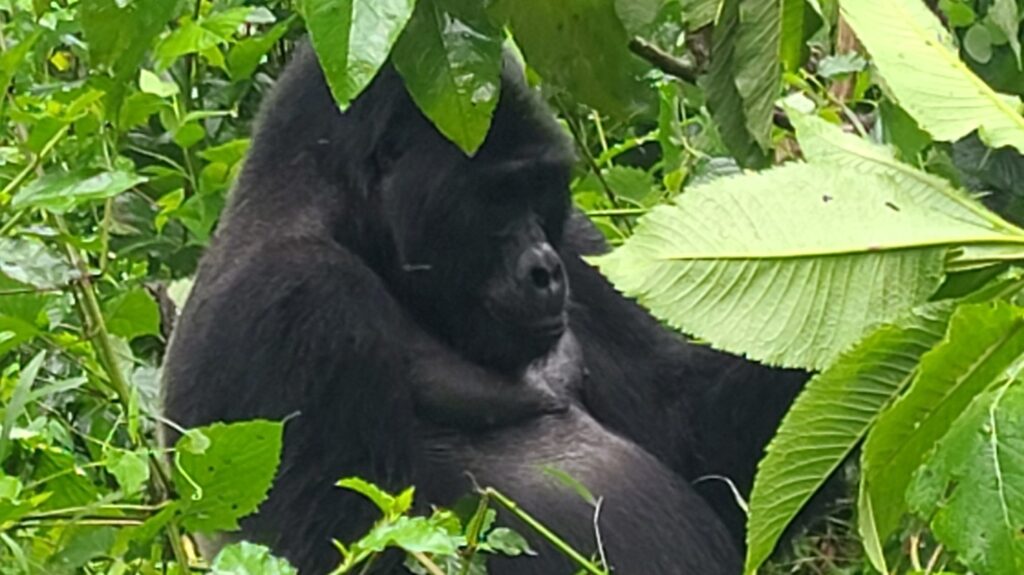
    SIlverback eating

    Then he started eating and didn’t care we were watching

    For the next hour, I stood in silent awe, mesmerized by these magnificent creatures. They’re so human-like, yet so profoundly different. I didn’t speak a word. My wife now jokes that she’ll bring me back to the gorillas anytime she wants a break from my endless commentary.

    The whole family was there—about 16 individuals, from babies to elders. They went about their business, completely unfazed by our presence. Even the silverback seemed more interested in munching leaves and scratching his belly than in us.
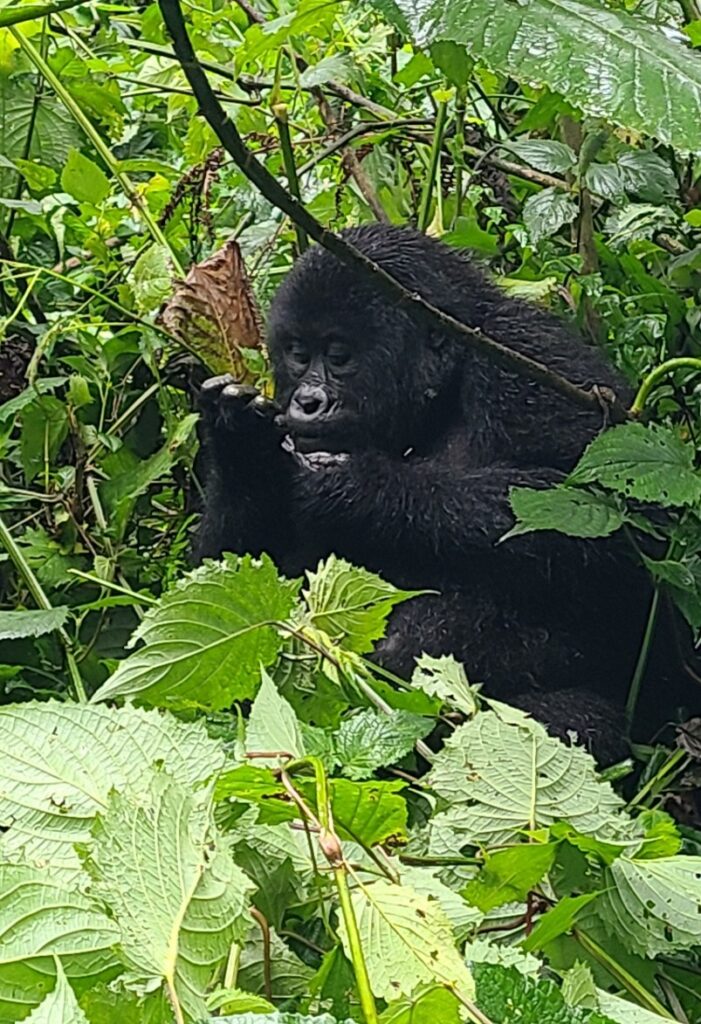
    Young gorilla eating green branches in Bwindi forest

    They mainly eat the leaves, but sometimes also the green branches
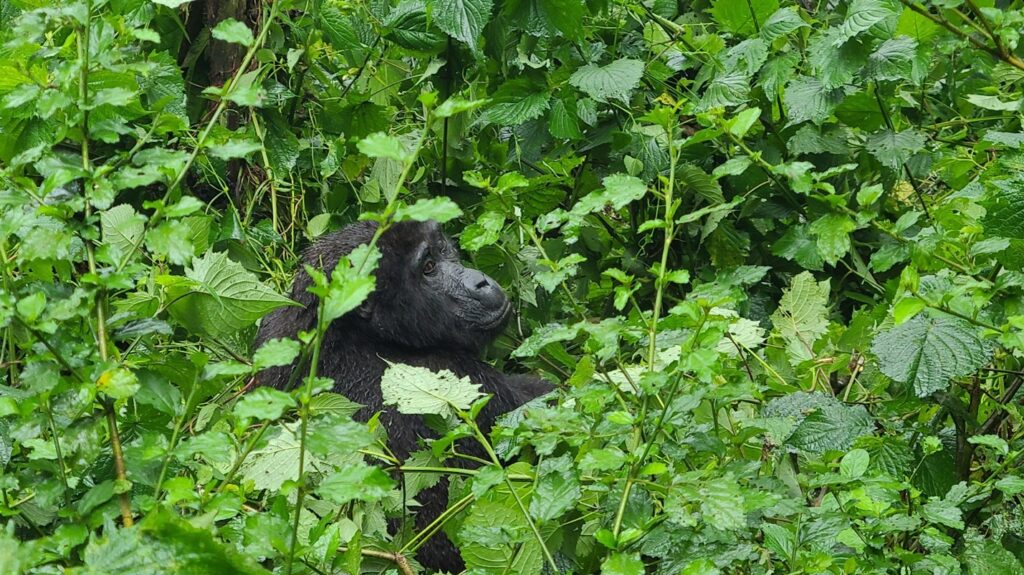
    This youngster was 5 years old and mature enough to feed himself

    Being that close to such powerful yet gentle animals is an experience that photos can only hint at. Chimps are fascinating, but gorillas? Gorillas are soul‑stirring.
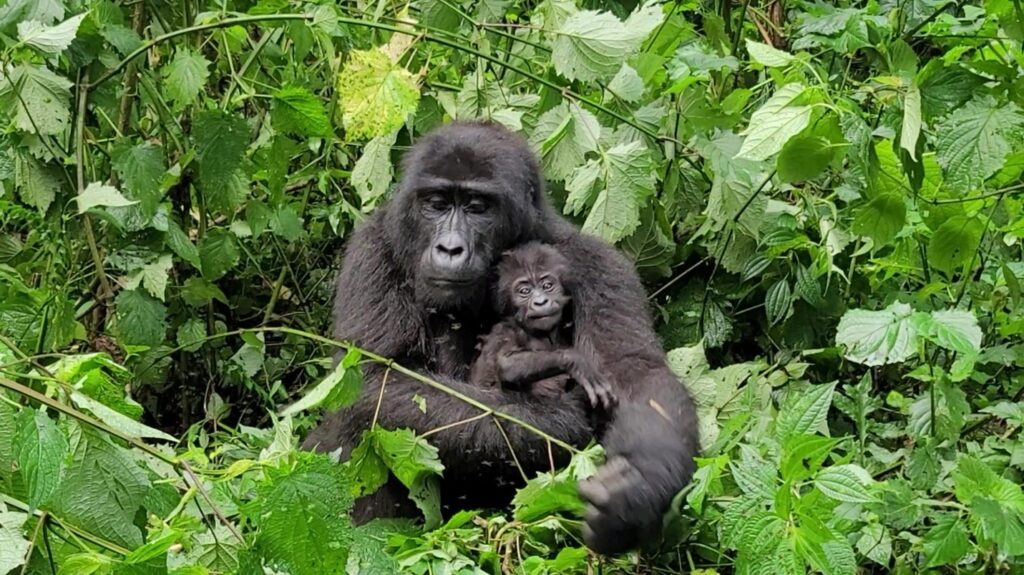
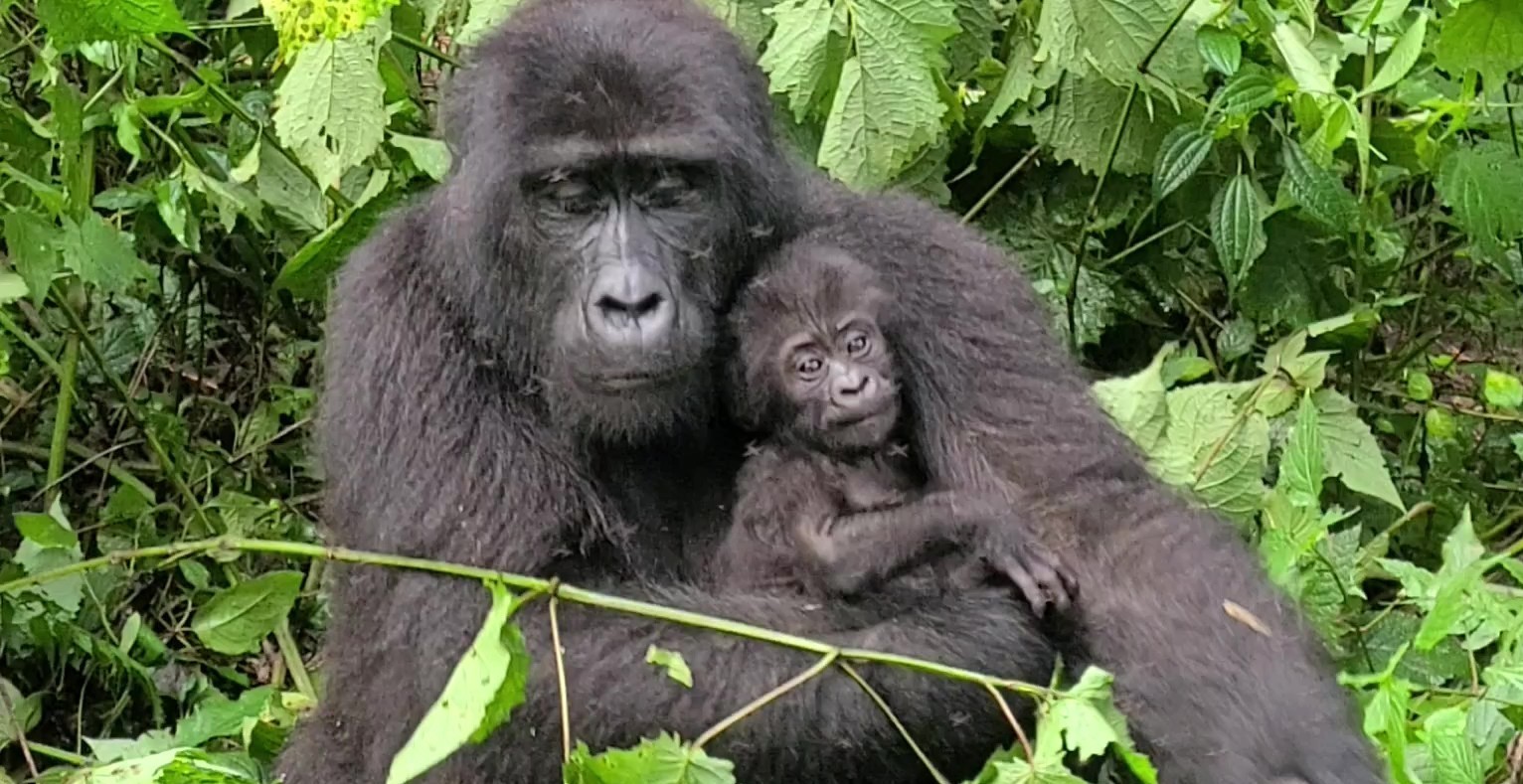
    Gorilla mom and small baby in Bwindi

    So human…Or should I say, we’re so much like them…
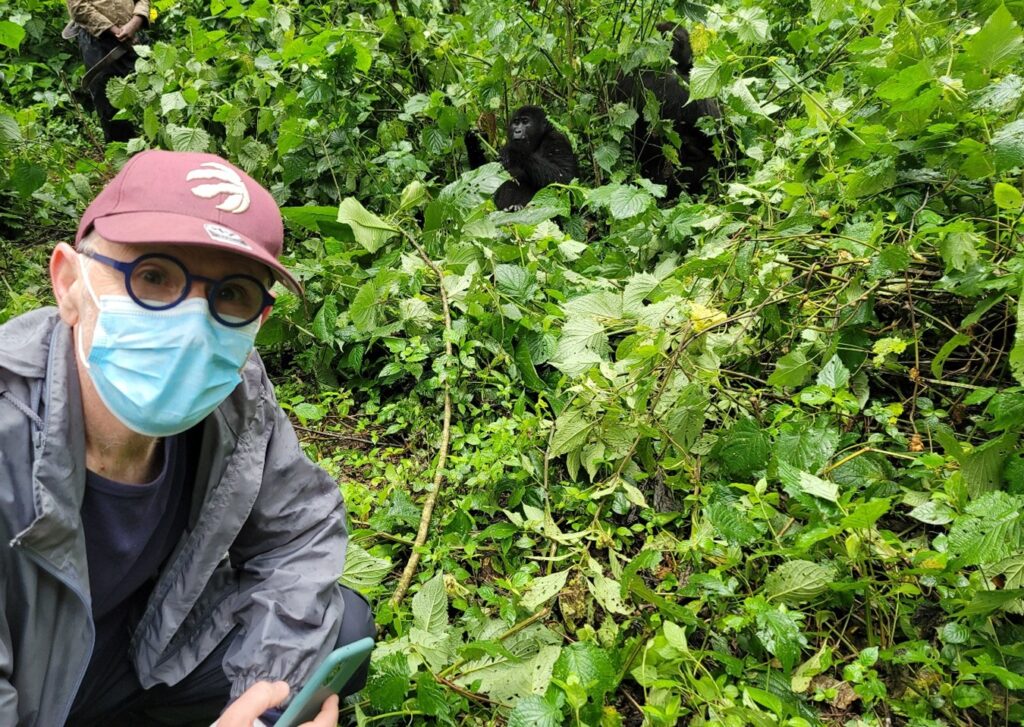
    Me and some members of the family in the background

    After an hour that felt like five minutes, we had to leave. The hike back was smoother, the weather was perfect, and the rainforest seemed to reward us with every step. At the park entrance, we received certificates acknowledging our contribution to conservation—proof that we helped keep these gentle giants wild and thriving. (Also proof that we survived the tree‑stem river crossing.)

    There are domestic flights from Kisoro to Entebbe via Bar Aviation or Aerolink, but they come with a strict 15‑kg soft‑bag limit. Anything extra is subject to the airline’s mood and math. We opted for the road trip instead—not just because it saved us a few hundred dollars per person, but because it gave us one last chance to meet more animals.

    The drive from Bwindi to Kampala takes about nine hours without stops. We broke it up with an overnight stay at Lake Mburo National Park, roughly halfway to Entebbe.

    We stayed at Mihingo Lodge, which was quite nice. The cabins are spacious but spread over a large area (ours was quite far from the main entrance).

    View from Mihingo Lodge Lake Mburo Uganda

    View of Lake Mburo from our cabin at Mihingo Lodge

    The food was quite good both at lunch and dinner. Meals were served on a terrace overlooking the park and a waterhole where animals casually dropped by for a drink—the wildlife version of happy hour.
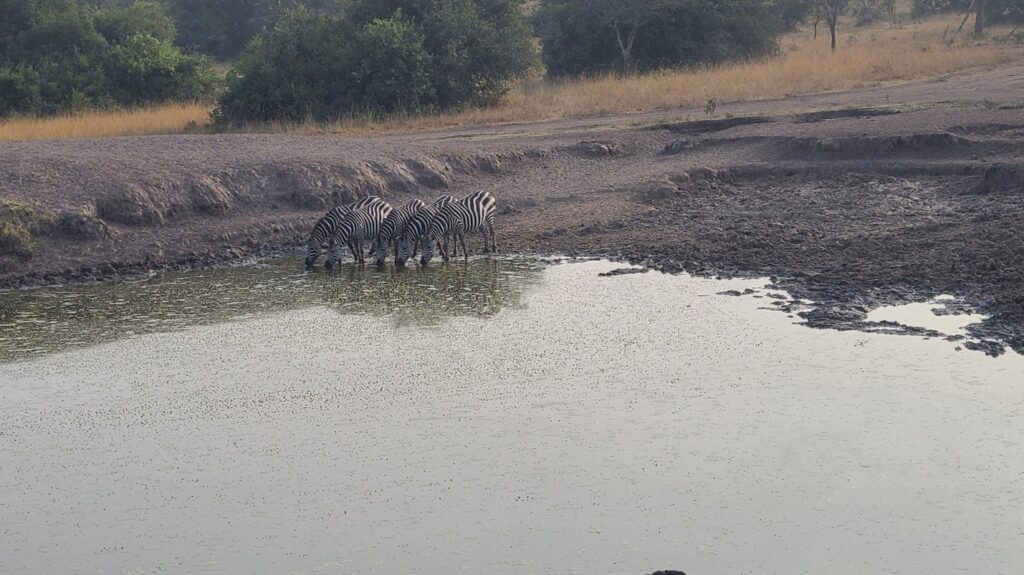
    It’s Happy Hour at Lake Mburo

    The next morning, we went on a walking safari. No predators here, just zebras (which we hadn’t seen in other parks), giraffes, antelopes, and buffalos. It was a refreshing change from game drives—more intimate, more… grounded.
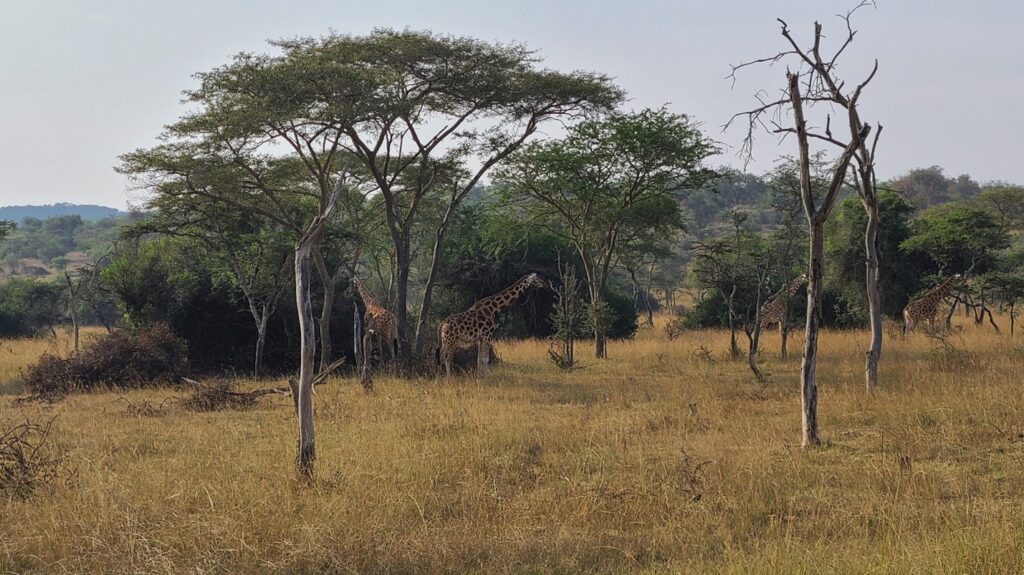
    Giraffes seen on foot in Lake Mburo National Park

    Giraffes we saw while walking in Lake Mburo National Park

    Zebras during Lake Mburo walking safari

    …and a family of zebras

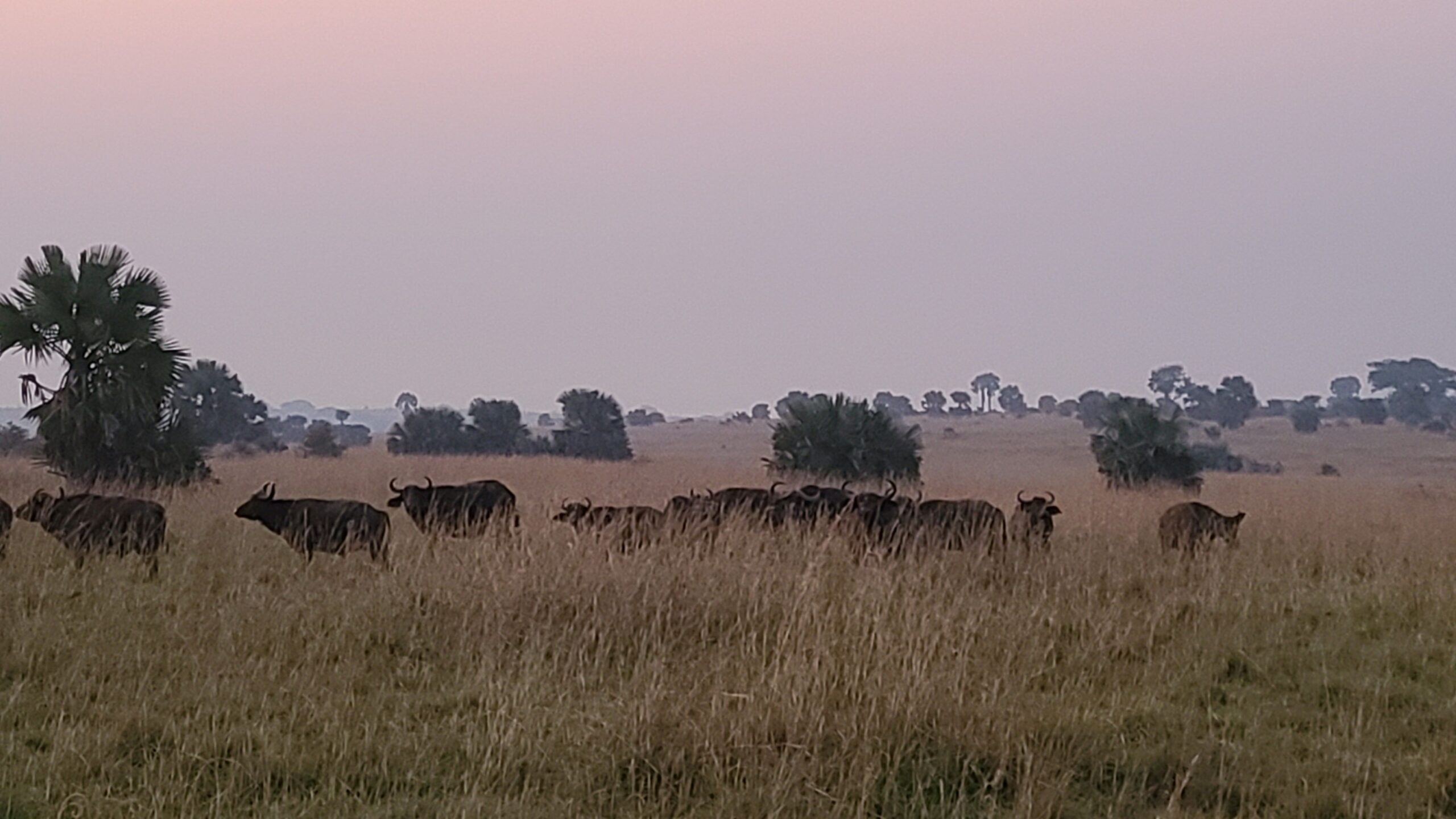
    We stayed on designated paths with a guide, so there was no real danger. One of the buffalos gave us a stare that said, “I see you and I don’t like you,” but kept its distance. We returned the favor.
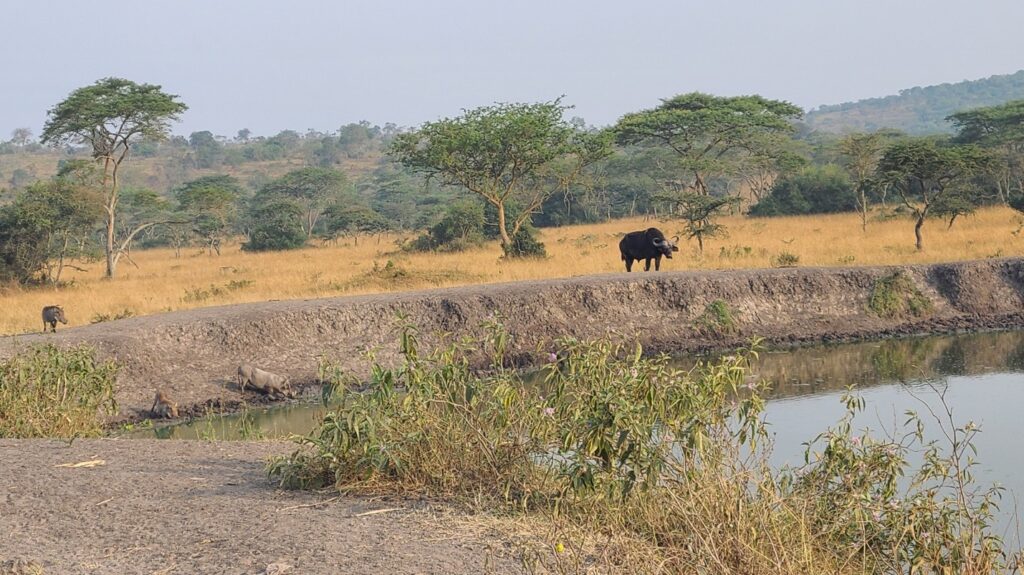
    Buffalo staring at visitors at Lake Mburo waterhole

    This buffalo was not so happy seeing us hanging out at his watering hole

    Sadly, we couldn’t visit Kampala due to a reported Ebola case. I was especially disappointed to miss the dungeons where over 200,000 people were imprisoned, tortured, and killed under Idi Amin’s regime. It’s a disturbing but important place—one that forces reflection and remembrance.

    Instead, we headed to Entebbe and spent two relaxing days by the pool at the Protea Marriott Resort. Not quite the same as confronting history, but a peaceful way to end an unforgettable journey.

    • Bwindi Foggy Morning Trek – Perfect weather for gorilla tracking, less perfect for waking up early.
    • Orientation Wisdom – Stay quiet, stay slow, and if the rangers run—run faster.
    • Gorilla Family Time – Babies, elders, and a silverback who preferred leaves to tourists.
    • Silent Awe Achievement – One full hour of speechlessness.
    • Lake Mburo Walking Safari – Zebras, giraffes, and a buffalo with strong opinions about your presence.
    • Mihingo Lodge Views – Terrace dining with wildlife drop‑ins.

    ← Previous: Uganda Series Part 6: Mud, Muscles, and Majestic Beasts
  • Mountain Gorilla Tracking: Practical Information (and Impractical Realities)

    Mountain Gorilla Tracking: Practical Information (and Impractical Realities)


    Ever since I was a small child, I’ve been a devout follower of the French saying garder pour la bonne bouche—“save the best for last.” Originally meant for dessert, I’ve generously applied it to life’s finer experiences.

    So naturally, we saved our mountain gorilla tracking adventure in Bwindi Impenetrable National Park for the end of our trip. Because nothing says “grand finale” like trekking through dense rainforest to meet creatures who could bench‑press your entire hiking group without breaking a sweat.

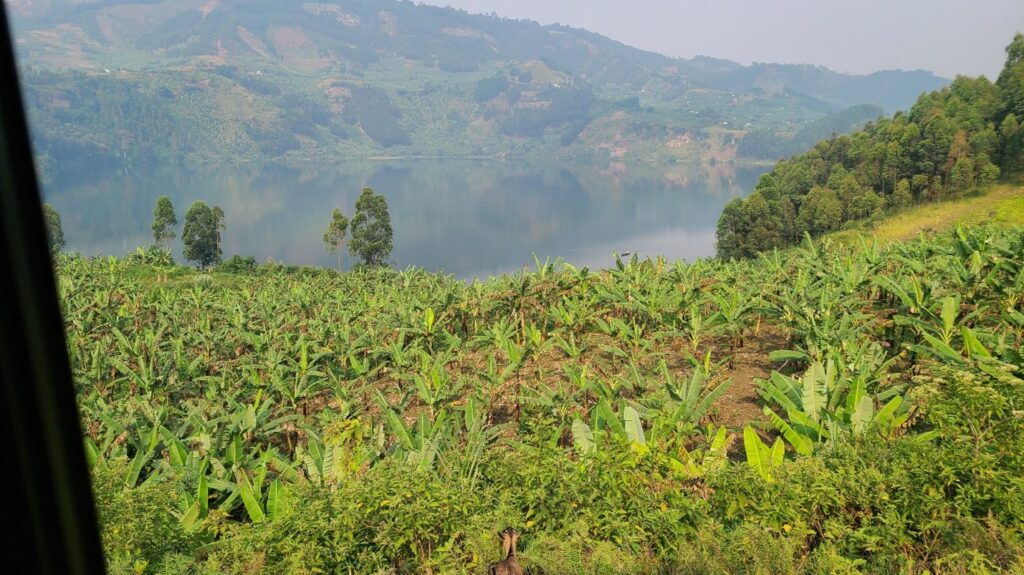
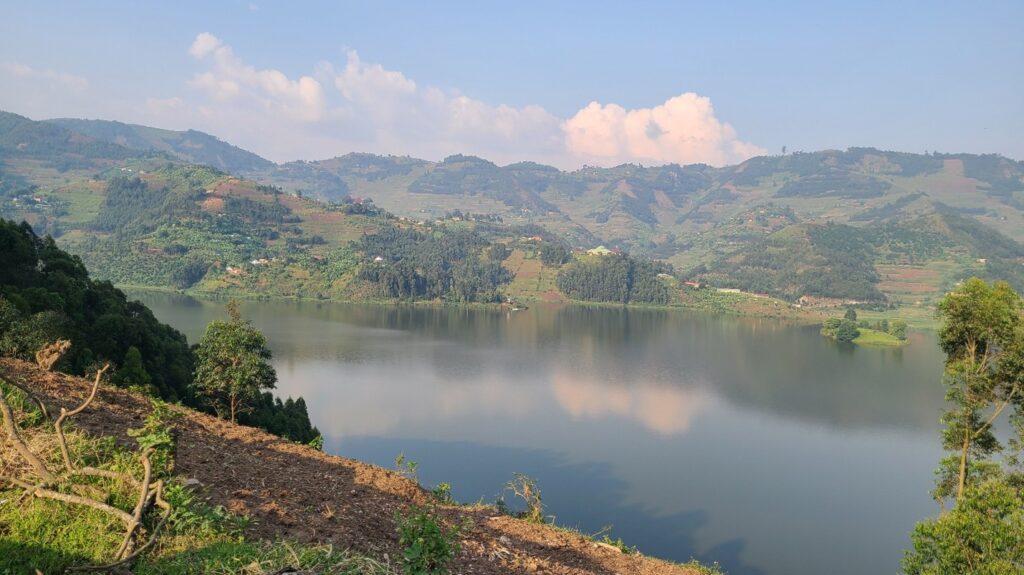
    Many of lakes on the beautiful road to Bwindi

    The drive from Queen Elizabeth National Park was beautiful: the Virunga Mountains in the background, terraces of tea plantations, and quite a few lakes scattered around. The distance isn’t huge, but we already knew that Ugandan roads have a charming habit of inventing reasons not to be fast.

    Road to Bwindi Impenetrable National Park with Virunga Mountains in background

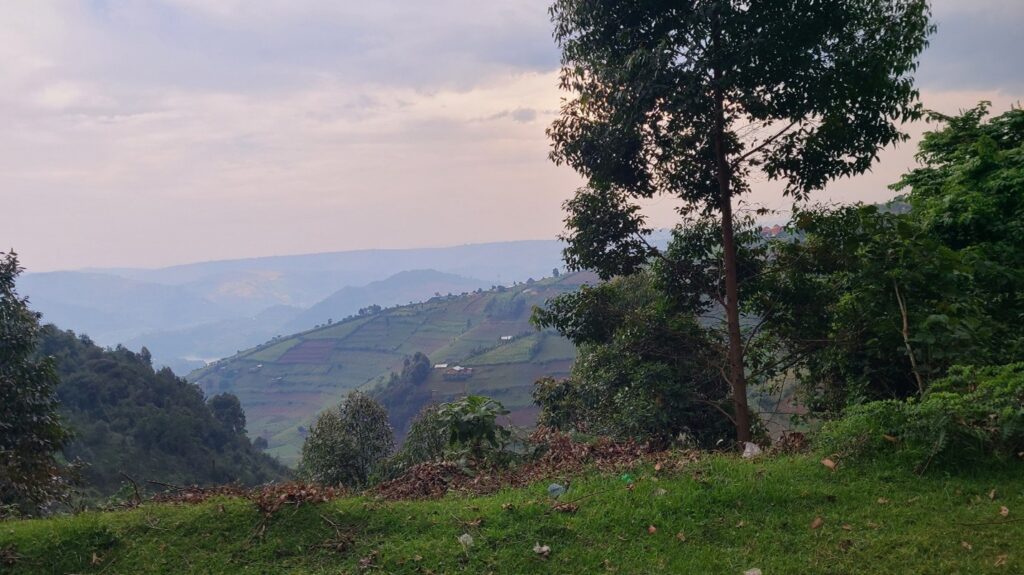
    Yet another beautiful spot on the way to Bwindi

    Lots of tea plantations on the way to Bwindi

    Tea plantations on the drive to Bwindi Uganda

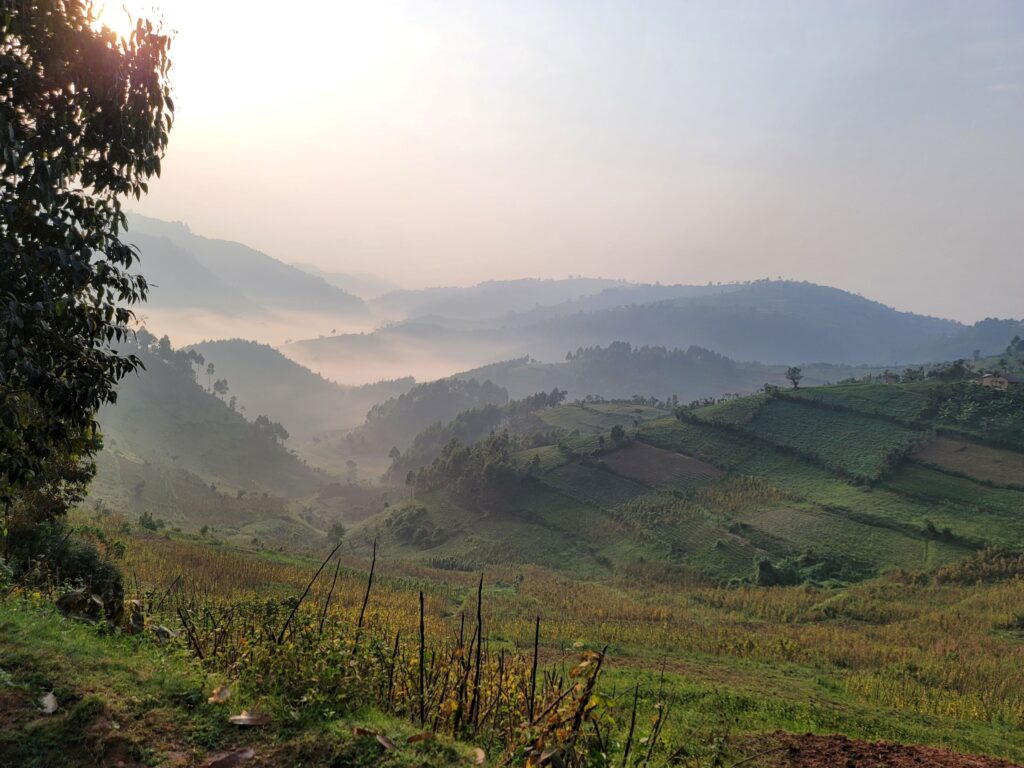
    Morning mist over Bwindi

    Ugandan roads have this charming habit of inventing reasons not to be fast…

    After another 4.5‑hour drive, we arrived at the Gorilla Doctors Headquarters. A very patient doctor gave us a one‑hour presentation on their work—balancing medical intervention with letting Nature “do its thing,” which sounds noble until you remember that Nature’s thing often involves parasites, infections, and the occasional broken limb.

    We learned that about half of the world’s mountain gorillas (roughly 500) live in Bwindi, and that it takes six years to habituate a gorilla family to humans. Six years. That’s almost as long as the average marriage in North America.

    There are 24 habituated gorilla families, each visited once a day by one group for one hour. The rest of the time, they’re left in peace—unlike most celebrities.

    I usually don’t mention places that are forgettable, but Ichumbi Gorilla Lodge deserves a special shoutout for redefining mediocrity.

    The food was pompous and bad, the rooms were generously sized but not very clean, and the shower offered a thrilling game of “Will It Be Hot?” (Spoiler: it won’t).

    The staff seemed to be practicing customer service as performance art—abstract, confusing, and mostly absent.

    We chose it for its proximity to the park entrance, which is a bit like choosing a dentist based on parking availability. Just… don’t.

    Despite the lodge, nothing could ruin the experience of seeing mountain gorillas in their natural habitat.

    Bwindi is a UNESCO World Heritage Site located at 1,200–2,600 meters (4,000–8,500 feet), but at least for us, it didn’t mean our lungs had to file a complaint.

    Gorillas aren’t territorial, but they do build nests and wander for food. Each morning, trackers locate the families and inform rangers of their whereabouts. Visitors are split into groups of eight, and depending on where your assigned family is, your hike can range from a breezy two hours to a six‑hour mud‑wrestling match with gravity.

    We, being “vintage” travelers (read: not 22 and invincible), were assigned a relatively close group—just three hours round‑trip. Moderately fit and supported by a porter ($20 for the entire job), we managed fine.

    Our porter didn’t carry much, but they were invaluable when the trail turned into a slip‑and‑slide. Hiring a porter is highly recommended—not just for your knees, but because it supports the local community.

    • Minimum age: 15. Probably because teenagers are famously respectful and quiet in nature.
    • If you’re sick, you’re not supposed to go. They didn’t check, but better not to test them.
    • Maintain a 7‑meter distance. This is a “guideline,” not a law—our photos show we were much closer.
    • No flash photography. Gorillas don’t appreciate paparazzi.
    • No sipping or snacking. Unless you’re cool with sharing… with someone who bench‑presses trees.
    • No touching. Not that you’d dare.

    Your clothes will get muddy. Accept it. Wear old stuff you won’t cry over.

    Bright colors and military camouflage are banned—because nothing says “I’m harmless” like dressing like a mercenary.

    Long pants, long sleeves, and gardening gloves are essential. Not for fashion, but for keeping your skin intact. The rainforest is full of branches that attack without warning and insects that treat your ankles like an all‑you‑can‑eat buffet.

    Rain is inevitable, so bring a raincoat and waterproof pants. Sturdy trekking shoes are also recommended. Tuck your pants into your socks or, even better, wear gaiters unless you want to discover new species crawling up your legs.

    And yes, you’re at the equator. Sunscreen, sunglasses, insect repellent, and a hat are your best friends.

    • Scenic Drive to Bwindi – Virunga Mountains, tea terraces, and lakes—just don’t expect to get there fast.
    • Gorilla Doctors Presentation – A crash course in primate medicine, parasites, and why “letting Nature do its thing” is a mixed blessing.
    • Gorilla Habituation Facts – Six years to get gorillas used to humans.
    • Ichumbi Gorilla Lodge – Spacious but cold rooms, poor service, and a shower that doubles as a guessing game. Not worth the experience.
    • Bwindi Impenetrable National Park – UNESCO site with altitude, attitude, and gorillas who couldn’t care less about your cardio level.
    • Gorilla Tracking Success – Not‑too‑difficult trek, mud, sweat, and porters who saved our knees and dignity.
    • Close Encounter with Gorillas – Lounging, snacking, and ignoring us completely—celebrity behavior without the ego.
    • What to Wear – Mud‑friendly gear, rain protection, and insect repellent.

    ← Previous: Part 5 Queen Elizabeth National Park: Close Encounters (Mainly) of the Furry Kind

    Next: Part 7 A Family Gathering Where You’re the Awkward Cousin — and a Walking Safari for Dessert→

  • Queen Elizabeth National Park: Close Encounters (Mainly) of the Furry Kind


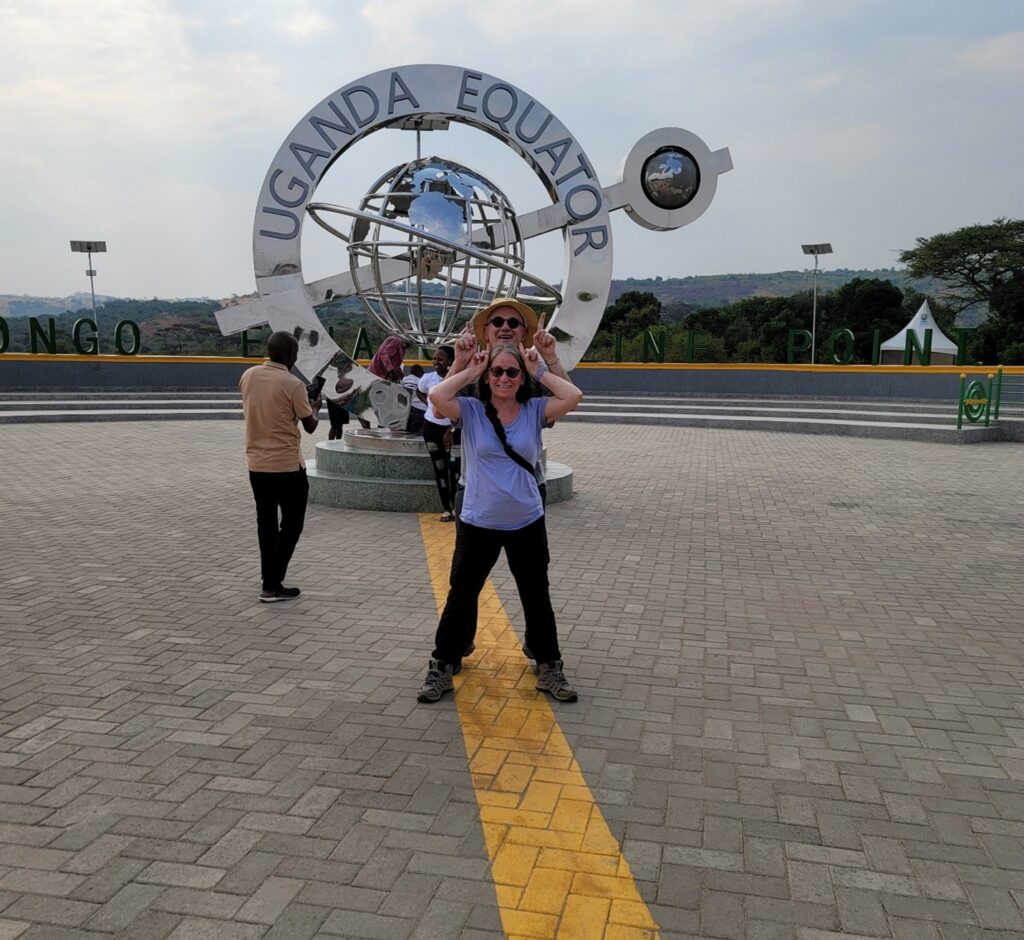
    From Kibale, we drove to Queen Elizabeth National Park—Uganda’s crown jewel of safari experiences. We made a short stop at the equator where we were able to stand on both the Northern and Southern Hemispheres. An interesting psychological experience, but nothing else.

    Standing at the Uganda equator sign on the way to Queen Elizabeth National Park

    On our way to Queen Elizabeth National Park we stopped at the equator.

    We arrived in the late afternoon and checked into Mweya Safari Lodge. The hotel is very comfortable, with spacious rooms and stunning lake views. The food is decent, the service is good, and the bungalows are spread out over a large area. After check‑in (and again before check‑out), they ferry guests and luggage to the rooms by buggy, which is a nice touch. You can request buggy transport during your stay too, but it’s actually quite pleasant to stroll around — so we didn’t bother.

    Especially because animals wander through the grounds stopping by for snacks as if it’s their neighborhood café. Luckily, only the herbivores showed up. With that reassurance, taking it easy with a cold beer felt like the only sensible plan.

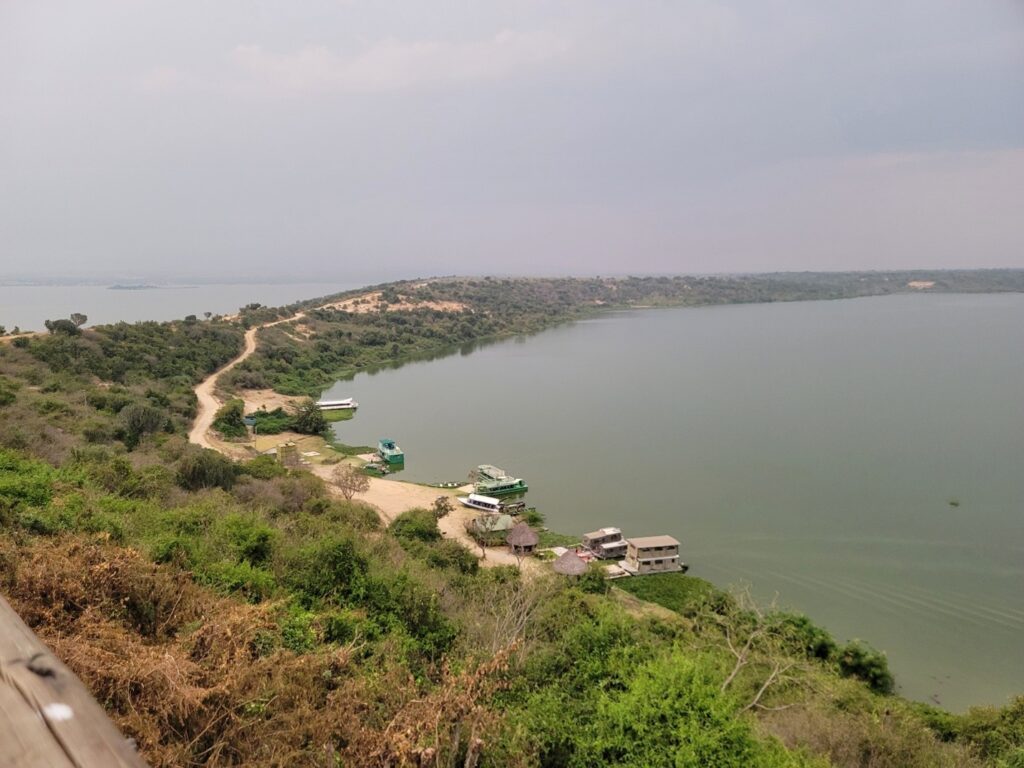
    Lake view from Mweya Safari Lodge restaurant balcony

    The View from the Mweya Lodge Restaurant Balcony

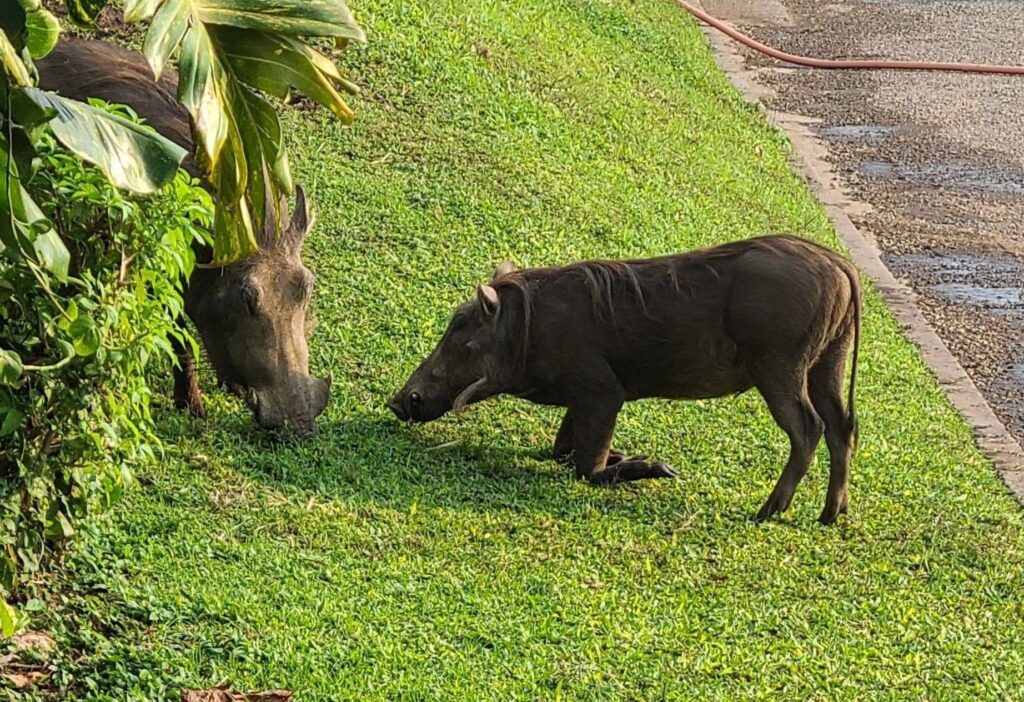
    Warthogs grazing at Mweya Safari Lodge

    There were warthogs everywhere having an early dinner

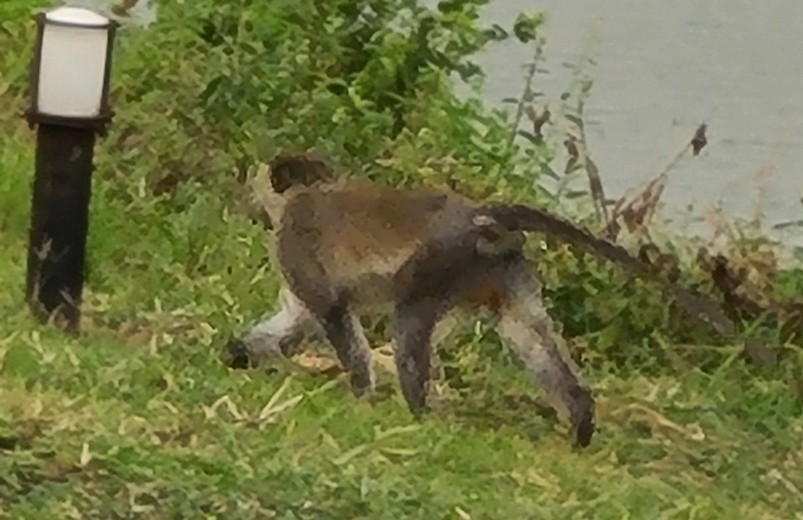
    A monkey around Mweya Safari Lodge grounds

    … and obviously monkeys

    Day 7 began with another early game drive. This time, a ranger joined us and used radio tracking to locate lions and leopards. We were allowed to drive off the designated trails, which we didn’t even know was an option. Our agent hadn’t mentioned that this little upgrade was booked for us. Turns out that for a couple of hundred dollars, you’re allowed to leave the official tracks and get much closer to the animals. Tourists who didn’t pay the extra fee were parked 40–50 meters away, squinting through binoculars while we were practically making eye contact. Huge thanks to our agent for booking it.

    We stayed in the car, of course, but being only 3–4 meters (10–12 feet) away felt surreal. The animals didn’t seem to care. They’ve probably seen enough wide‑eyed tourists to know we’re harmless.

    Lion staring at safari vehicle in Queen Elizabeth National Park

    He was staring at us, and we were staring at him

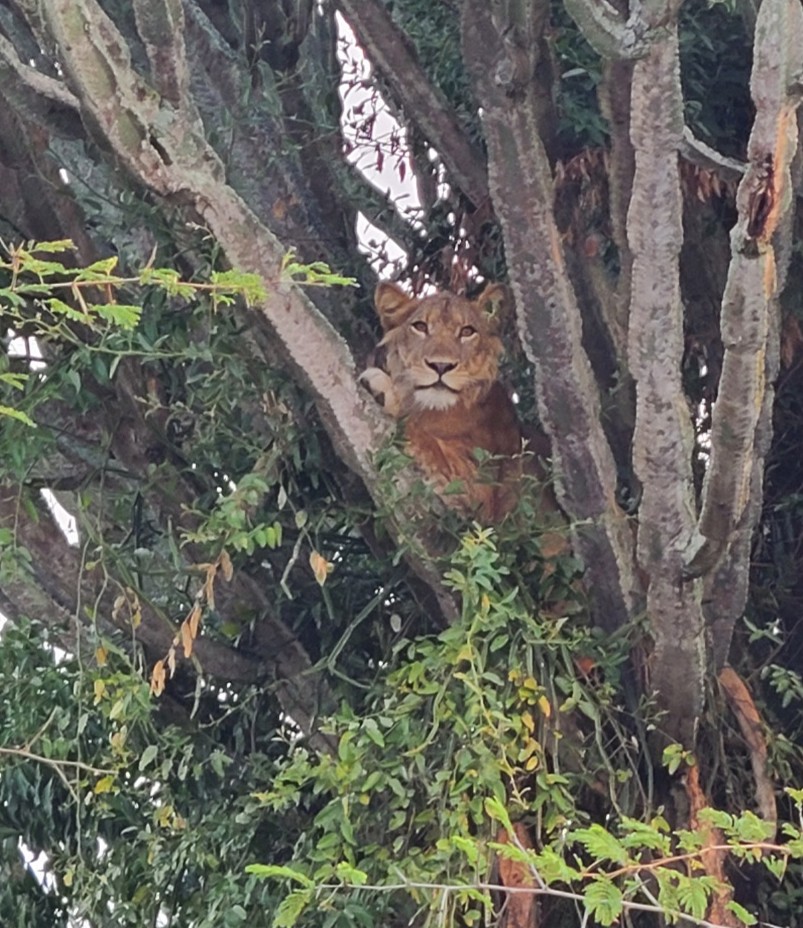
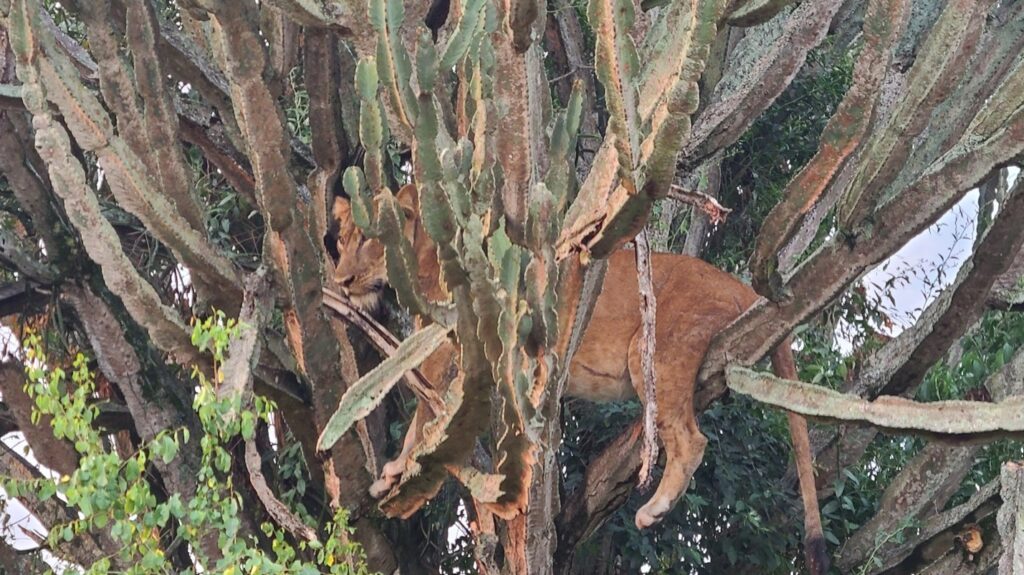
    In the Ishasha sector of Queen Elizabeth National Park, lions have taken up an unusual hobby: tree climbing. Unlike your average lion (assuming you keep one as a casual acquaintance), the Ishasha lions climb fig and acacia trees to get away from the heat and the local insect mafia and obviously starring in National Geographic documentaries. It’s a bit like finding a secret rooftop lounge in the middle of the wilderness.

    This rare behavior has earned them quite the reputation among safari visitors, who might come expecting the usual roar but instead catch a glimpse of a lion lying on a branch.

    Tree‑climbing lioness resting on a branch in Ishasha sector

    I’m not sure I would have enjoyed hanging on a branch like this lioness

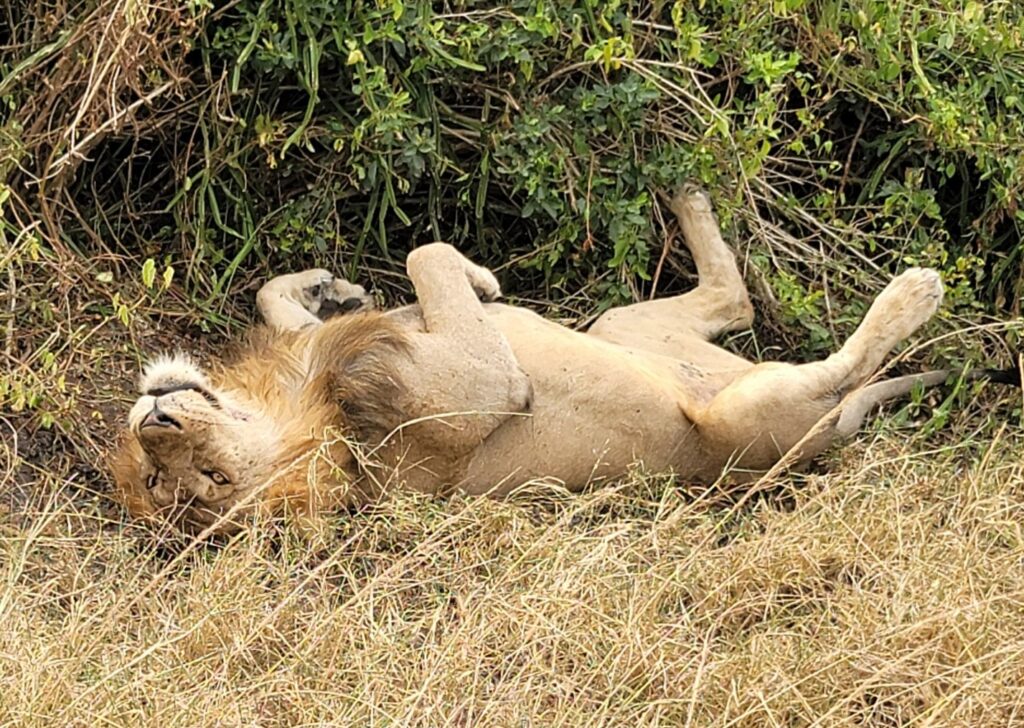
    Lion lying on his back in the savannah

    There were still some lions who preferred a more conservative position

    We saw giraffes gracefully galloping with their calves, buffalos staring us down like bouncers at a nightclub, elegant antlered kobs and topis, and elephants communicating in mysterious ways. It was the full safari buffet.

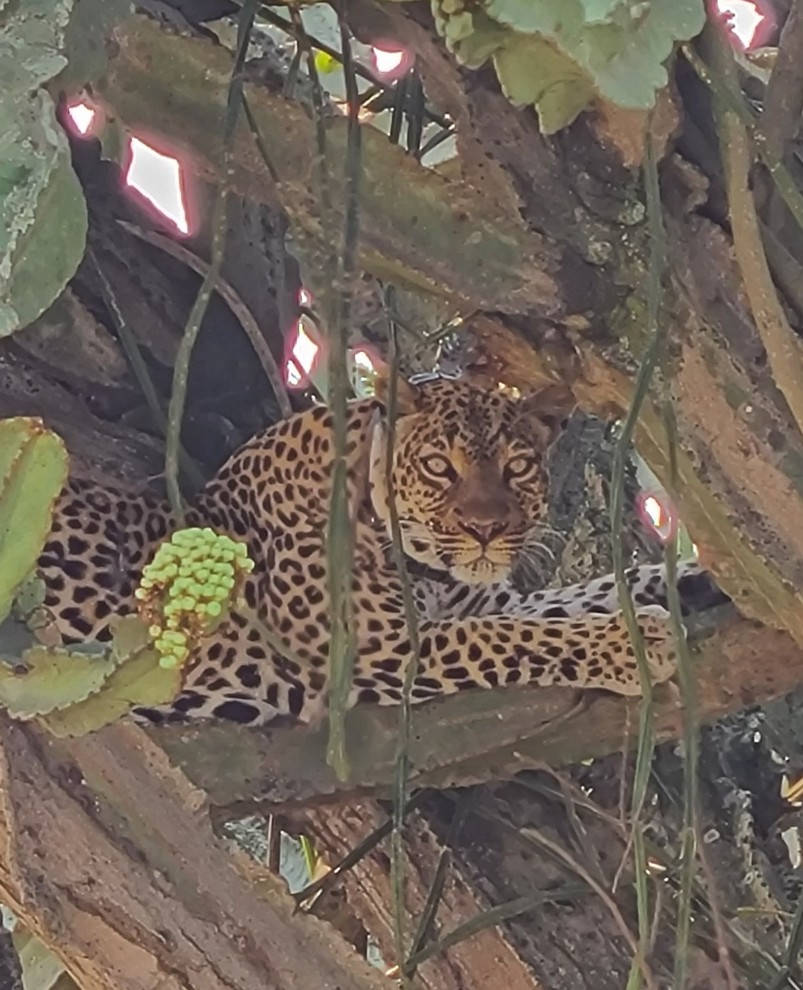
    Leopard sighting during off‑trail safari in Queen Elizabeth National Park

    We’ve never seen a leopard so close anywhere else

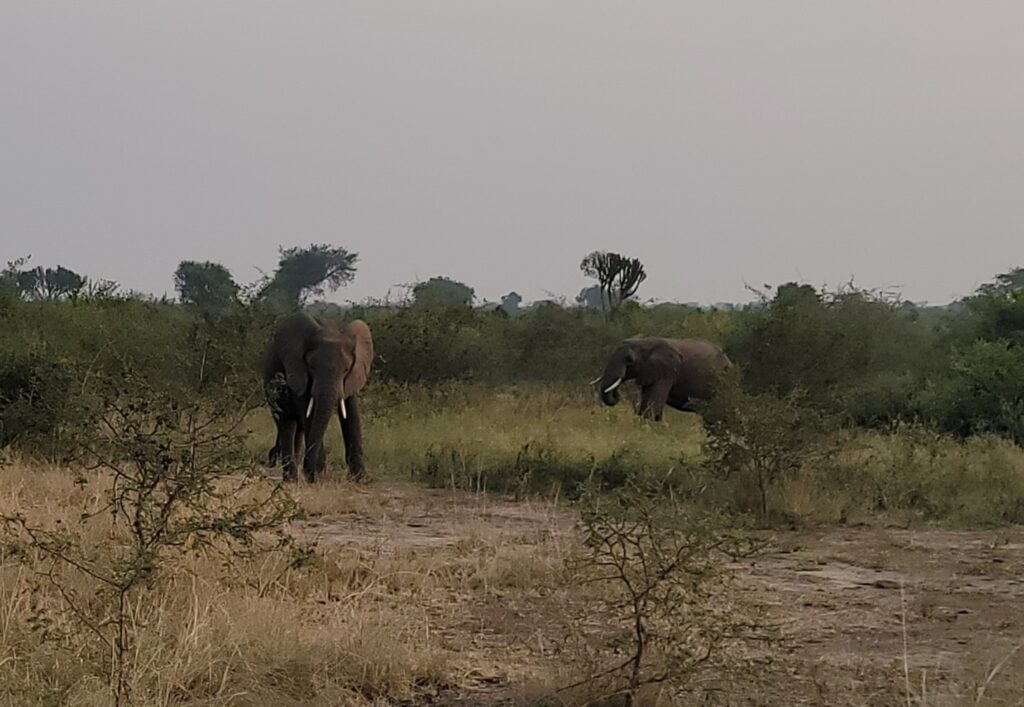
    Elephants communicating in Queen Elizabeth National Park

    Not sure what they were saying to each other

    In the afternoon, we cruised the Kazinga Channel, which connects Lake Edward and Lake George. With over 95 mammal species and 600+ bird species in the park, the boat ride was a photographer’s dream. We made hundreds of photos—only a few here…

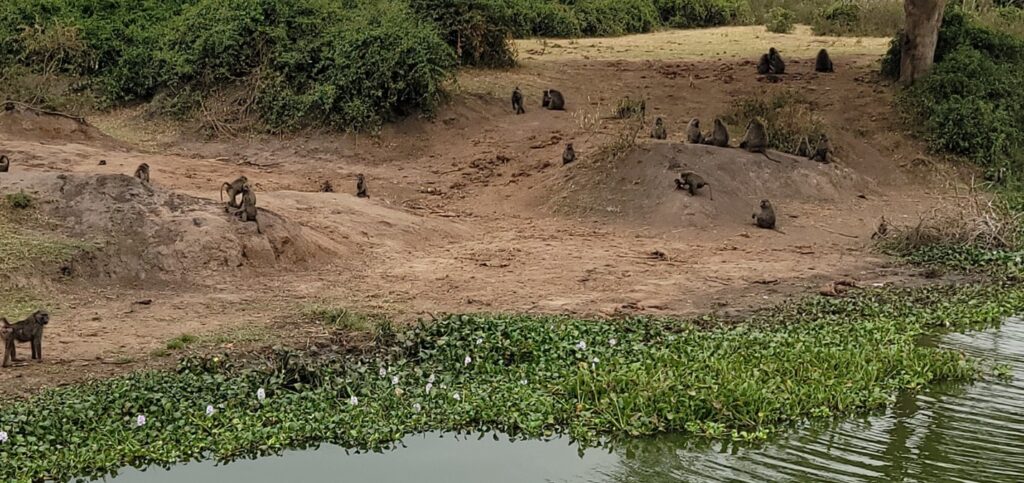
    Baboons along the Kazinga Channe

    The baboons made sure to stay away from the hippos

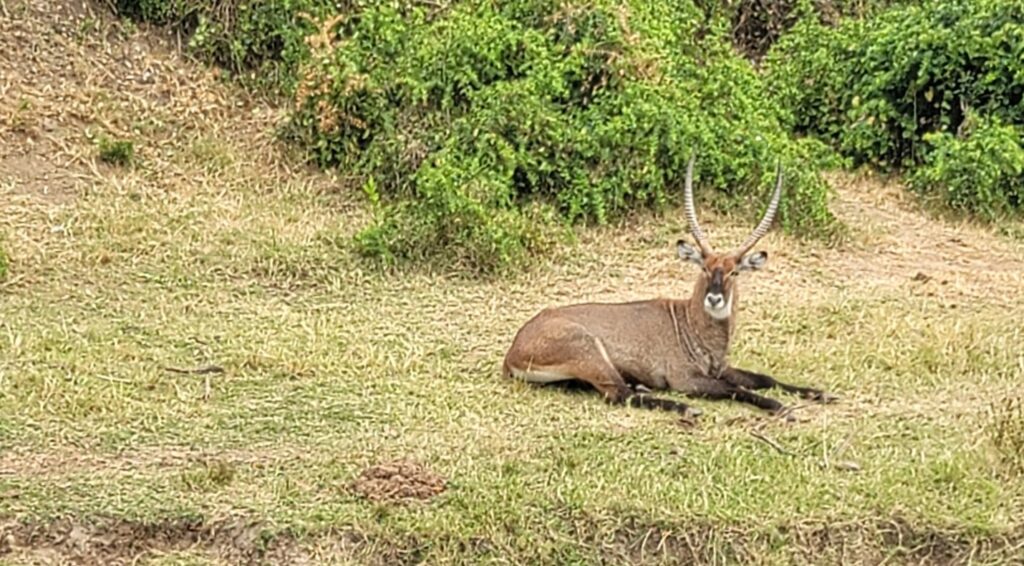
    Waterbuck standing by the water in Queen Elizabeth National Park

    This waterbuck was chilling by the water (where else…)

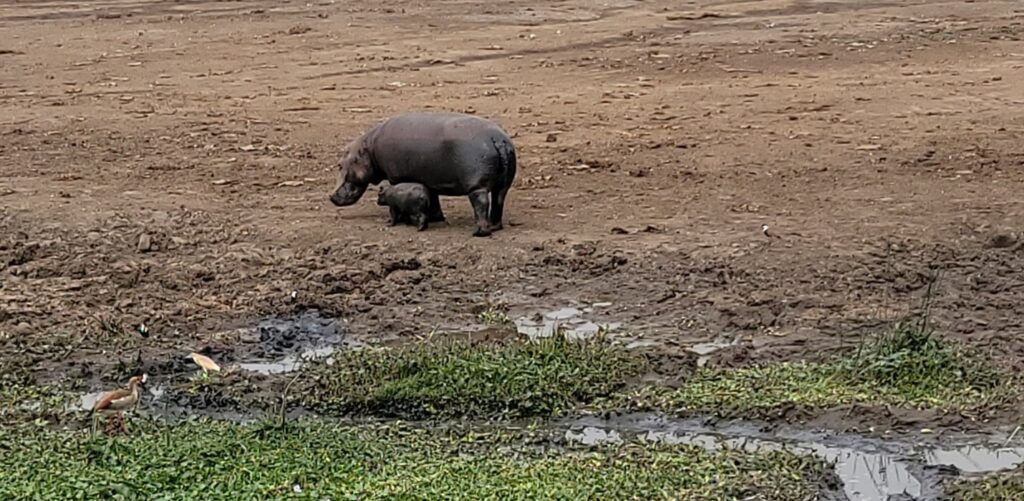
    Hippo mom and baby walking along the shore of the Kazinga Channel

    Taking a walk on the shore of Kazinga Channel

    Painted stork near the Kazinga Channel

    Let’s not forget the birds… Painted stork

    • Equator Stop – Stand in two hemispheres at once. Existential? Yes. Life‑changing? Not really.
    • Mweya Safari Lodge – Lake views, cold beer, and zero complaints.
    • Off‑Trail Game Drive – Lions, leopards, and buffalo up close—a safari with VIP access.
    • Tree‑Climbing Lions of Ishasha – Lions With Hollywood Attitude.
    • More Safari Wildlife Buffet – Giraffes, kobs, topis, elephants, buffalos and more.
    • Kazinga Channel Cruise – Hippos, birds, monkeys, hippos, birds, monkeys…

    ← Previous: Part 4 – From Market Mayhem to Monkey Business

    Next: Part 6 – Mountain Gorilla Tracking: Practical Information (and Impractical Realities) →

  • The Big Five and the Nile

    The Big Five and the Nile


    On the third morning, we kicked off our tour of Uganda. Expectations were high—and somehow, reality outdid them. Always nice when a trip decides to cooperate.

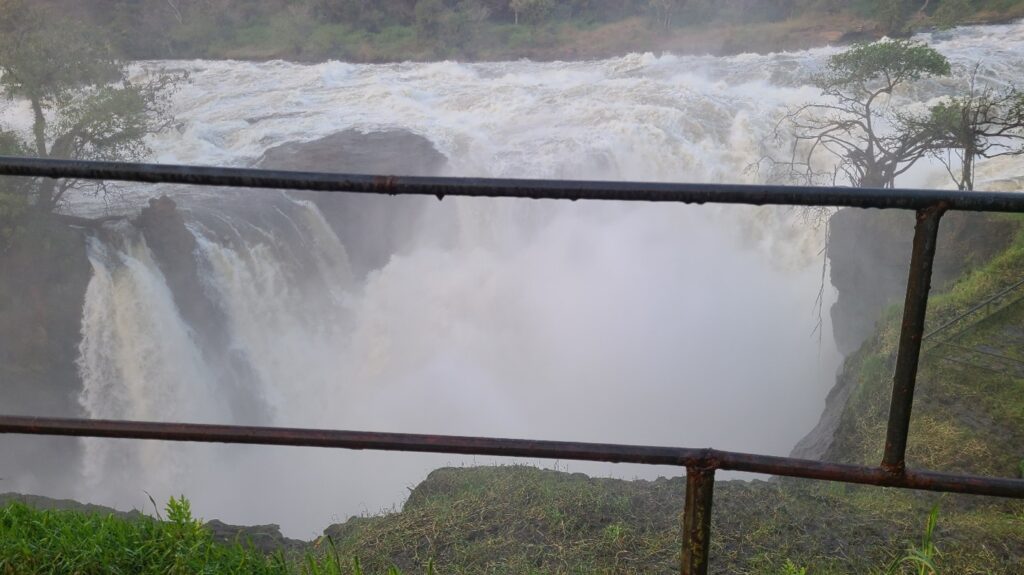
    Our first major destination: Murchison Falls, where the mighty Nile squeezes through a gorge just 7 meters (23 feet) wide before plunging 43 meters (141 feet) into Lake Albert (obviously, coming out of Lake Victoria first — because even rivers follow royal protocol).
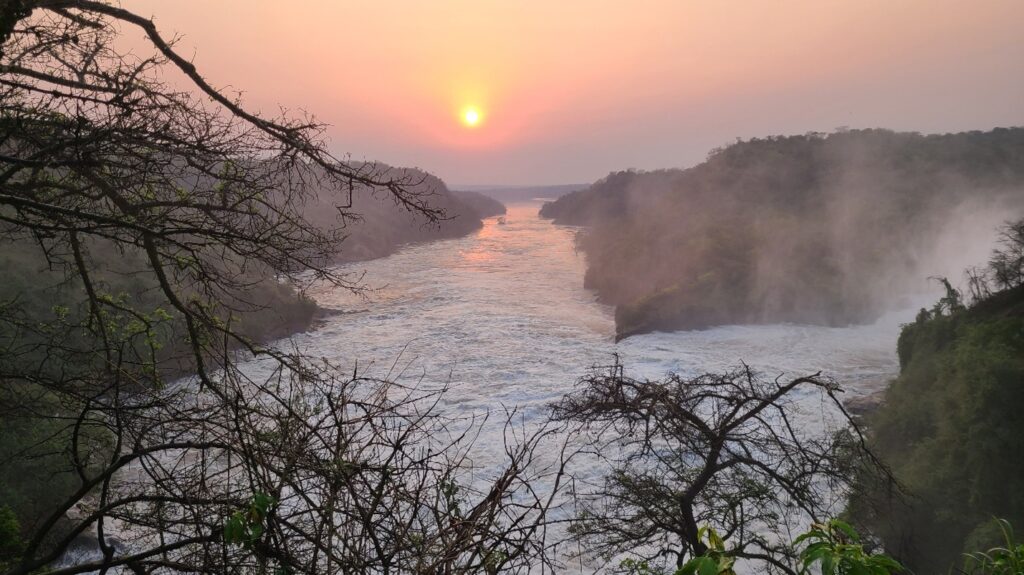
    It’s not the tallest waterfall, but the sheer volume of water being forced through that narrow gap is jaw‑dropping. Go at sunset and you’ll get a spectacle that makes you question every photo you’ve ever taken.

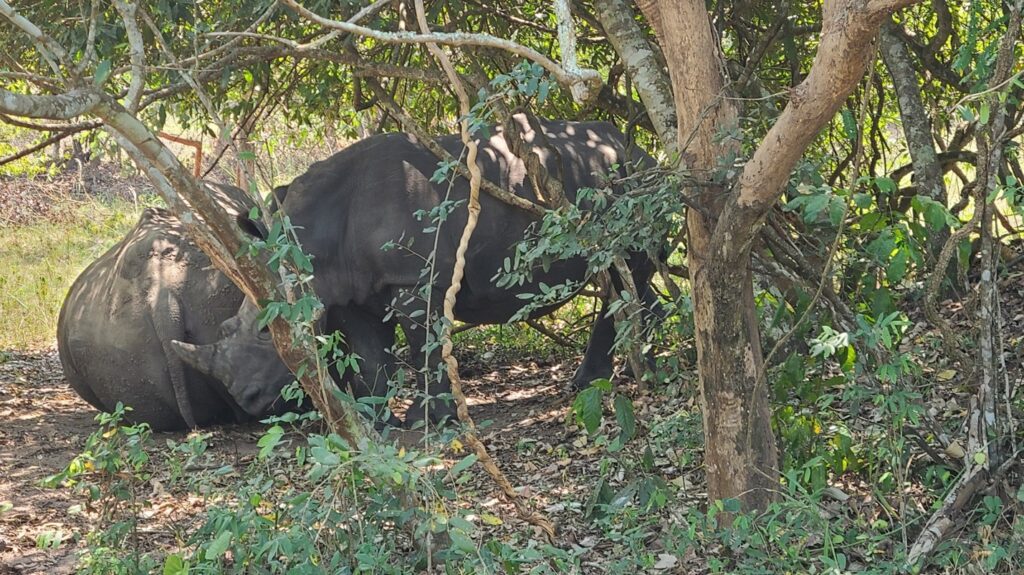
    Before reaching the falls, we stopped at Ziwa Rhino & Wildlife Ranch — in Nakitoma village—the only place in Uganda to see Southern White Rhinos. There are just 47 of them (maybe 48 if someone’s been busy), and once they hit 50, the plan is to release them into savannah parks.

    For about an hour, we walked with a ranger and had a close encounter with these massive, surprisingly gentle creatures. Peaceful, breathtaking… and sweating less than we were.

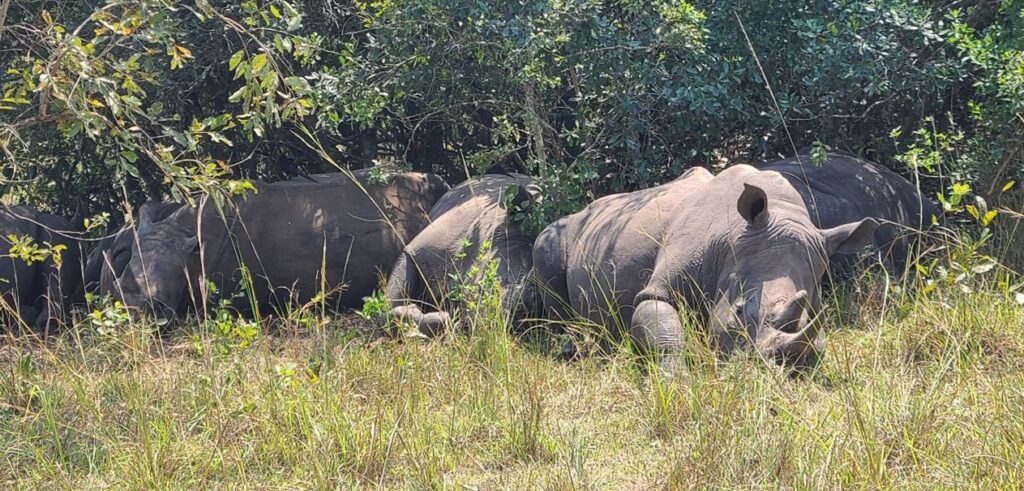
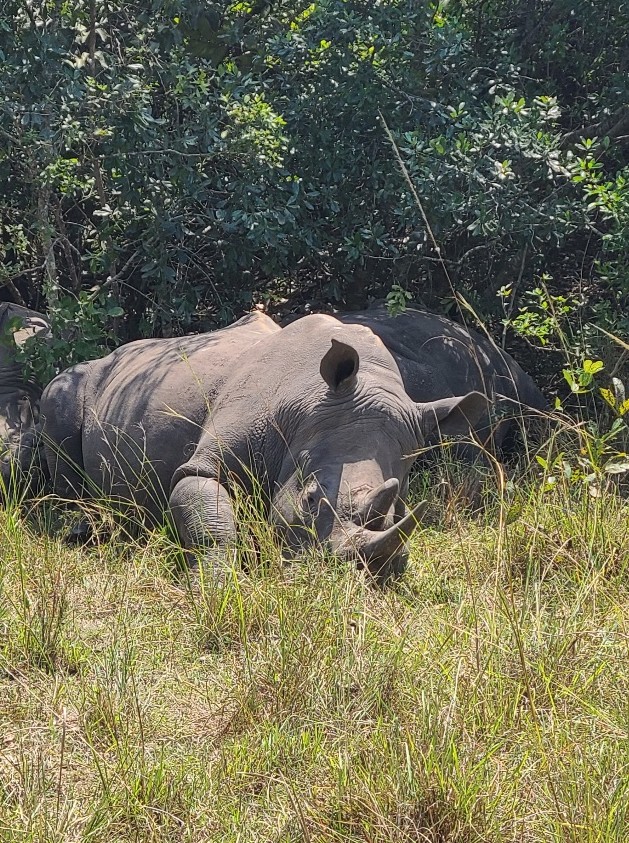
    Southern White Rhinos at Ziwa Rhino Sanctuary Uganda

    Rhinos in Ziwa Sanctuary. Even they thought it was too hot.

    This one probably had too much to eat.

    The young guy was only two years old, babysat by his big brother while mom recovered from giving birth.

    We arrived at Murchison Falls about an hour before sunset. And honestly? Words fail. It’s one of those places where your camera gives up before you do — it can’t capture the roar, the mist, or the feeling that you’re witnessing something so powerful.

    Murchison Falls from above at sunset

    Murchison Falls from above

    Sunset on the Nile

    Right inside the national park — great location, very comfortable, and no need to pretend you’re “one with nature” because nature is literally outside your window.

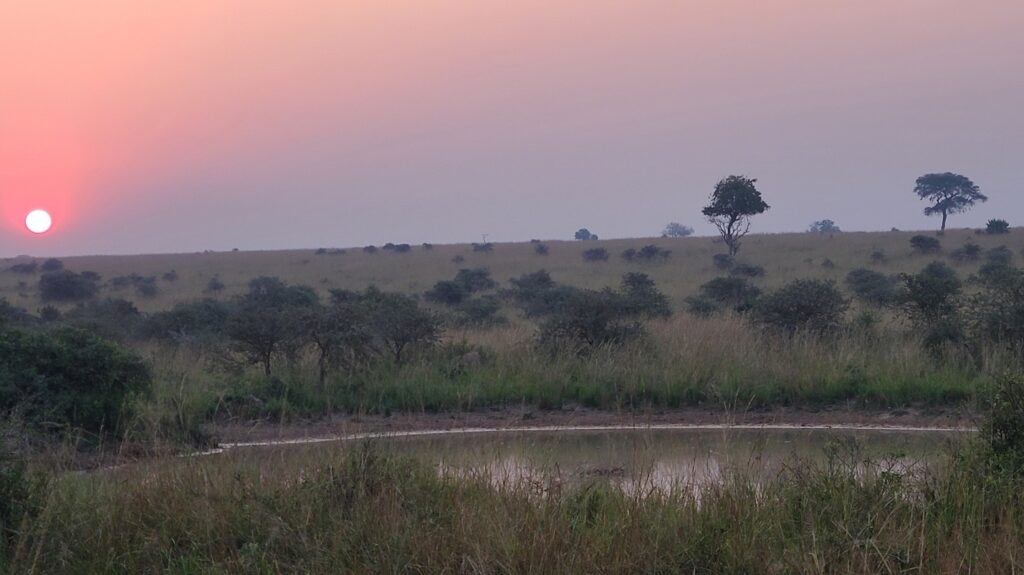
    We started early. Before‑dawn early. Too early.
    Animals in Africa don’t do lunch — they’re up with the sun, grabbing breakfast before the heat kicks in. So if you want to see the action, you’ve got to be there when the wild wakes up.

    Sunrise over the savannah in Murchison Falls National Park

    Sunrise in the savannah

    As you’ve probably gathered, we’re not morning people. But being near the equator meant a 6 a.m. wake‑up instead of the 5 a.m. horror show we endured in South Africa. Still not fun, but survivable.

    We were hoping to spot four of the Big Five. (elephant, lion, African buffalo, leopard, rhino). We’d already ticked off rhino the day before, so seeing all the others felt like a long shot. But guess what? We saw them all. The leopard was playing hard to get—spotted from a distance—but the others swaggered in.

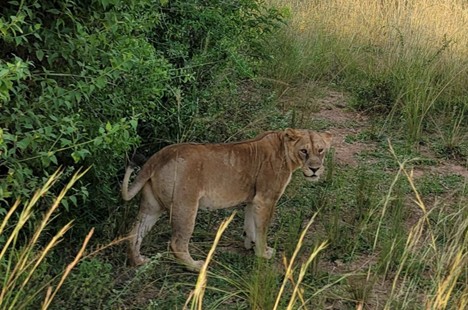
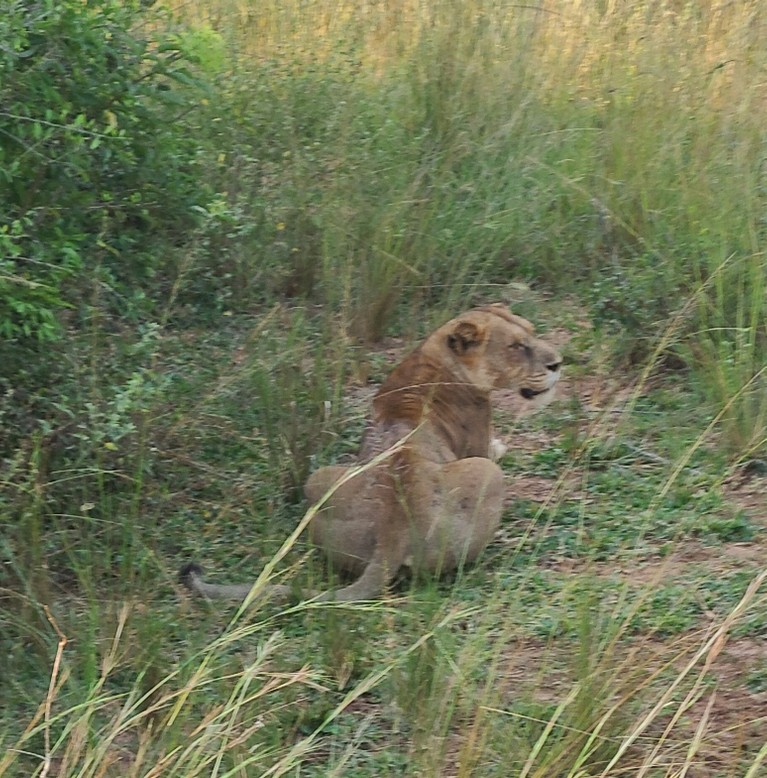
    One of the most memorable sightings was a young lioness casually strolling through the bush. She moved with the kind of grace that reminds you she’s very, very good at hunting… and you are very, very good at staying inside the car.

    Lioness walking through the savannah in Murchison Falls National Park

    Where was the lioness coming back from?

    Then she decided to sit and rest a bit.

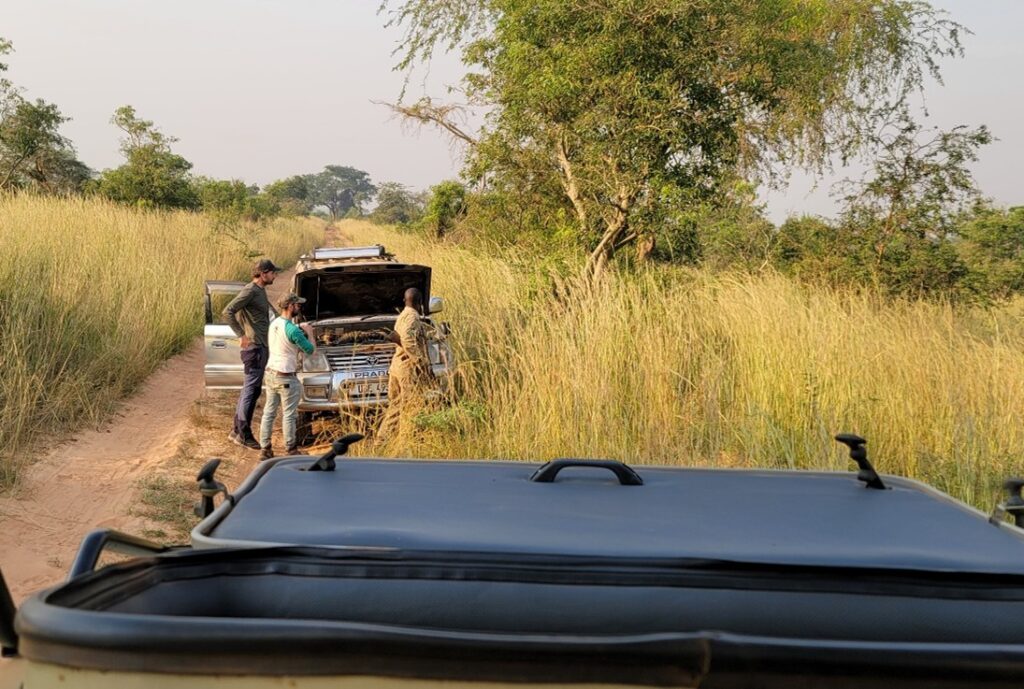
    Things got a bit more intense when we saw a car stuck on the other side of the same bush. Three people were trying to fix it, including a ranger with a rifle who was also the designated mechanic.

    Joseph, our driver, jumped out to help. Brave? Maybe. Reckless? Possibly. But no one seemed too worried about the lioness. Joseph’s a big guy, but I doubt even he would fancy a wrestling match with a charging feline. Thankfully, the car got fixed and everyone drove off – no claws, no drama.

    These poor people got stuck in the middle of the savannah with the lioness on the other side of the bush

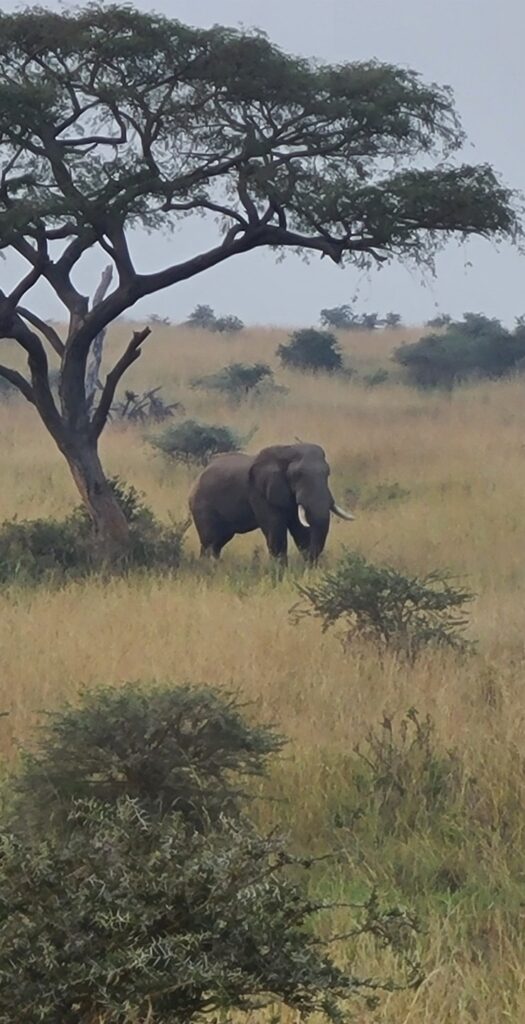
    Later, we encountered a herd of elephants that clearly didn’t appreciate our presence. One of the big ones charged us. Joseph hit the gas and got us out of there. Scary? A bit. Cool? Absolutely. We trusted Joseph to know when to floor it.

    Elephant mock‑charging safari vehicle in Uganda

    He made it very clear that we should leave.

    In the afternoon, we took a cruise on the Nile. Hippos, elephants, and hundreds of birds. A water safari is a different vibe — calmer, quieter, but not less thrilling.

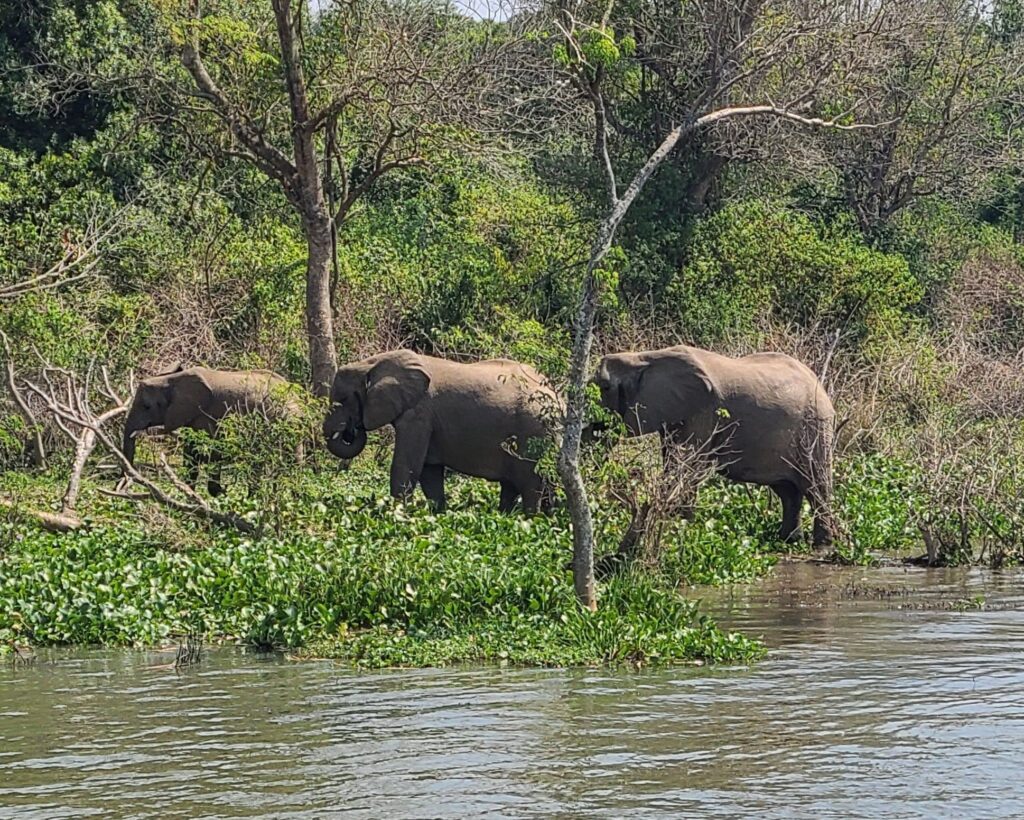
    Nile River cruise with elephants

    Elephants on Break: Do Not Disturb

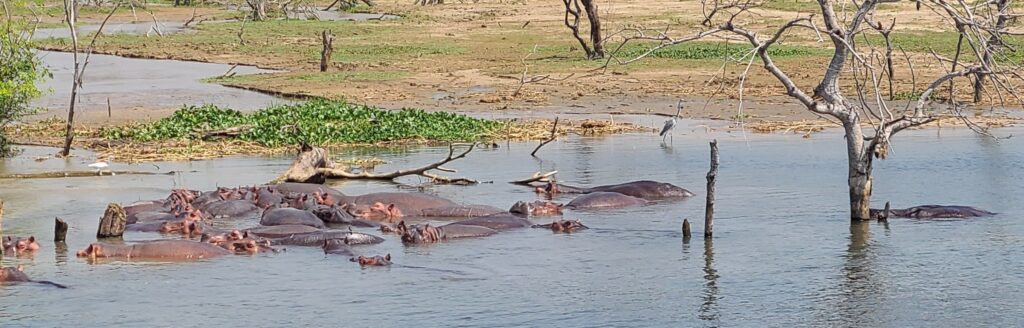
    One thing we’ve learned is that hippos are incredibly sun-sensitive, which is why they spend their days marinating in water. They have no sweat glands and hairless, permeable skin, so a few hours in direct sunlight and they’d end up looking like overcooked sausages.

    Nile River cruise with hippos

    A Bit Crowded There

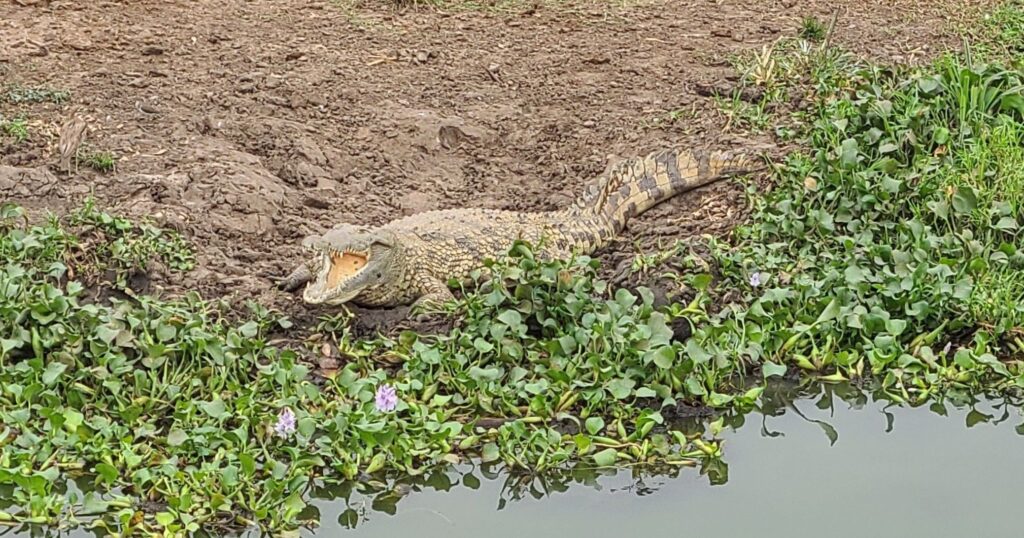
    There are crocs here also

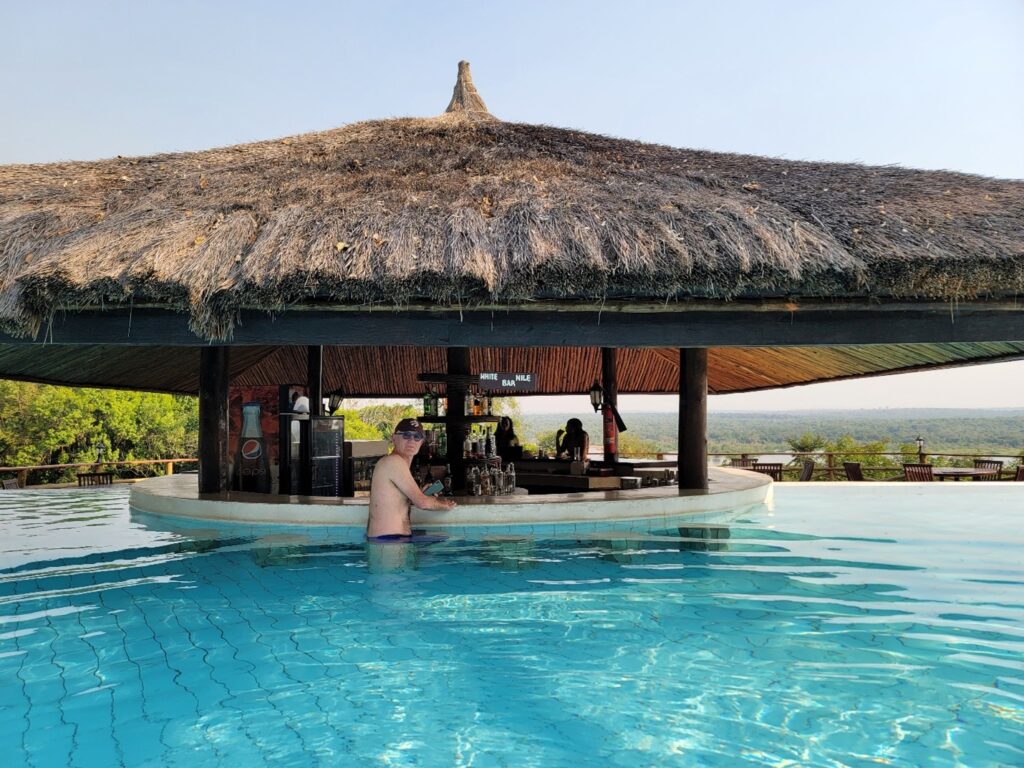
    We could’ve gone for an evening game drive, but after our morning success and a healthy dose of adrenaline, we opted for something lazy: a dip in the pool and a few mysterious bar concoctions. No lions, no wake-up calls—just fun. Pool bars are our happy place.

    Pool bar at Paraa Safari Lodge Uganda

    There’s me sitting by the pool bar on a beautiful evening in Uganda.

    • Ziwa Rhino Sanctuary – A rare chance to watch Southern White Rhinos up close.
    • Murchison Falls at Sunset – The Nile’s dramatic squeeze through a 7‑meter gorge.
    • Paraa Safari Lodge Stay – Comfortable digs inside the park, with wildlife just outside.
    • 6 a.m. Game Drive – Early, painful, but worth it — because animals don’t do brunch.
    • Big Five Bingo – Elephant, lion, buffalo, leopard, rhino — all spotted, some with flair, one with attitude.
    • Lioness Encounter – Graceful, powerful, and thankfully uninterested in us.
    • Nile River Cruise – Hippos, crocs, and an abundance of birds.
    • Pool Bar at Paraa Safari Lodge – Cocktails, calm, and zero predators. The only thing hunting us was the bartender.

    ← Previous: Part 2 – 17 Hours, 5 Wines, and a Stork with low self respect: Welcome to Uganda

    Next: Part 4 – From Market Mayhem to Monkey Business: A Day in Kibale