Tag: Istanbul travel •

  • Ecuador: The Country That Makes You Weigh Less (But Charges You More at the ATM)

    Ecuador: The Country That Makes You Weigh Less (But Charges You More at the ATM)


    Ecuador wasn’t even supposed to be even a part of our 2.5-months trip to South America— Galapagos was. Ecuador turned out to be the unexpected show‑stealer. This Ecuador travel guide dives into Andes landscapes, safety myths, cloud theatrics, and cacao that is so good that should honestly be illegal — because Galapagos alone wasn’t enough. Here’s the unfiltered, 50+‑friendly, sarcasm‑powered overview.

    The original plan for our third South American adventure was simple: Galapagos or bust. But seven days in paradise barely scratches the itch for two travel addicts, so we needed more. Ecuador should have been the obvious add‑on — it’s the same country, after all — but headlines about rising crime made us hesitate. After booking our Galapagos cruise through a local agent who specializes in finding good deals, I asked him the big question: “Is Ecuador safe?”

    His answer: “It’s no less safe than any other South American country… just avoid certain coastal areas.”

    He was right. And I’m very glad he talked us into it.

    Ecuador used to be one of the safest countries in South America. Then, about a decade ago, drug cartels expanded their influence — especially along the coast. According to locals, the previous president’s family ties to a drug lord didn’t exactly help.

    But here’s the nuance:

    The dangerous areas are coastal, especially Guayaquil — the country’s most problematic city. Even Ecuadorians avoid Guayaquil unless they have family there. Their accent alone would give them away as “outsiders,” making them targets for muggings. The Andes and Amazon regions are a different world — calm, welcoming, and stunning.

    We skipped the Amazon this time. My dream is to cruise the actual Amazon River, and Ecuador only has a tributary — lovely, but not the Amazon. So we focused on the Ecuadorian Andes, which turned out to be a spectacular mix of volcanoes, rainforests, lakes, lagoons, and waterfalls.
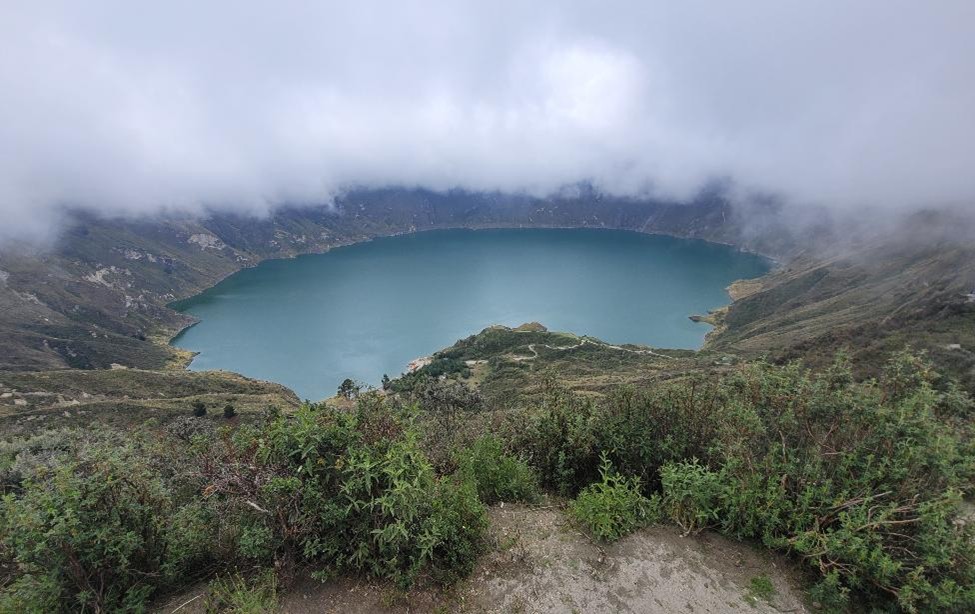
    Laguna Quilotoa crater lake in Ecuador Andes

    Laguna Quilotoa — where the view is free, but the hike back up charges interest
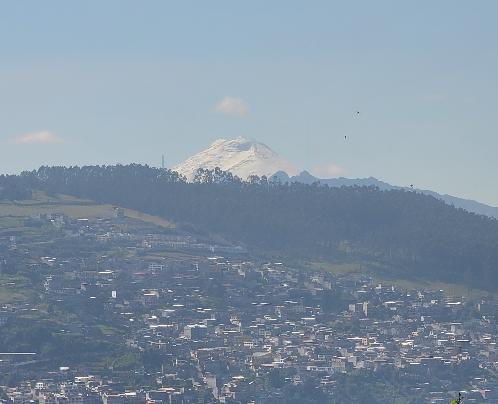
    Cotopaxi volcano in Ecuador Andes with snow peak

    Cotopaxi: towering, intimidating, and still less dangerous than Guayaquil

    Manto de la Novia waterfall in Baños Ecuador
    Manto de la Novia waterfall in Baños Ecuador

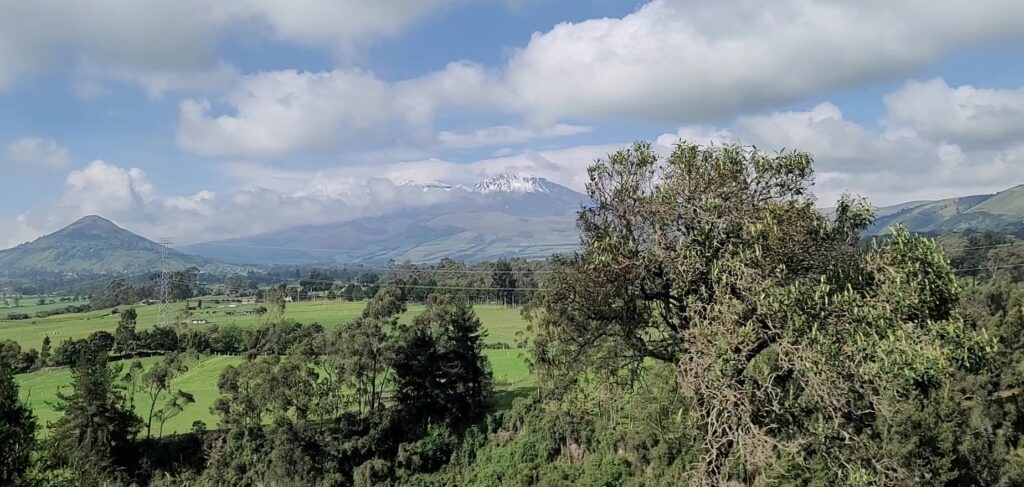
    Ilinisa grande volcano in Ecuador Andes

    Ilinisa Grande volcano

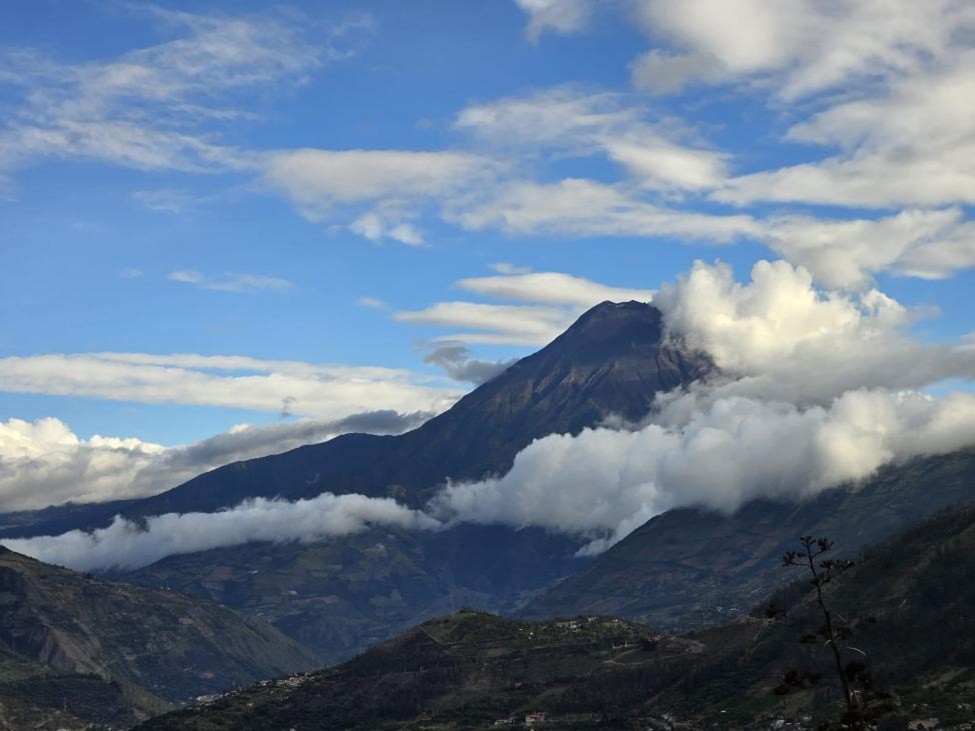
    And the clouds — oh, the clouds. They cling to volcanoes like fluffy beautiful scarves, hiding the peaks until they suddenly don’t… and then WOW.
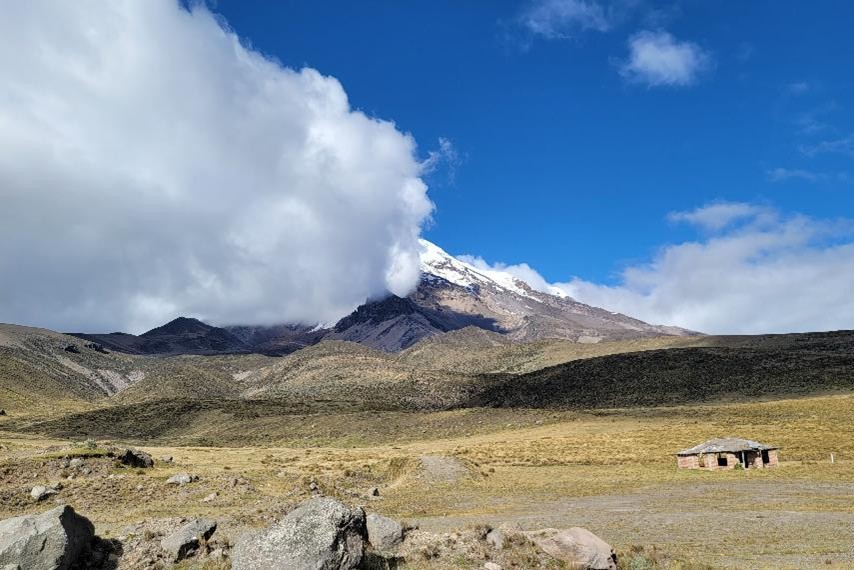
    Chimborazo volcano in Ecuador Andes

    Chimborazo volcano photobombed by clouds
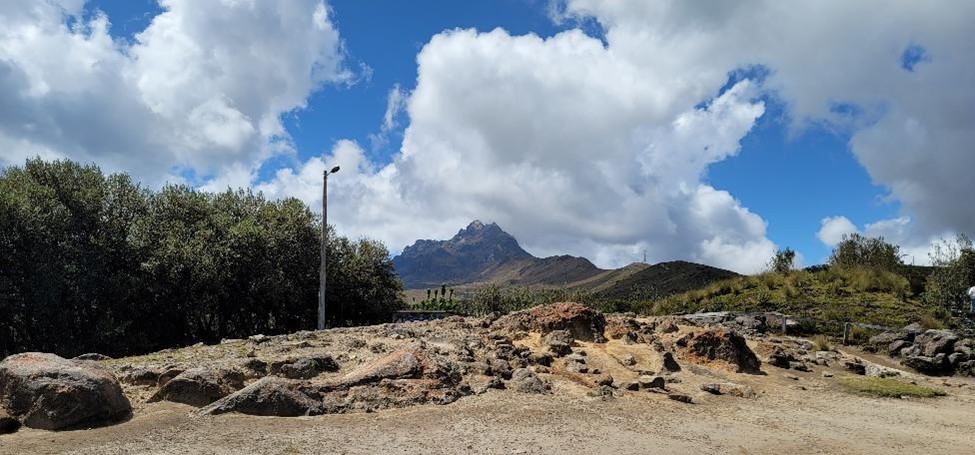
    Rucu Pichincha volcano near Quito

    Rucu Pichincha Volcano as seen from Cruz Loma, near Quito, Ecuador

    Quito behaves like any major city: some areas are perfectly walkable; others are “Uber-only unless you enjoy adrenaline.” Hotel‑organized rides or Uber are safer than random cabs. Nothing unusual for a Latin American capital.

    Now that we’ve been, I can vouch for both the safety of the regions we visited and the jaw‑dropping beauty of the country. Ecuadorians are warm, friendly, and frustrated that tourism dropped after the pandemic due to exaggerated safety fears. Their loss, your gain.

    Since 1999, Ecuador has used US dollars. They mint their own coins up to $1, but they are not accepted in the US. All banknotes are from the US.
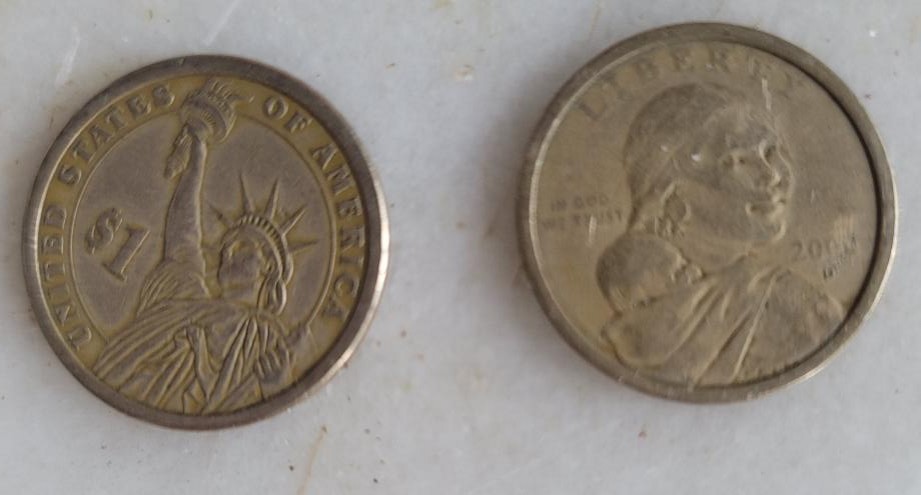
    Ecuador-minted US dollar coins

    Ecuador-minted US dollar coins

    But because they can’t print their own bills:

    • Cash is king. Bring cash. Lots of it.
    • Credit cards are hit‑or‑miss, definitely outside big cities.
    • Many restaurants accept only cash. Hotels though accept credit cards.
    • ATMs limit withdrawals to $200–$300/day with ~$4.50 fees.
    • Galapagos works the same way.

    At the equator, gravity is slightly weaker. Everything weighs about 0.5% less. If you’re worried about gaining weight on vacation, Ecuador is basically the place to go!

    Ecuadorian cuisine isn’t as sophisticated as Peru’s, but it’s delicious and diverse thanks to the country’s geography and indigenous traditions.

    Expect: Lomo Saltado (yes, like in Peru); Goat stews; Empanadas; Excellent seafood; Amazonian fish like paiche — the largest freshwater fish

    Paiche was a revelation: meaty, flaky, slightly sweet, and perfect grilled. It reminded me of Chilean sea bass — which, by the way, is actually Patagonian toothfish rebranded by a shrewd American wholesaler.

    I’m a chocolate addict (65% cocoa and up, obviously), and Ecuador’s cacao is on another level. More on that in my Mindo post.
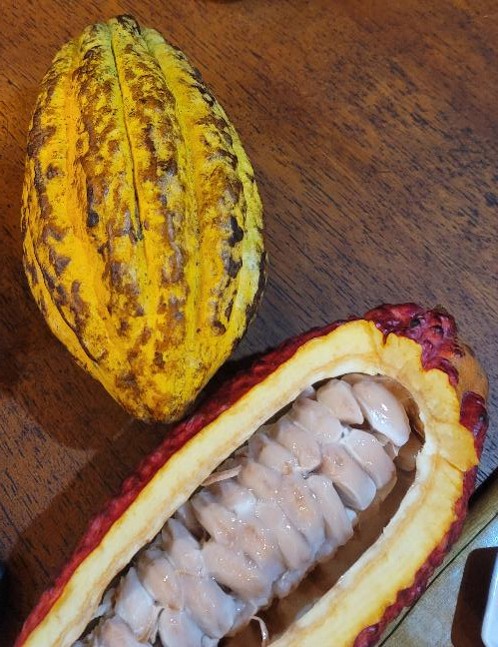
    cacao pods from Ecuador

    Cacao pods. The magical ingredient in the chocolate made in Ecuador

    Quito isn’t a major hub, but flights from North America are plentiful. LATAM, COPA, and AVIANCA fly from Canada, though all require a layover. United has direct flights from Houston and Newark. other US airlines may also have flights to Quito, but I did not check. Air Canada plans to start direct flights in late 2026 — too late for us.

    We planned an 11‑day tour focused on the Andes, with must‑visit stops in Quito and in Cuenca, a gem that feels like a country within a country. More about Cuenca in its own post.
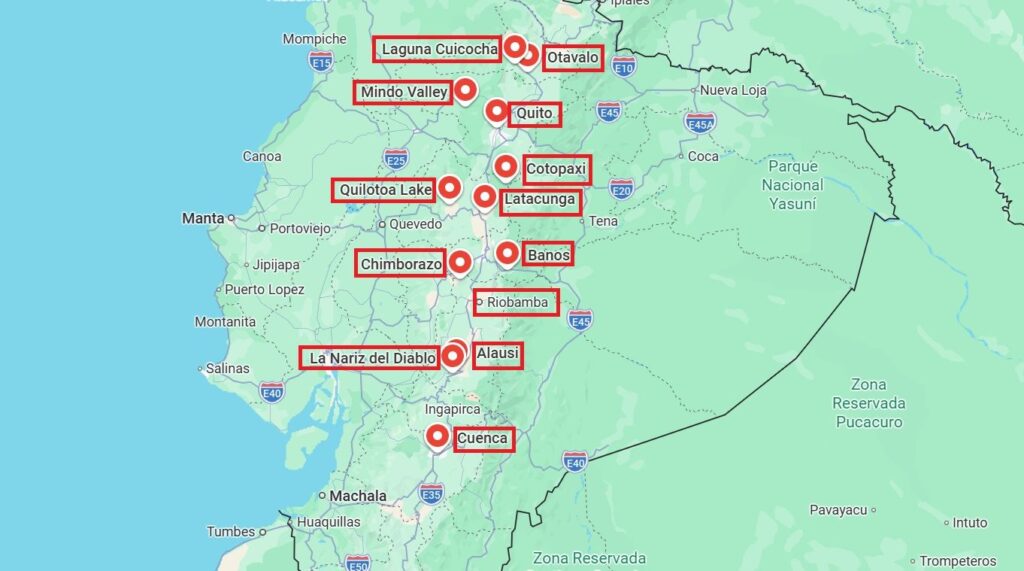
    Map of Ecuador Andes travel itinerary

    Map of our Ecuador travel itinerary

    • This Ecuador travel guide proves the Andes are safer than the headlines — and cacao is better than therapy.
    • The Andes deliver nonstop drama: volcanoes, lagoons, rainforests, and cloud theatrics.
    • Cash is essential — your credit card will feel neglected.
    • Paiche is the fish you didn’t know you needed in your life.
    • Ecuadorian cacao will ruin all other chocolate for you.
    • Quito is a typical big city: walk some areas, Uber others.
    • Avoid Guayaquil unless you enjoy danger tourism.
    • The equator makes you weigh 0.5% less — you’re welcome.
    • Cuenca is a must‑see, and Galapagos is just the beginning.
    • Q: Do I really need altitude acclimatization in Ecuador?
      A: Unless you enjoy gasping like a fish on land, yes. Take it slow, hydrate, and skip the macho “I’ll be fine” routine
    • Q: What’s the deal with Ecuadorian food?
      A: Expect seafood and meat, plantains everywhere, and guinea pig if you’re feeling adventurous. No, it doesn’t taste like chicken—it tastes like guinea pig. But don’t eat it mixed with honey!!! It’s horrible.
    • Q: Can I pay with US dollars?
      A: Yes, Ecuador uses USD as its formal currency. Cash is king and credit cards are not a trend.
    • Q: Can I drink the tap water?
      A: Unless you want your trip to turn into a bathroom marathon, stick to bottled.

    Next: Part 2 – Avianca, Standing Eggs, and Quito’s Extra Equator
  • Istanbul in (almost) 24 Hours: Wet Socks, Architectural Wonders, and a Lounge Worth Starving For

    Istanbul in (almost) 24 Hours: Wet Socks, Architectural Wonders, and a Lounge Worth Starving For

    Two-week trips are for people who still believe in rest, not addicted travellers like us. Since we were already in Africa (see Uganda posts), we figured—why not hop to another country on the same continent with a completely different vibe? Morocco had been on our radar since our Portugal trip, but time wasn’t on our side back then. This time, it was. Different culture, different history, different landscapes, different cuisine (we’ll get to that later—spoiler: tagine is involved).

    Getting there, however, was a logistical masterpiece. Entebbe is not exactly a bustling airline hub. To reach Casablanca, we had to fly Turkish Airlines through Istanbul. That meant 7 hours eastward only to boomerang 5.5 hours westward. Not really efficient.

    We landed in Istanbul at 1 PM, with our next flight scheduled for noon the following day. That gave us almost 24 hours to explore the city—just enough time to fall in love and get mildly frostbitten.

    Turkish Airlines knows how to milk a layover. They even offer city tours for passengers with more than 8 hours to kill—because as Arthur Dent in The Hitchhiker’s Guide to the Galaxy wisely reminds us, “time is an illusion; lunchtime doubly so.” But here’s the kicker: once you check in your luggage, it disappears into the airline’s version of the Infinite Improbability Drive until your final destination. So pack your toothbrush (luckily, no need to bring a towel if you’re staying at a hotel), clean clothes, and whatever else you need to survive a day wandering around without your suitcase. Because trust me, regret makes a lousy travel buddy—worse than a Vogon poem.

    Istanbul in early February is less “romantic fog” and more “bone-chilling drizzle.” No snow, but plenty of rain and temperatures that flirted with freezing . Still, we’re Canadian. Cold is our love language.

    We aimed for the Big Four — Istanbul style, as opposed to the Big Five we marveled at in Uganda. This time, our wild adventures involved Hagia Sophia, the Blue Mosque, Topkapi Palace, and the Grand Bazaar. We managed two out of four, which given the weather, felt like a pretty impressive safari of its own.

    The drive from the airport to downtown takes about an hour, even when traffic is behaving. We booked with Istanbul Airport Private VIP Transfers, and they delivered: clear instructions, a clean Mercedes minivan, and a driver who didn’t try to sell us a carpet. Punctual, polite, perfect. Honestly, more reliable than what you expect from certain governments.

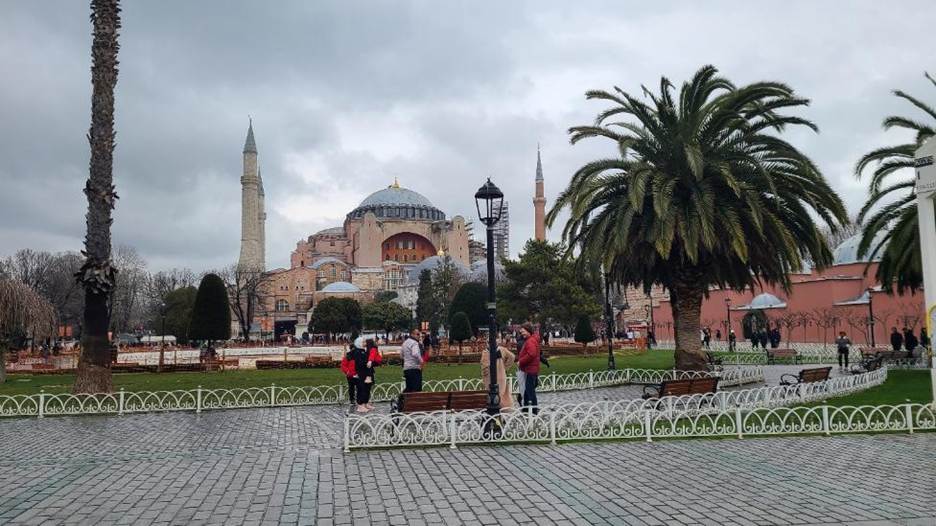
    Istanbul on a rainy day in February

    We stayed at Sultanahmet Hotel, located—shockingly—in the Sultanahmet District. It’s not fancy, but it’s the obvious choice for first-timers who want to stay in the historical and cultural heart of Istanbul. It’s the oldest part of the city, in the European part. If you’re into clubs and shopping, head to Beyoğlu. We had limited time and prioritized Hagia Sophia and the Blue Mosque, both within a 10-minute walk.

    The entrance to the Blue Mosque

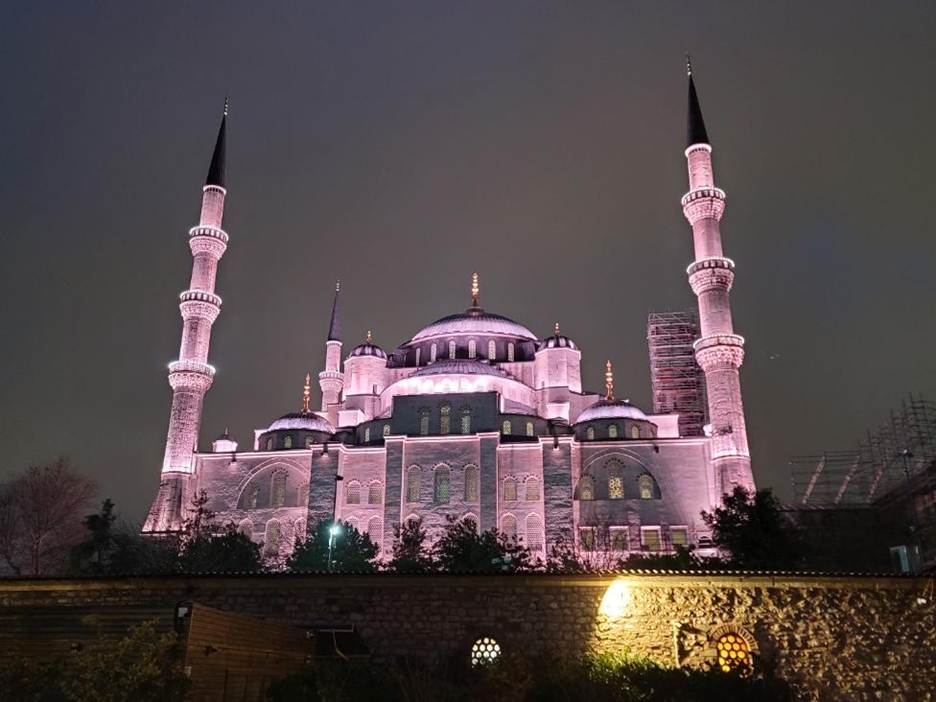
    The Blue Mosque at night

    We started with the Blue Mosque, which was on the way to Hagia Sophia. In retrospect, we should’ve reversed the order and hit the Hagia Sophia museum first—it offers context for both sites. These mosques are massive, and majestic (also not cheap to visit). But they’re worth every lira. Pro tip: get the audio guide. It’s like having a historian in your pocket.

    The cupola of the Blue Mosque from inside

    Hagia Sophia

    Inside Hagia Sophia

    The Byzantine relics still very vivid inside Hagia Sophia

    More Byzantine art from Hagia Sophia

    On the way back, we stumbled into a small bazaar and bought some rahat lokum. Because when in Istanbul, you eat the candy they claim to have invented. Pistachios, nuts, raisins, rosewater—all suspended in a gelatinous cube of sweetness. Delicious, but not bingeable. Think of it as dessert with a built-in portion control.

    Dinner was at Albura Kathisma, recommended by the hotel receptionist. We obeyed, and it paid off. The food was hearty and spiced with great flavours, the atmosphere cozy, and the service genuinely kind. We wrapped up with raki and beet brine—because nothing says “Istanbul in February” like fermented root vegetables and anise-flavored firewater. Not all restaurants serve alcohol, so if you’re craving a drink, check before you sit down. Or risk an evening of sparkling water and existential dread.

    I’m not a breakfast person. But I skipped it for a noble cause: the Turkish Airlines business class lounge. Reviews are mixed, and you can read them if you want. They will tell you about the amenities, the sleeping suites and who can get them, the kids’ area and anything else you’d like to know. The lounge is enormous, noisy, and crowded, but the food is a great. Seven live cooking stations were open dishing out borek, shawarma, moussaka, omelettes, pizza, cookies… it’s like a culinary fever dream. I ate enough to make skipping breakfast feel like a strategic life decision.

    In less than 24 hours, Istanbul gave us wet socks, beautiful architecture, sugar bombs disguised as candy, and a lounge buffet worth skipping breakfast for. Was it efficient? Not so sure. Was it unforgettable? Definitely. Proof that even a layover can turn into a mini‑adventure—just take Arthur Dent’s recommendation and pack a towel (dry socks would also be useful).

    We boarded the flight to Casablanca with full bellies. I fell asleep before takeoff and woke up wondering if Istanbul had been a dream. A cold, but fascinating and delicious dream.

    • Weather report: February drizzle, near‑freezing temps. Wet socks included at no extra charge.
    • VIP transfer: Clean Mercedes, polite driver, zero carpet sales pitch. Miraculous.
    • Blue Mosque & Hagia Sophia: Majestic, massive, worth every Euro. Audio guide = historian in your pocket.
    • Hotel choice: Sultanahmet Hotel — location wins, luxury loses. Ten‑minute walk to the Big Two.
    • Lokum detour: Turkish delight = sugar trap with built‑in portion control. Delicious, but not binge‑worthy.
    • Dinner at Albura Kathisma: Cozy food, warm raki, beet brine.
    • Turkish Airlines lounge: Seven live cooking stations. Skipping breakfast was strategic.