
How Do We Prepare for a Trip?
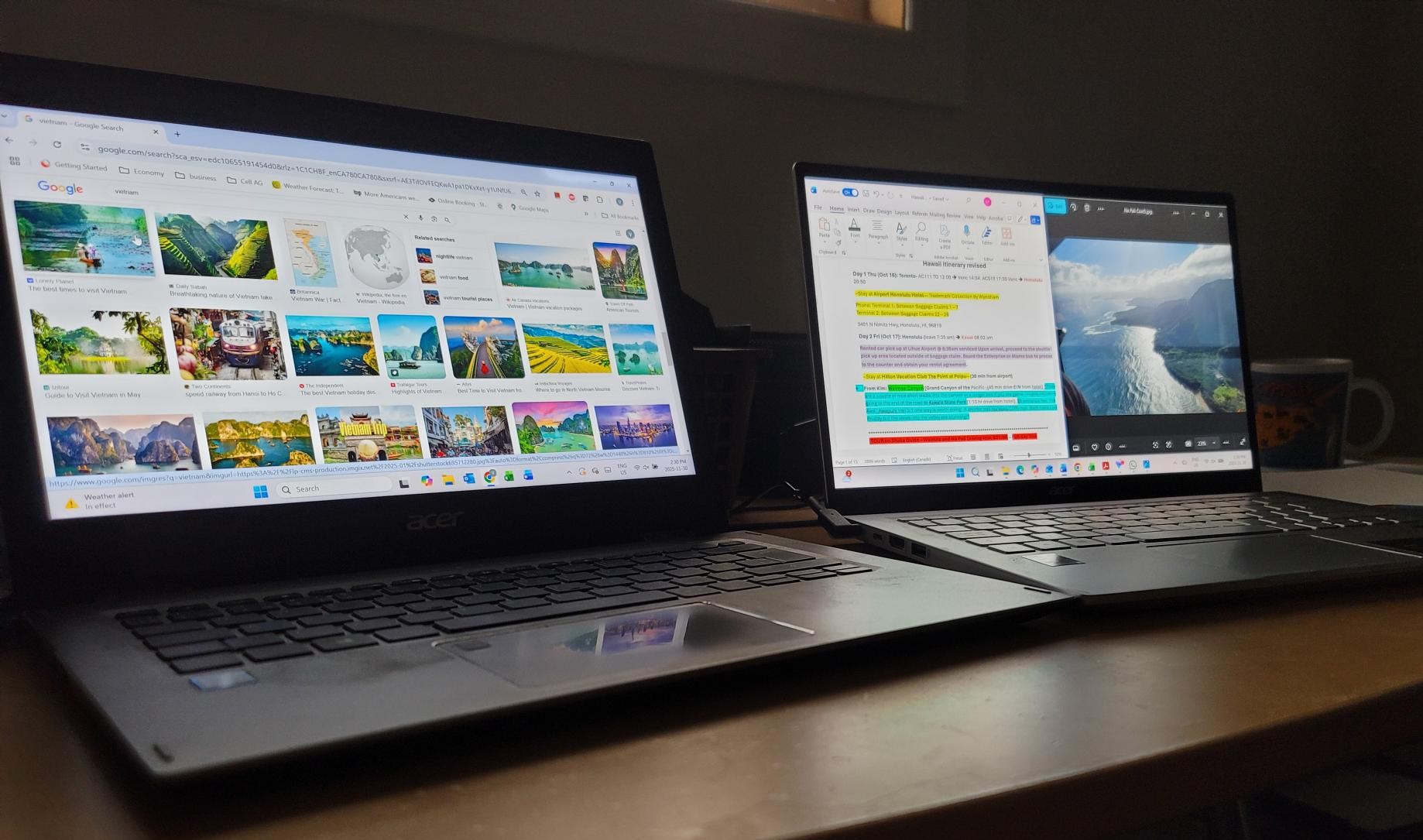
What do I do when I prepare for a trip? That’s a question I asked myself while writing this blog—and honestly, I’d never really thought about it before. Travel planning just sort of… happens. Like laundry. Or accidentally binge-watching a series when you meant to watch just one episode.
Travel planning sounds glamorous until you realize it’s basically spreadsheets, weather charts, and Googling “is this country safe or just pretending?” In this first part of this guide, I’ll walk you through the foundations: choosing destinations, timing, research, and logistics. Think of it as the boring-but-essential healthy food before you get to dessert.
Decide on the Destination
We keep a bucket list of countries and regions we want to visit. It’s based on personal interests—landscapes, cultures, wildlife, cities, history, and anything else that sparks our curiosity. Basically, if a place has mountains, markets, or monkeys, it’s probably on the list.
How do we discover these places? Just like anybody else: friends, books, media, documentaries, movies, ads. Sometimes even a random travel YouTube video where someone pretends to “live like a local” while clearly staying at a hotel.
Is the destination always as exciting as expected? Not always. Sometimes it’s even better. That’s when deeper research kicks in. Other times it’s a letdown, and you realize the beautiful ad forgot to mention the construction site next door.
Decide When to Visit
We rarely visit just one country per trip. It’s more efficient, more eco-friendly, and frankly, more fun. That’s why we took a round-the-world trip—4.5 months, 10 countries, and enough layovers to qualify for frequent flyer therapy. It was unforgettable, almost life changing, but we later decided three months is the sweet spot. Any longer and we start forgetting what we saw when we started… and let’s be honest, memory isn’t exactly improving with age.
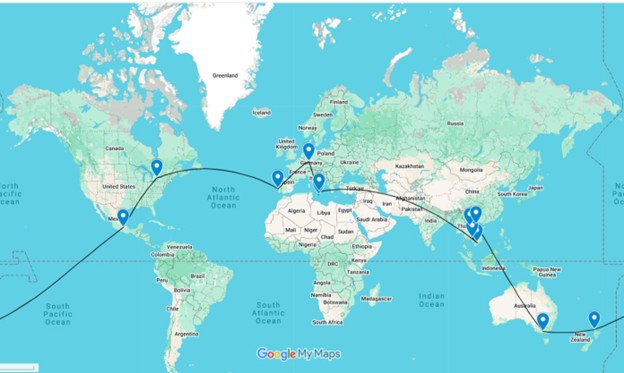
Round the World in 137 Days
Timing is everything. Weather can make or break a trip. Sure, you can visit Patagonia in July, but unless you’re training for your expedition trip to Antarctica, don’t. And Indonesia in January? Let’s just say your umbrella might need to work overtime.
Some destinations are cheaper in bad weather. Fewer tourists, friendlier locals, and more elbow room. But there’s a fine line between “off-season charm” and “why did I think hiking in a monsoon was a good idea?”
If you’re not a beach bum and 18–22°C (64-72°F) sounds like great weather, winter travel can be wonderful. We visited Malta and Sicily in December. It barely rained, and even when it did—like in Siracusa’s old town—we told ourselves, “It’s so beautiful, we’ll forget about the weather.”
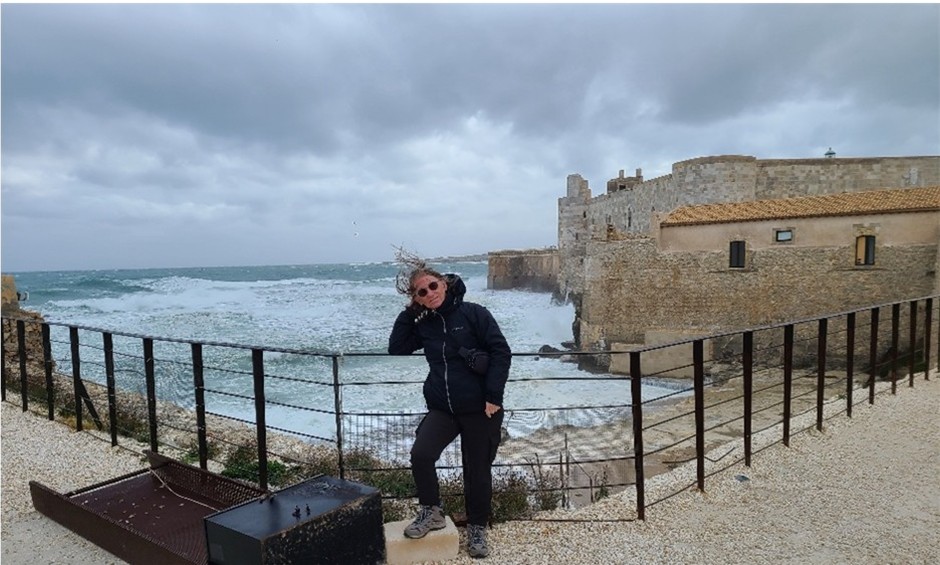
It was raining and cold and windy (look at my wife’s hair), but Siracusa is so beautiful.
And Malta? Perfect weather, even on our boat ride to Gozo Island —just sunshine and smug smiles.

Gozo Island, one of the 4 islands that are part of Malta
Living in Canada, we like to “cheat” winter. Most of our long trips happen during the colder months. It’s our way of saying, “Nice try, snow. We’ll be sipping a nice cold bubbly in the sun instead of shoveling the driveway.”
Learn More About the Destination
If we know someone local, we ask them. Their advice is gold—unless they’re the type who thinks a shopping mall is a cultural experience.
Online research is our bread and butter. We read “Top 10” lists, “23 things to do,” “15 must-sees,” and occasionally “7 places you’ll regret missing.” Lonely Planet, Tripadvisor, and local tourism boards are great sources. Yes, tourism boards are biased—they’re basically saying, “Please come visit us, we’re desperate,” but they still provide useful info. Just make sure it’s current. Nothing ruins a trip like showing up to a “must-see” museum that’s been closed since 2019, or a flooded hiking trail that turns your dream day into a detour. We compare lists to spot the recurring stars. If everyone mentions the same attraction, it’s probably worth it. Of course, we’ve had letdowns. Like Cathedral Cove in New Zealand—it’s lovely, but after seeing Portugal’s Algarve coast, it felt like the opening act to a rock concert we’d already attended.
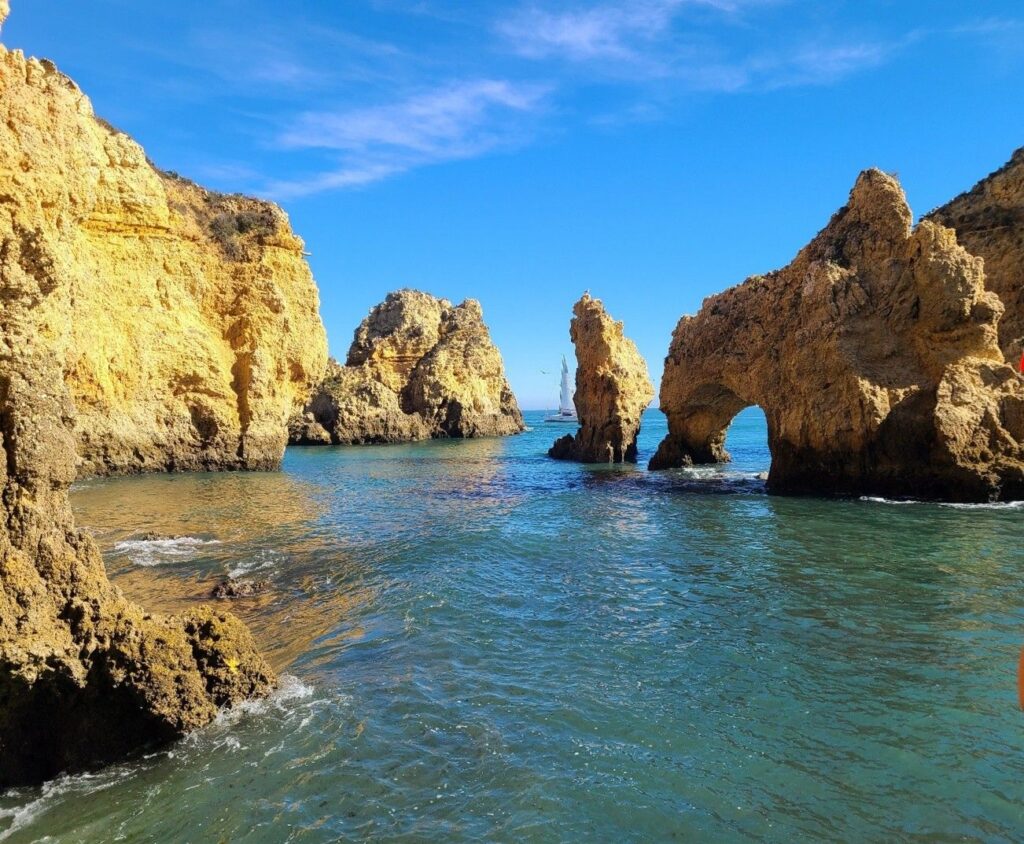
Portugal’s Southern Coast is like lace. Hundreds of rocks coming out of water, small caves into which you can enter by boat.
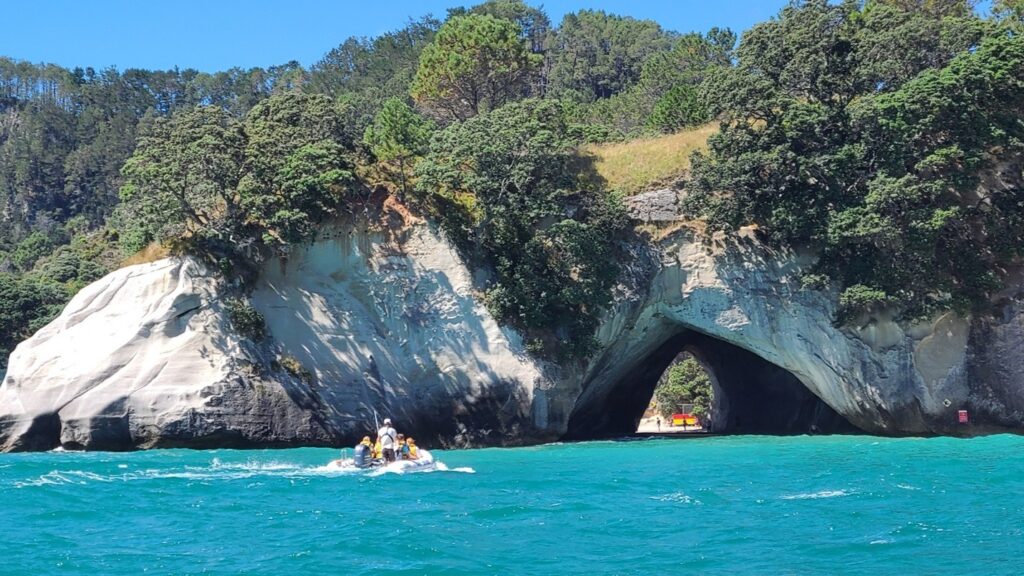
Cathedral Cove is very nice, but compare it to what you saw above…
Research in Depth
Once we’ve picked the region and attractions, we dive into the details:
- How long to stay
- When is the best time to go
- What’s worth seeing
- How to get around
- Local holidays and site closures
- What it costs
- How safe the place is
- How many snacks we’ll need to survive a hike
No single source fits all. Lonely Planet is solid, blogs and podcasts are great—but only if they match your vibe. We love food, wine, hiking (within reason), animals, history, architecture, landscapes, big cities and small villages. But even among fellow enthusiasts, tastes vary. Some people hike for 12 hours and call it relaxing. We call that a rescue mission.
Another priority is whatever makes a place unique—culture, art, food, wine, architecture—basically anything that keeps us curious. Safety matters too: we avoid unsafe areas when possible, but sometimes the lure of a special experience wins. We research, ask locals, and hope for the best. Still, surprises happen. I was once mugged in broad daylight on a main street in Cape Town—after being told the area was “perfectly safe.” So yes, we trust locals… but always beware.
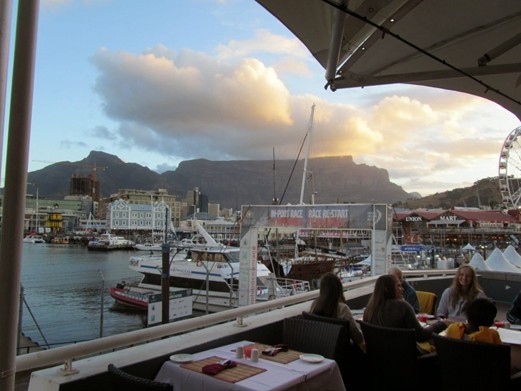
Table Mountain seen from Cape Town Harbour
Cultural Awareness
Travel isn’t just about ticking off sights—it’s about connecting with people. We research local customs, gestures, and etiquette. In Thailand pressing the palms together in front of the chest with the head slightly bowed (the “way”), means more than a handshake. In Italy, punctuality is more of a suggestion. In Germany, it’s a lifestyle.
We try to learn a few words in the local language. It shows effort and earns smiles. Even if our pronunciation is questionable, the attempt matters.
How to Get Around
Transportation is key. Should we rent a car? Hire a driver? Fly and walk around? It depends on road quality, traffic, and how brave we’re feeling. In Europe and North America, we usually rent a car—often at the airport to save time (even if many times more expensive). In places like Vietnam or Thailand, we let someone else take the wheel. The traffic there is like a symphony of chaos, and we prefer to enjoy the scenery without exercising our knowledge of curses.
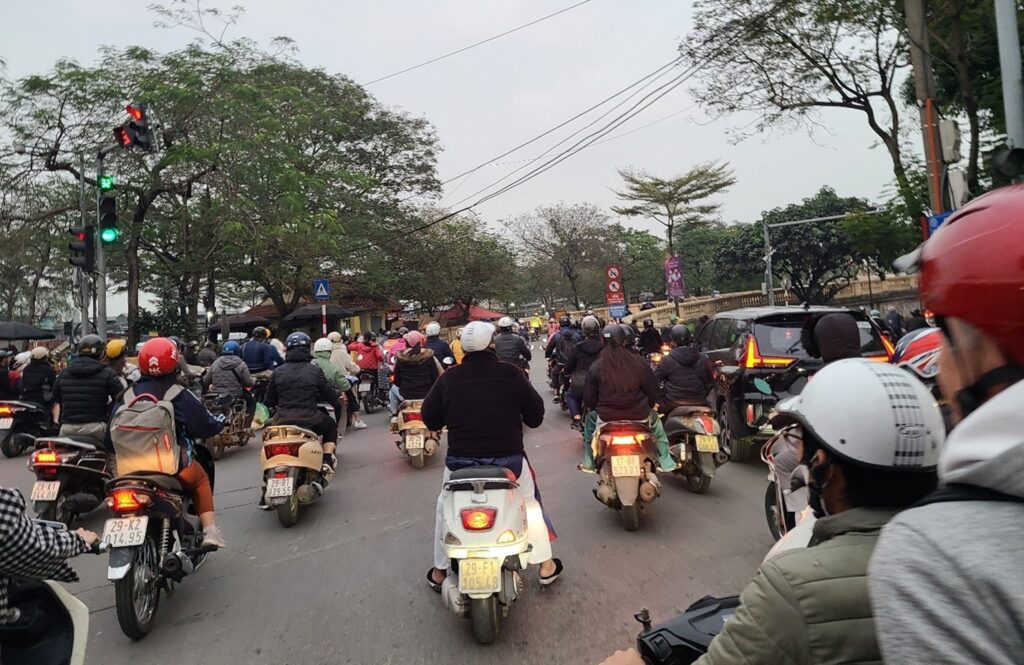
Normal traffic in Hanoi. Do you really want to drive there?
We weigh the cost of renting vs. hiring a driver. Sometimes the difference is small, and the comfort of being chauffeured while we snack and stare out the window is totally worth it.
Building the Itinerary
After all the research, we finally reach the stage of crafting the itinerary—aka, the moment we realize we want to see everything and have time for none of it. Every country is bursting with experiences, and unless you’ve discovered a way to pause time, you’ll have to make some tough choices. One of the hardest parts of planning is deciding what not to include.
We like to plan circular routes—start and end in the same city, usually the capital. It makes car rentals easier and helps us wrap things up smoothly before flying to the next destination.
How long to stay in one place?
We all travel differently, but here’s our highly scientific formula: big cities get 3–4 days. It’s long enough to get a feel for the place, short enough to avoid developing strong opinions about public transit. Smaller places—Christchurch, for example—are delightful for about two days, after which you’ve basically met everyone (including the Canada geese) and can confidently say you “did the city.”
Then there are the historical towns, like Santiago de Compostela, or Dubrovnik where we wander around whispering, “Wow, look at that old stone,” for three or four days straight. It’s charming. It’s atmospheric. These are the places where we willingly walk 20,000 steps without complaining.
The heavyweights —Paris, New York, London—are a different species entirely. You don’t visit them; you enter a long‑term relationship. You simply return like a moth to a very expensive flame. There’s always something new to discover.
And Lisbon? Lisbon is one of our soft spots. Not as glamorous as Paris, sure, but we’re hopelessly in love with it. We’ve already been twice and are plotting a third visit, ideally involving pastries, sardines, and the delusion that we might one day move there “for the vibe.”
How much we drive?
We also plan our stops based on estimated driving time. We’re good with 2–4 hours a day, but we’ve done longer drives when needed. Sometimes we stop midway, other times we explore and return to our base. Google Maps is our go-to for estimating travel time—both during planning and on the road. It isn’t perfect, occasionally it forgets to mention things like “road closed due to a flock of sheep” or “this scenic route doubles as a rollercoaster.”
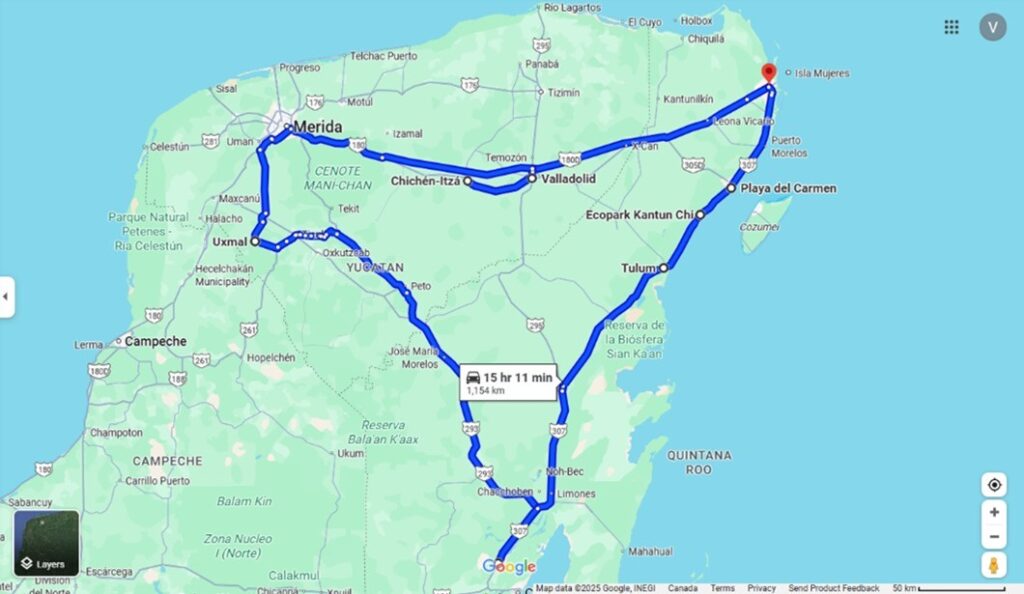
Circular itinerary for a week by car in Yucatan, Mexico (from Cancun to Cancun)
How much planning is too much planning?
We don’t plan every minute, but we do sketch out a daily schedule. We estimate how long hikes, museums, or adrenaline-fueled adventures (like rappelling for 100 meters/328 feet into a cave—yes, we’ve done that) will take. Booking in advance helps us avoid the dreaded “sold out” sign and gives us peace of mind. Sure, it makes the trip less spontaneous, but it also means we’re not wandering the streets at 9 p.m. looking for a place to sleep or a restaurant that doesn’t require a reservation made in 1997. Unfortunately, even when we had planned in advance, we found ourselves being the last customers at the local grocery store because all the restaurants in town closed at 7 (beautiful country New Zealand, but people go to sleep early).
That said, we’re flexible. If the weather changes or we just feel like chilling, we adjust. That’s the beauty of traveling solo—no rigid schedule, no group to follow.
We usually explore from around 8:30 a.m. to 5 p.m.—like a regular workday. If we’re hiking or doing something active, we start earlier. In cities, we take it slower. Usually, we don’t fuss over lunch—just snacks between breakfast and dinner.
Final thoughts
By now you’ve picked a destination, stalked the weather, and persuaded yourself Google Maps knows what it’s talking about, and convinced yourself you’ll “blend in” culturally by learning three words in the local language. This means you’ve already built the backbone of your adventure. But planning doesn’t stop there, it’s just the rehearsal. The real show (where you sleep, what you eat, and how you survive hotel curtains that don’t close) kicks off in Part 2.
Have thoughts, tips, or trauma from your own trip‑planning adventures? Leave a comment after you read the summary. Misery loves company, and so do travel planners.
Summary and Key Takeaways
- Plan multi-country trips when possible — they’re more efficient, environmentally friendly, and you get bragging rights.
- Pick travel dates wisely: based on weather, seasonal charm, local holidays, affordability (some destinations are significantly cheaper off season). Off-season doesn’t always mean bad weather. The weather in Southern Europe can be quite pleasant in November and December.
- Research destinations: if an attraction shows up in every guide, it’s probably worth seeing. Or at least worth pretending you saw.
- How to learn in-depth about the destination? Focus on attractions that consistently appear across multiple sources — they’re likely worth your time. Use a mix of:
- Ask locals that you may know from before
- Travel blogs (some honest, some delusional)
- Trusted publications (Lonely Planet, Tripadvisor—yes, still useful)
- Local tourism boards (biased, but enthusiastic)
- Books, media, random internet rabbit holes
- Spontaneous online finds
- Key topics to check before you go:
- Must-see sites and experiences
- Ideal trip length (spoiler: longer is better)
- Best time to visit
- How to get around
- Local holidays and site closures (because nothing says “vacation” like arriving at a locked gate)
- How much it costs
- How safe the place is
- How many snacks you’ll need to survive a hike
- Get acquainted to the local culture and learn a few words in the local language (bonus points if you can pronounce them)
- Best way to travel:
- Rental car = freedom
- Car + driver = sanity in traffic
- Flying = covering large distances without losing your will to live
- Building the itinerary:
- The hardest part? Choosing what not to include.
- Circular routes are efficient
- Use Google Maps, but don’t trust its “2 hours” estimate—it’s lying sometimes.
- 2–4 hours of driving per day is fine. More than that, and you’ll start questioning your life choices.